Space station orbit earth
1344×768 · AVIF · CC BY 4.0
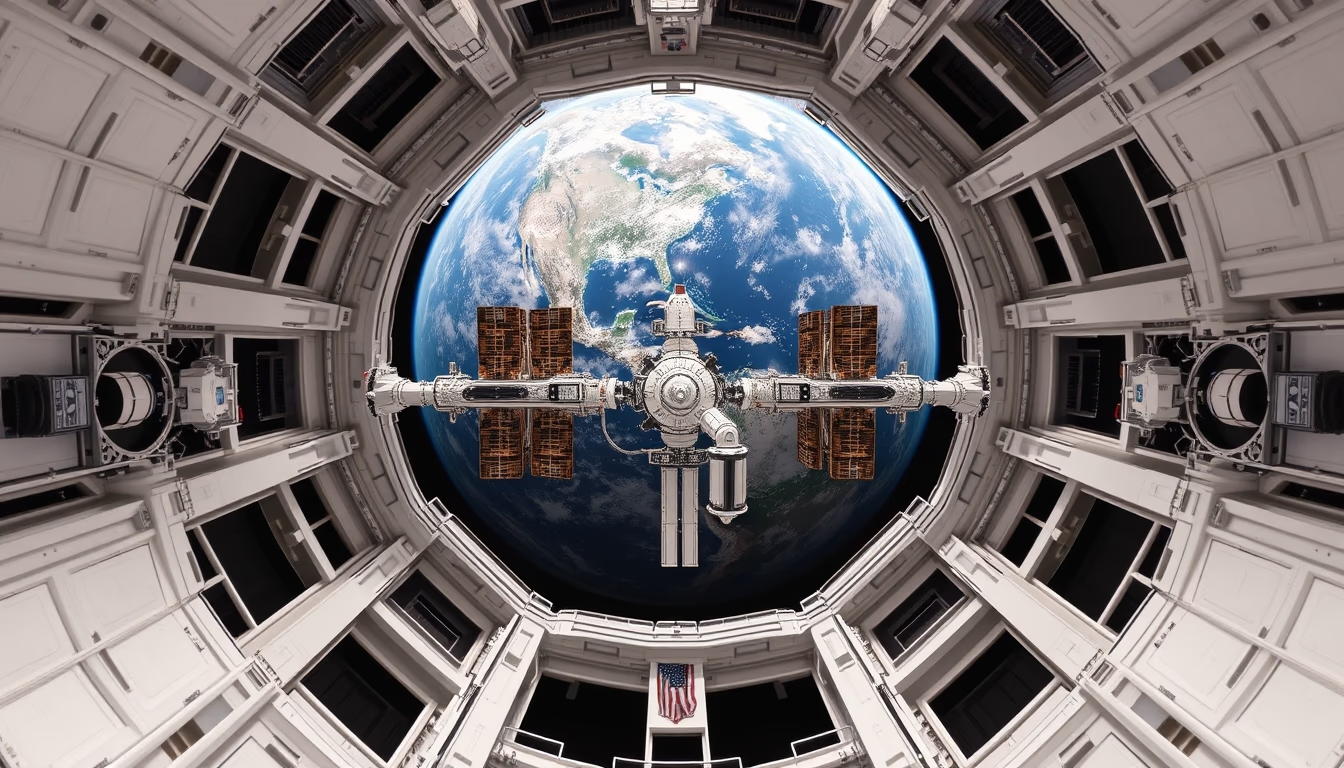
Estação espacial em órbita terrestre: conheça a Estação Espacial Internacional, seus módulos, tripulação e experimentos científicos.
Sobre o tema
A Estação Espacial Internacional (ISS) é o maior e mais complexo projeto de cooperação espacial da história. Iniciada em 1998, a ISS orbita a Terra a uma altitude média de cerca de 400 quilômetros, viajando a aproximadamente 28.000 km/h. Completar uma volta ao redor do planeta leva apenas 90 minutos, permitindo que os astronautas vejam 16 amanheceres e entardeceres por dia. A estrutura modular abriga laboratórios de pesquisa em microgravidade, onde são conduzidos experimentos em biologia, física, ciência dos materiais e observação da Terra, contribuindo para avanços em medicina, agricultura e tecnologia.
Além da ISS, outras estações espaciais marcaram ou ainda marcam presença em órbita. A estação russa Mir operou de 1986 a 2001, sendo a primeira estação modular. A China, por sua vez, concluiu a montagem da Estação Espacial Tiangong em 2023, com três módulos principais e previsão de operação por pelo menos 10 anos. A Tiangong orbita a cerca de 390 km de altitude e recebe tripulações rotativas para missões científicas e tecnológicas. Essas estações representam o esforço humano em manter presença contínua no espaço, impulsionando a exploração além da órbita baixa.
A manutenção da órbita de uma estação espacial é um processo crítico. Devido ao arrasto atmosférico residual na altitude de operação, a velocidade orbital decai gradualmente, exigindo correções periódicas com propulsores a bordo ou com a ajuda de veículos de carga acoplados, como as naves russas Progress ou as estadunidenses Cygnus e Dragon. Essas manobras de reboque são programadas para evitar a reentrada descontrolada na atmosfera. No caso da ISS, o plano de descomissionamento prevê sua desativação controlada por volta de 2031, com direcionamento para o Ponto Nemo, no Oceano Pacífico.
Curiosamente, a ISS é visível da Terra a olho nu como um ponto luminoso em movimento rápido, semelhante a um avião, mas sem luzes piscando. Sites e aplicativos especializados fornecem horários de passagem sobre qualquer localidade. A estação possui aproximadamente o tamanho de um campo de futebol americano (109 metros de comprimento) e massa de cerca de 420 toneladas. Até hoje, mais de 250 astronautas de 20 países já visitaram a ISS, que serve como símbolo de cooperação internacional em um ambiente hostil, onde a sobrevivência depende de tecnologia e trabalho em equipe.
Perguntas frequentes
Com que velocidade a Estação Espacial Internacional orbita a Terra?
A ISS viaja a aproximadamente 28.000 km/h, completando uma órbita a cada 90 minutos. Isso significa que ela dá cerca de 16 voltas ao redor da Terra por dia.
Quantas estações espaciais existem atualmente em órbita?
Duas estações espaciais estão operacionais: a Estação Espacial Internacional (ISS), com participação de vários países, e a Estação Espacial Tiangong da China. A Mir russa foi desativada em 2001.
É possível ver a estação espacial da Terra?
Sim, a ISS é visível a olho nu como um ponto luminoso em movimento rápido, geralmente ao amanhecer ou entardecer. Aplicativos e sites como Spot The Station indicam os horários de passagem sobre qualquer localidade.
URL direta
https://pub-c7d6a6ea828543ac903a74a341ccb2e1.r2.dev/imagens/space-station-orbit-earth-architectural-photography-p0.avifComo creditar
Inclua um link visível de volta pro UtilizAí. Copie um dos snippets abaixo:
<a href="https://xn--utiliza-eza.com/midia/imagens/space-station-orbit-earth-architectural-photography-p0">Space station orbit earth</a> by <a href="https://xn--utiliza-eza.com">UtilizAí</a>, licensed under <a href="https://creativecommons.org/licenses/by/4.0/">CC BY 4.0</a>.
[Space station orbit earth](https://xn--utiliza-eza.com/midia/imagens/space-station-orbit-earth-architectural-photography-p0) by [UtilizAí](https://xn--utiliza-eza.com), CC BY 4.0
Licença: CC-BY-4.0