Snorkel mask glass
1344×768 · AVIF · CC BY 4.0
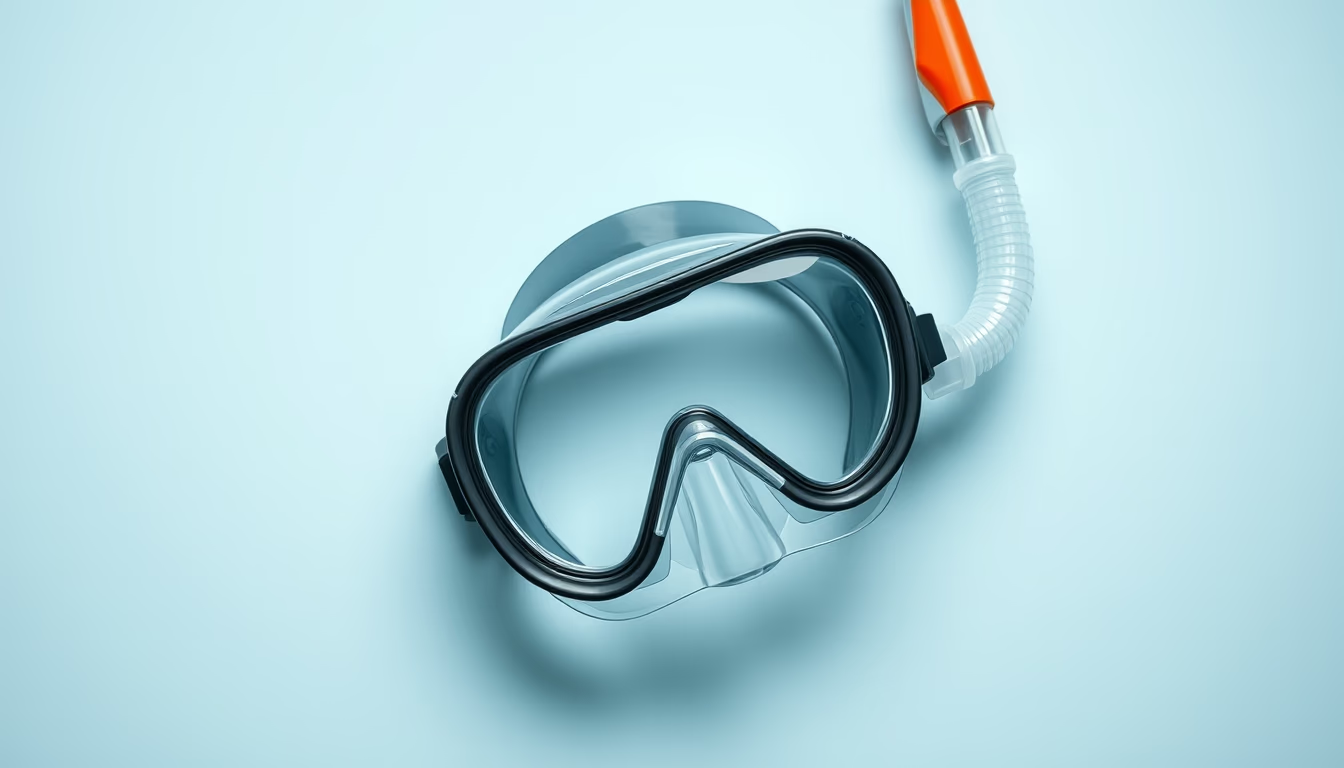
Snorkel mask glass is crucial for underwater visibility and safety, requiring durable materials like tempered glass or polycarbonate.
About this subject
Snorkel masks primarily use tempered glass, a material heat-treated to increase impact resistance and pressure tolerance. Unlike common plastics, tempered glass offers clearer optics and resists fogging, crucial for divers observing coral reefs or shipwrecks. Standard thickness ranges from 2 to 4 mm, depending on the model and intended depth.
In regions like the Red Sea, where visibility exceeds 30 meters, glass optical quality determines the success of marine life observation. In cold waters such as southern Brazil, the glass must withstand thermal shock when contacting water below 15°C. High-performance masks may use laminated glass, similar to car windshields, to prevent shattering.
Maintenance involves cleaning with mild soap and rinsing with fresh water after each use to prevent salt buildup and edge corrosion. Anti-fog agents, usually silicone-based, are applied to the inner surface before diving. Historically, early 20th-century diving masks used ordinary glass, but fragility led to tempered glass adoption in the 1950s, popularized by brands like Cressi and Mares.
The tilt-shift effect in snorkel mask photography, mimicking miniatures, highlights the glass's transparency and curvature, emphasizing its role as a window to the underwater world. This technique is also used in dive tourism campaigns to attract beginners, portraying the mask as a portal to adventure.
Frequently Asked Questions
What is the difference between tempered glass and polycarbonate in snorkel masks?
Tempered glass is more scratch-resistant and offers clearer vision, while polycarbonate is lighter and more impact-resistant but scratches easily. For recreational diving, glass is preferred; for extreme activities, polycarbonate is used.
How to prevent snorkel mask glass from fogging?
Apply a dedicated anti-fog agent (or saliva) to the inner surface before diving. Avoid touching the glass with oily fingers. High-quality masks have factory anti-fog treatment.
Can snorkel mask glass break easily at depth?
No, tempered glass is designed to withstand underwater pressure. However, impacts against rocks or drops can shatter it. Always inspect the glass before diving and avoid masks with ordinary glass.
Direct URL
https://pub-c7d6a6ea828543ac903a74a341ccb2e1.r2.dev/imagens/snorkel-mask-glass-tilt-shift-miniature-fresh0.avifHow to credit
Include a visible link back to UtilizAí. Copy one of the snippets below:
<a href="https://xn--utiliza-eza.com/en/midia/imagens/snorkel-mask-glass-tilt-shift-miniature-fresh0">Snorkel mask glass</a> by <a href="https://xn--utiliza-eza.com">UtilizAí</a>, licensed under <a href="https://creativecommons.org/licenses/by/4.0/">CC BY 4.0</a>.
[Snorkel mask glass](https://xn--utiliza-eza.com/en/midia/imagens/snorkel-mask-glass-tilt-shift-miniature-fresh0) by [UtilizAí](https://xn--utiliza-eza.com), CC BY 4.0
License: CC-BY-4.0