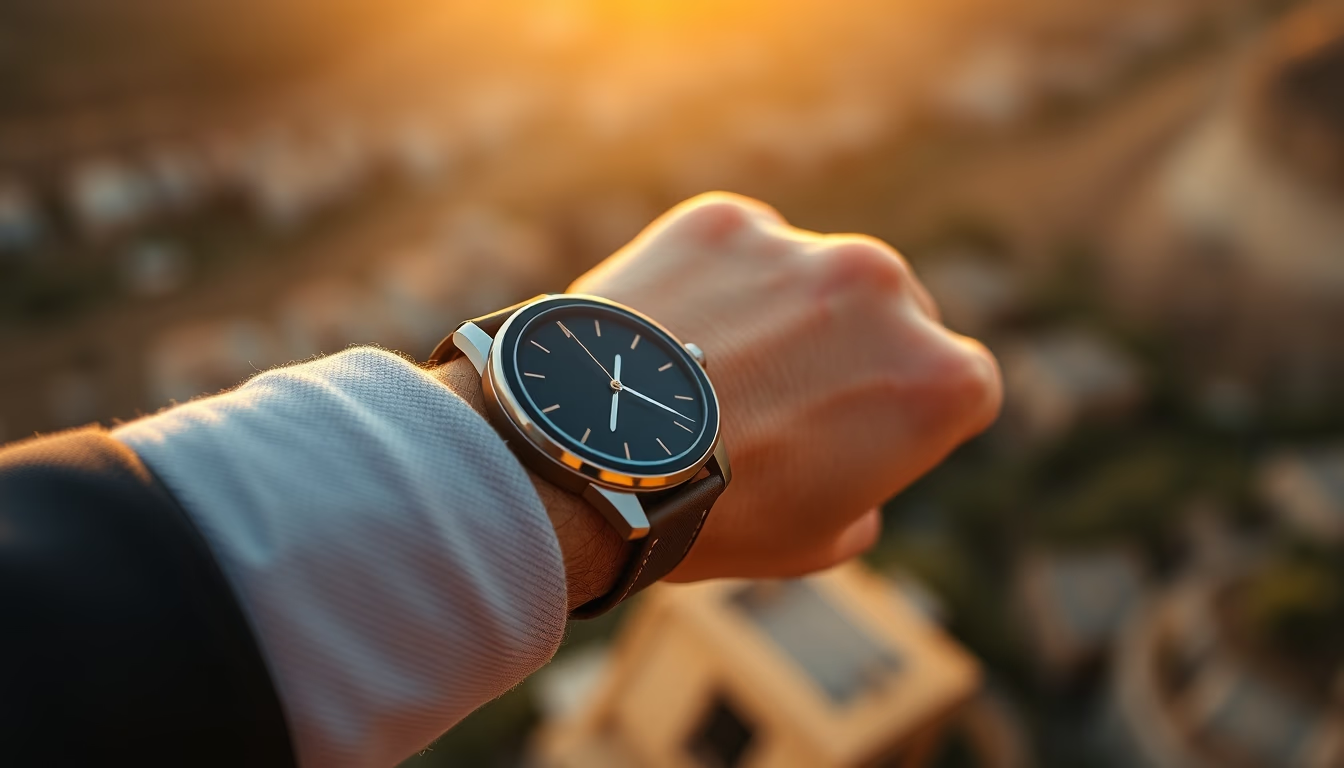
Smart watch on wrist closeup
1344×768 · AVIF · CC BY 4.0
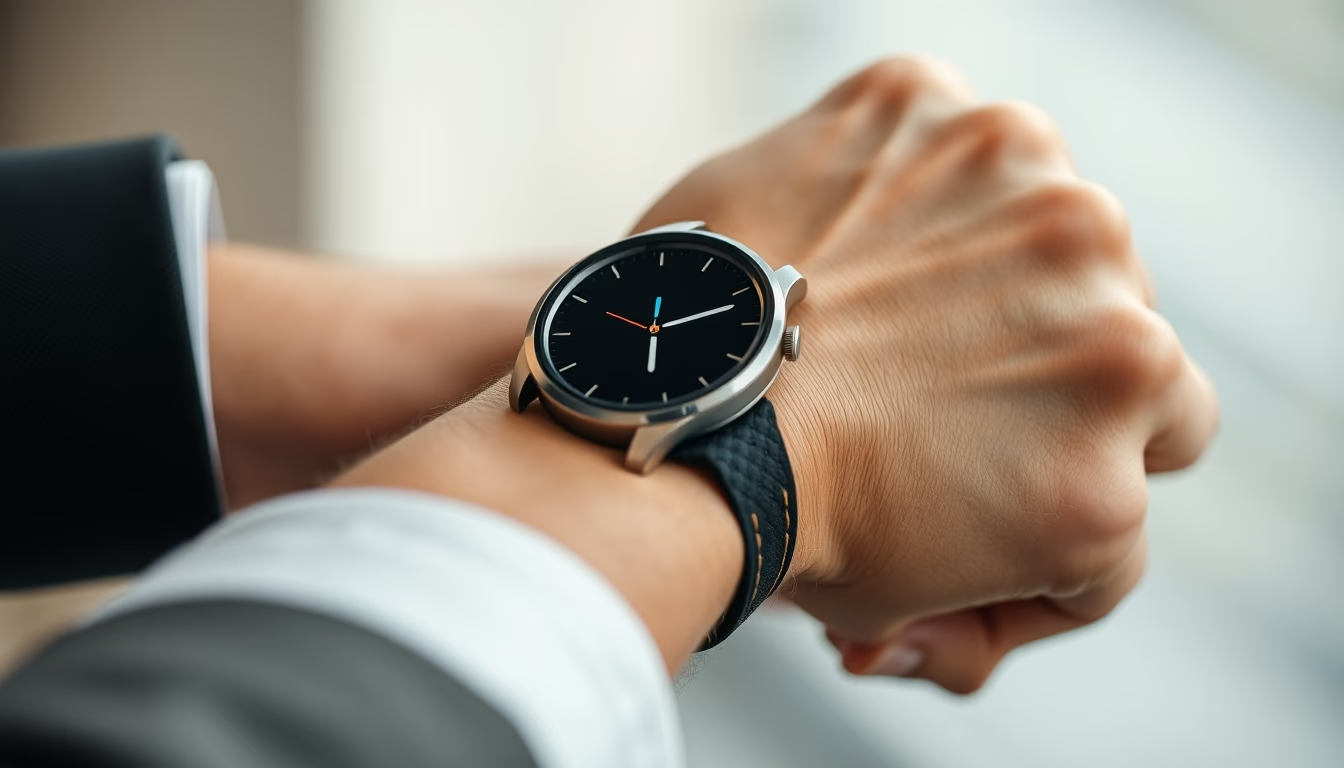
Smart watch on wrist: how smartwatches evolved from fashion accessories to hubs of health and personal connectivity.
About this subject
Smartwatches are wearable devices that combine watch functions with computing and connectivity. Since the launch of the first Apple Watch in 2015, the market has grown exponentially, with brands like Samsung, Garmin, Fitbit, and Huawei competing for shares. Today, smartwatches go far beyond showing notifications: they integrate biometric sensors that monitor heart rate, blood oxygen levels, electrocardiograms, sleep quality, and even stress levels. This evolution has been driven by growing demand for self-care and preventive health, especially after the COVID-19 pandemic.
By 2026, the smartwatch trend points to even greater integration with smart home ecosystems. Many models already allow controlling IoT devices, such as lights, thermostats, and security cameras, directly from the wrist. Additionally, NFC payments, offline maps, and sports activity recognition have become standard. Sensor accuracy has advanced to the point where some models are FDA-approved for detecting cardiac arrhythmias like atrial fibrillation, though they still do not replace professional medical equipment.
Battery life varies widely: full-featured smartwatches (running watchOS or Wear OS) last 1 to 3 days, while hybrid or sports-focused models (like Garmin and Coros) can reach up to 14 days on a single charge. This difference reflects the trade-off between functionality and autonomy. For many users, fast charging and wireless charging compatibility are decisive factors in their choice.
Privacy and data security are also central to the debate. Smartwatches collect sensitive health information, requiring robust encryption protocols and transparent usage policies. Brazil's General Data Protection Law (LGPD) and similar regulations abroad impose limits on sharing this data with third parties. With the global wearables market projected to exceed US$100 billion by 2027, smartwatches are expected to become even more personalized and integrated into daily life.
Frequently Asked Questions
Do smartwatches replace medical exams?
No. Smartwatches provide continuous monitoring and can alert users to anomalies, but they do not replace diagnoses or exams performed by healthcare professionals. They are complementary tools for self-care.
What is the average battery life of a smartwatch?
It varies by model and usage: full-featured smartwatches last 1 to 3 days, while hybrid or sports-focused models can reach up to 14 days. Factors like screen brightness, GPS usage, and notifications directly affect battery life.
Do smartwatches work with any smartphone?
It depends on the operating system. Apple Watch is only compatible with iPhone. Models with Wear OS (Google) work with Android and iOS, but with reduced functionality on iOS. Brands like Garmin and Fitbit offer support for both systems.
Direct URL
https://pub-c7d6a6ea828543ac903a74a341ccb2e1.r2.dev/imagens/smart-watch-on-wrist-closeup-macro-closeup-p1.avifHow to credit
Include a visible link back to UtilizAí. Copy one of the snippets below:
<a href="https://xn--utiliza-eza.com/en/midia/imagens/smart-watch-on-wrist-closeup-macro-closeup-p1">Smart watch on wrist closeup</a> by <a href="https://xn--utiliza-eza.com">UtilizAí</a>, licensed under <a href="https://creativecommons.org/licenses/by/4.0/">CC BY 4.0</a>.
[Smart watch on wrist closeup](https://xn--utiliza-eza.com/en/midia/imagens/smart-watch-on-wrist-closeup-macro-closeup-p1) by [UtilizAí](https://xn--utiliza-eza.com), CC BY 4.0
License: CC-BY-4.0