Smart thermostat on wall
1344×768 · AVIF · CC BY 4.0
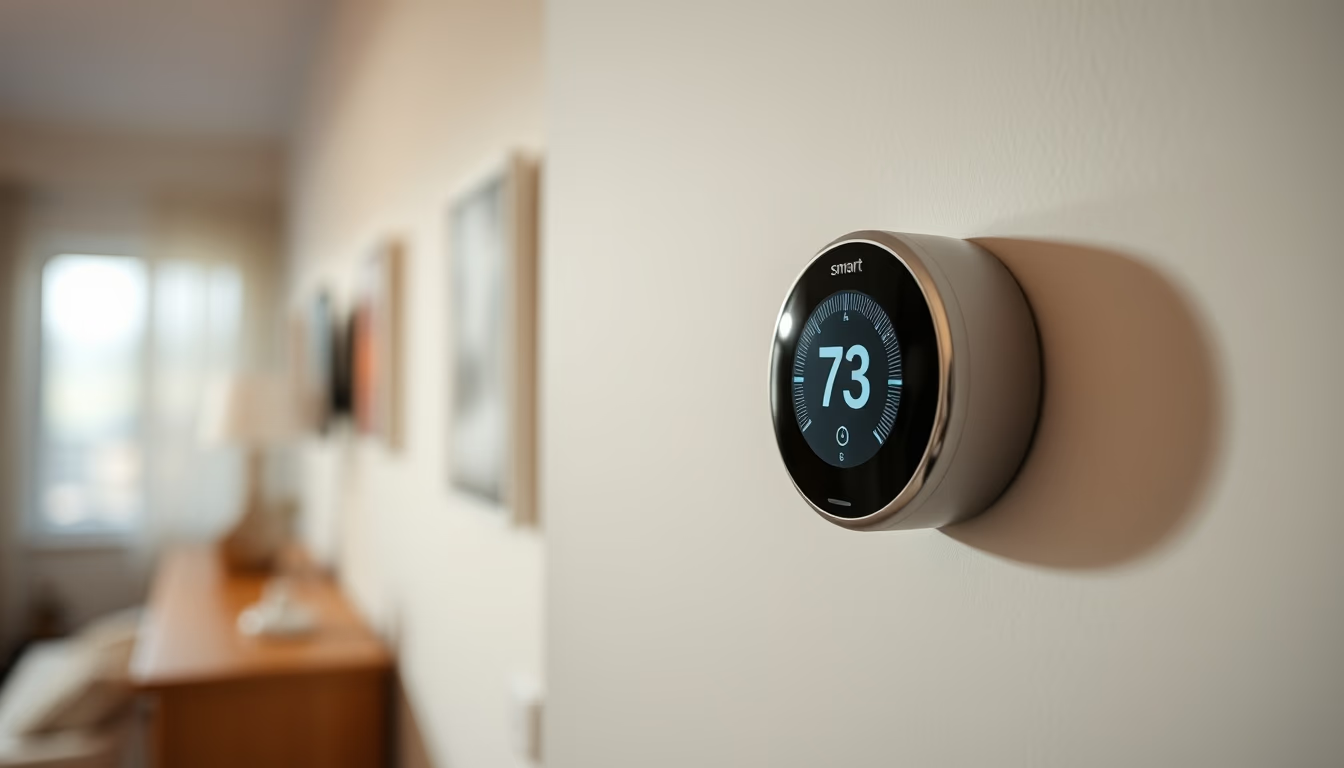
Smart thermostats, like the model in the image, optimize energy consumption by learning household routines, reducing bills and emissions.
About this subject
Smart thermostats are central devices in modern home automation. Unlike traditional analog models, they connect to the internet and allow remote control via smartphone apps. Their main function is to efficiently regulate room temperature, but the true differentiator lies in learning capabilities: algorithms analyze occupancy patterns, thermal preferences, and even weather data to create automatic schedules. This can save 10% to 23% on heating and cooling costs, according to studies by the U.S. Department of Energy.
The popularity of these devices surged with the launch of the Nest Learning Thermostat in 2011 by Nest Labs (acquired by Google in 2014). Since then, the market has expanded with competitors like Ecobee, Honeywell, and Tado, each offering features such as occupancy sensors, geofencing, and integration with virtual assistants (Alexa, Google Assistant, Siri). In Brazil, adoption is growing, though models must be compatible with split systems and central air conditioning; installation requires attention to voltage and equipment type.
Typical smart thermostat interfaces include a touchscreen display, temperature readout, and mode icons (heating, cooling, ventilation). Wi-Fi connectivity allows users to adjust temperature from anywhere, receive maintenance alerts, or view monthly usage reports. Beyond comfort, the environmental contribution is significant: reduced energy consumption lowers household carbon footprints, aligning with global energy efficiency goals for 2026 and beyond.
Frequently Asked Questions
How much energy can a smart thermostat actually save?
Studies show savings of 10% to 23% on heating and cooling costs, depending on climate, home insulation, and usage patterns. Savings come from automatic adjustments and personalized scheduling.
Do smart thermostats work with common mini-split air conditioners?
Yes, if the model is compatible. Many smart thermostats require a central system with standard 24V wiring. For mini-splits, adapters or specific models (like those from Tado or Honeywell) that communicate via infrared or wires are needed.
Is it difficult to install a smart thermostat?
Installation can be done by an electrician, especially on existing systems. Some models are DIY with step-by-step guides, but it's crucial to check electrical compatibility and the type of HVAC system.
Direct URL
https://pub-c7d6a6ea828543ac903a74a341ccb2e1.r2.dev/imagens/smart-thermostat-on-wall-documentary-photography-p4.avifHow to credit
Include a visible link back to UtilizAí. Copy one of the snippets below:
<a href="https://xn--utiliza-eza.com/en/midia/imagens/smart-thermostat-on-wall-documentary-photography-p4">Smart thermostat on wall</a> by <a href="https://xn--utiliza-eza.com">UtilizAí</a>, licensed under <a href="https://creativecommons.org/licenses/by/4.0/">CC BY 4.0</a>.
[Smart thermostat on wall](https://xn--utiliza-eza.com/en/midia/imagens/smart-thermostat-on-wall-documentary-photography-p4) by [UtilizAí](https://xn--utiliza-eza.com), CC BY 4.0
License: CC-BY-4.0