Small family farmer tending to organic vegetables
1344×768 · AVIF · CC BY 4.0
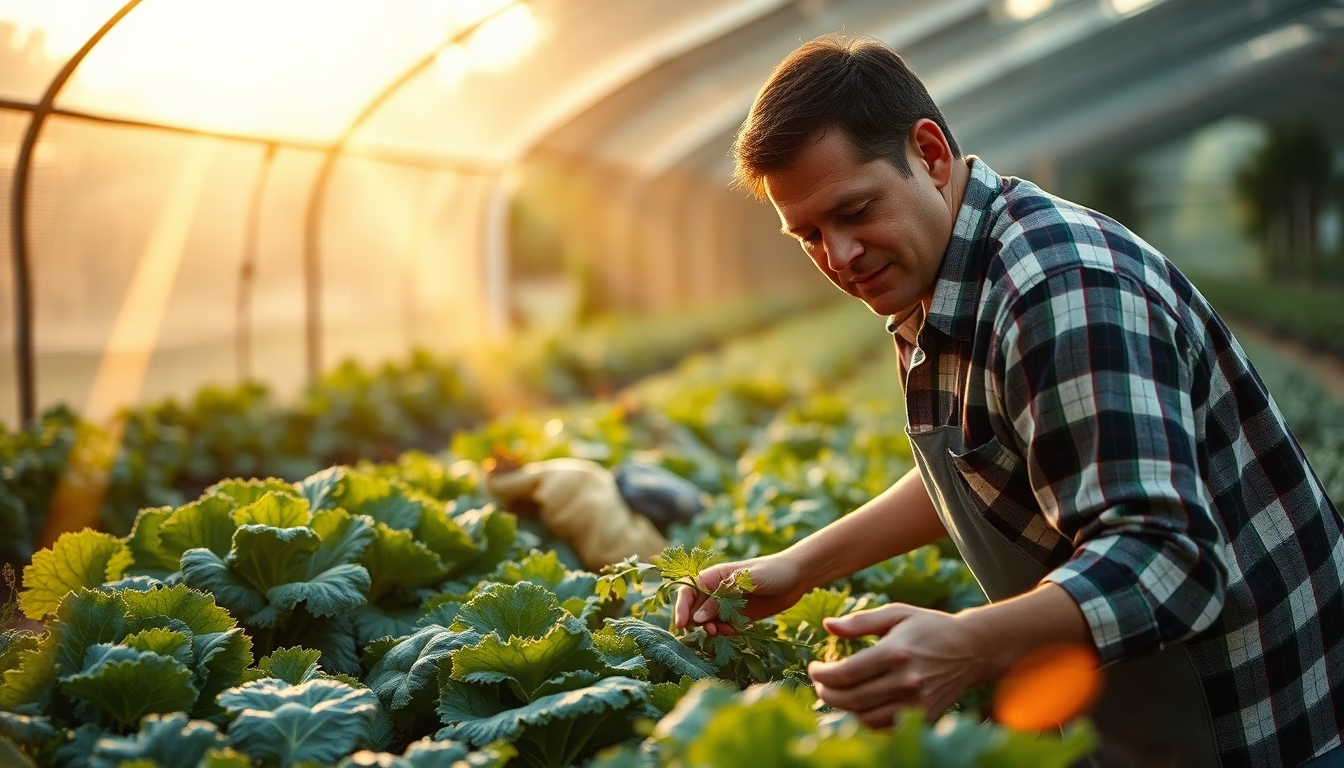
Small family farmer tends organic vegetables on a small Brazilian rural property.
About this subject
Family farming accounts for about 70% of the food consumed in Brazil, according to IBGE data. In this context, small rural producers dedicate themselves to organic cultivation of vegetables such as lettuce, arugula, and tomatoes, without synthetic pesticides. This practice has gained momentum in recent decades, driven by growing demand for healthy food and appreciation for agroecological systems.
In Brazil, organic production is regulated by Law 10.831/2003, which establishes standards for certification and commercialization. Small family farmers often opt for direct sales at organic fairs or through baskets delivered to local consumers, strengthening the regional economy and reducing carbon footprint. Crop diversification is a common strategy to ensure year-round income and preserve soil biodiversity.
Manual labor is characteristic of these properties, involving soil preparation, planting, irrigation, and harvesting. Many families combine traditional techniques with sustainable innovations such as composting and crop rotation. The presence of riparian forests and ecological corridors is frequent, contributing to environmental balance. Despite challenges like access to credit and technical assistance, organic family farming represents an important pillar for food security and natural resource conservation.
Frequently Asked Questions
What is the difference between family farming and organic farming?
Family farming refers to a production model managed by the family, while organic farming concerns a production system without synthetic inputs. A farm can be family-run but not organic, or organic but not family-run, though they often overlap.
How can I ensure a product is truly organic?
In Brazil, organic products must carry the seal of the Brazilian Organic Conformity Assessment System (SisOrg), or be sold directly by family farmers registered with the Ministry of Agriculture.
What are the main challenges for small organic farmers?
Main challenges include access to rural credit, specialized technical assistance, costly certification, and competition with conventional agriculture. Additionally, pest management without pesticides requires technical knowledge.
Direct URL
https://pub-c7d6a6ea828543ac903a74a341ccb2e1.r2.dev/imagens/small-family-farmer-tending-to-organic-vegetables-editorial-overcast-daytime-2.avifHow to credit
Include a visible link back to UtilizAí. Copy one of the snippets below:
<a href="https://xn--utiliza-eza.com/en/midia/imagens/small-family-farmer-tending-to-organic-vegetables-editorial-overcast-daytime-2">Small family farmer tending to organic vegetables</a> by <a href="https://xn--utiliza-eza.com">UtilizAí</a>, licensed under <a href="https://creativecommons.org/licenses/by/4.0/">CC BY 4.0</a>.
[Small family farmer tending to organic vegetables](https://xn--utiliza-eza.com/en/midia/imagens/small-family-farmer-tending-to-organic-vegetables-editorial-overcast-daytime-2) by [UtilizAí](https://xn--utiliza-eza.com), CC BY 4.0
License: CC-BY-4.0