Silk thread spool
1344×768 · AVIF · CC BY 4.0
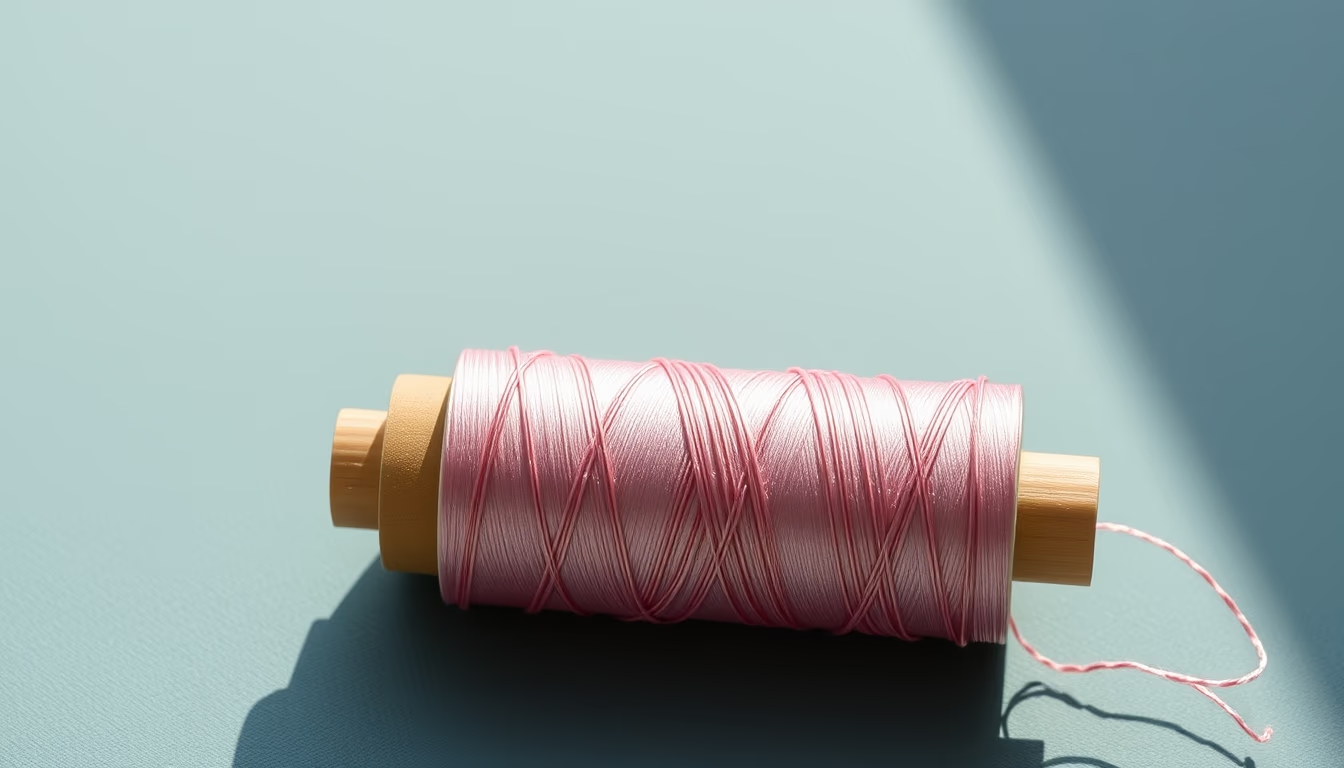
The silk thread spool is an essential item in the textile industry, representing the ancient tradition of sericulture and the production of high-quality threads.
About this subject
Silk thread is a continuous filament extracted from the cocoon of silkworms, primarily Bombyx mori. The production process, known as sericulture, involves raising the caterpillars, harvesting the cocoons, and spinning the thread. To obtain a continuous strand, cocoons are immersed in hot water to soften the sericin, a natural gum that holds the fibers together. The fibers are then unwound and twisted together to form a strong, lustrous thread.
Silk has a rich history dating back to ancient China, where it was secretly cultivated for millennia. The Silk Road, a network of trade routes connecting East and West, was named after this precious fabric. To this day, silk is synonymous with luxury and quality, used in fine clothing, accessories, tapestries, and embroidery. Silk thread, in particular, is prized by artisans and seamstresses for its strength, elasticity, and natural sheen.
Currently, China is the world's largest silk producer, accounting for about 80% of global production. Other producing countries include India, Uzbekistan, and Brazil. Mulberry silk, from silkworms fed exclusively on mulberry leaves, is the most common and highest quality. Varieties such as tussah silk, produced by wild silkworms, yield a coarser thread with a natural brown color.
Silk thread spools are used to store and dispense the thread in an organized manner. They vary in size and material, with plastic or cardboard being common. Silk thread is often used in embroidery, sewing delicate fabrics, and in technical applications such as surgical sutures due to its biocompatibility. To maintain its properties, silk should be stored in a dry place away from direct light, as prolonged exposure can weaken the fibers.
Frequently Asked Questions
How is silk thread produced?
Silk thread is produced from silkworm cocoons. The cocoons are heated in water to soften the sericin, and then the fibers are unwound and twisted into a continuous thread. This process is called sericulture.
What are the main uses of silk thread?
Silk thread is widely used in embroidery, sewing fine fabrics, making luxury garments, tapestry, and in medical applications such as surgical sutures, due to its strength and biocompatibility.
Where is most of the world's silk produced?
China is the world's largest silk producer, accounting for about 80% of global production. Other key countries include India, Uzbekistan, and Brazil.
Direct URL
https://pub-c7d6a6ea828543ac903a74a341ccb2e1.r2.dev/imagens/silk-thread-spool-magazine-editorial-fresh0.avifHow to credit
Include a visible link back to UtilizAí. Copy one of the snippets below:
<a href="https://xn--utiliza-eza.com/en/midia/imagens/silk-thread-spool-magazine-editorial-fresh0">Silk thread spool</a> by <a href="https://xn--utiliza-eza.com">UtilizAí</a>, licensed under <a href="https://creativecommons.org/licenses/by/4.0/">CC BY 4.0</a>.
[Silk thread spool](https://xn--utiliza-eza.com/en/midia/imagens/silk-thread-spool-magazine-editorial-fresh0) by [UtilizAí](https://xn--utiliza-eza.com), CC BY 4.0
License: CC-BY-4.0