Shipwreck underwater old
1344×768 · AVIF · CC BY 4.0
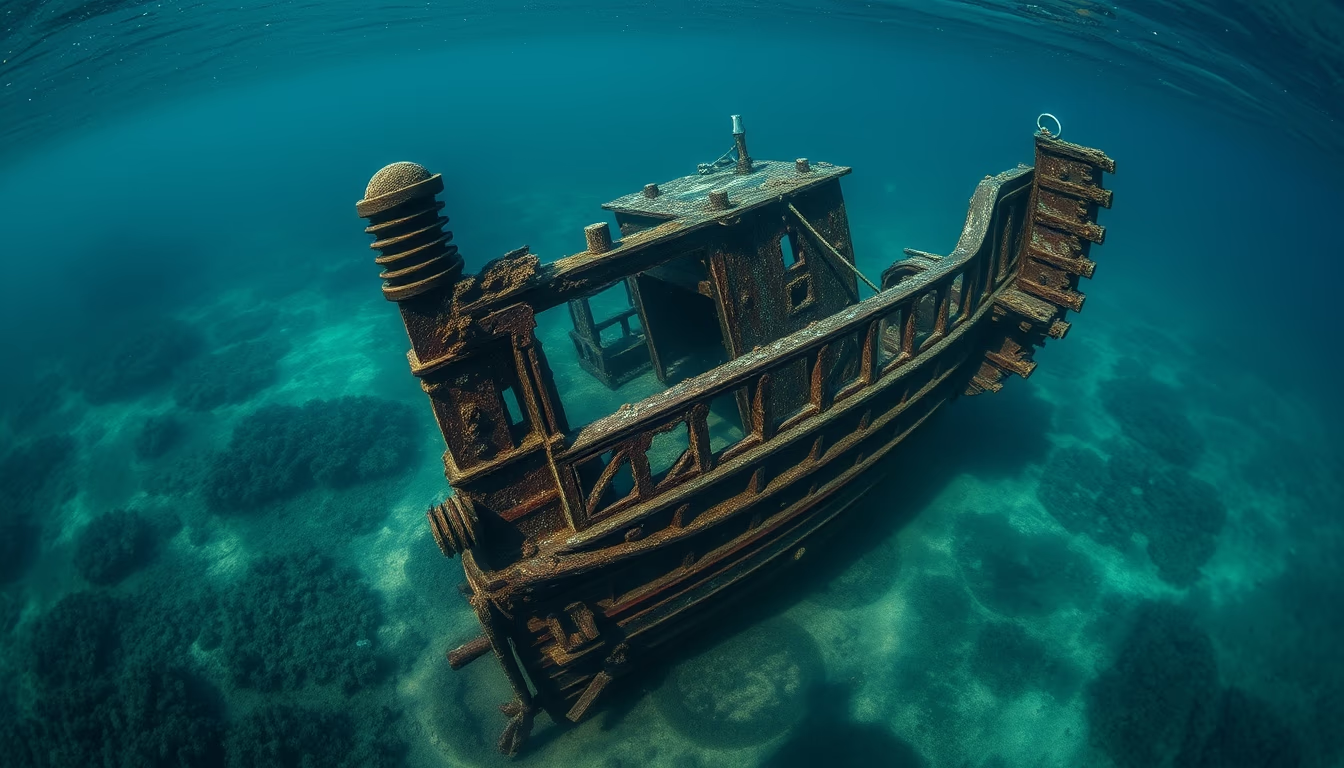
Underwater shipwrecks like this one preserve centuries of maritime history and become artificial reefs rich in biodiversity.
About this subject
Underwater shipwrecks are true underwater archaeological sites that record over two thousand years of navigation, trade, and human conflict. Each sunken hull carries the memory of its vessel, cargo, crew, and historical context. Brazil's Atlantic coast holds hundreds of shipwrecks, from Portuguese caravels of the 16th and 17th centuries to 20th-century merchant ships. Notable examples include the wreck of the galleon Sacra Família (1668) in Bahia and the steamer Cidade de Santos (1887) in São Paulo.
Beyond historical value, these wrecks play a fundamental ecological role. Over time, the metal and wood of vessels are colonized by algae, corals, sponges, and fish, creating oases of life on the seafloor. A single shipwreck can host hundreds of species, serving as a nursery and refuge from predators. It is estimated that a medium-sized wreck may sustain over 10 thousand marine organisms.
Preservation of these sites is regulated by international conventions, such as the UNESCO Convention on the Protection of the Underwater Cultural Heritage (2001), and by national laws. In Brazil, Law 7.542/86 protects underwater archaeological sites, requiring authorization for diving and collection. Recreational divers can visit many wrecks but must follow rules not to touch or remove objects.
Interestingly, the oldest known shipwreck is the Uluburun wreck off Turkey, dating to the 14th century BC, which carried copper and tin ingots from the Mycenaean civilization. The deepest known wreck is the USS Johnston, at 6,460 meters depth in the Philippine Sea. These submerged remains continue to reveal secrets of history and nature.
Frequently Asked Questions
What is the oldest shipwreck ever discovered?
The Uluburun shipwreck off the coast of Turkey is the oldest known, dating to the 14th century BC. It carried cargo from the Mycenaean civilization.
Why do shipwrecks become artificial reefs?
Submerged metal and wooden structures provide a hard surface for marine organisms like corals and algae to attach, creating a diverse ecosystem.
Can divers visit any shipwreck?
No. Many wrecks are protected by cultural heritage or environmental laws and require prior authorization. Removing objects is prohibited.
Direct URL
https://pub-c7d6a6ea828543ac903a74a341ccb2e1.r2.dev/imagens/shipwreck-underwater-old-magazine-editorial-p5.avifHow to credit
Include a visible link back to UtilizAí. Copy one of the snippets below:
<a href="https://xn--utiliza-eza.com/en/midia/imagens/shipwreck-underwater-old-magazine-editorial-p5">Shipwreck underwater old</a> by <a href="https://xn--utiliza-eza.com">UtilizAí</a>, licensed under <a href="https://creativecommons.org/licenses/by/4.0/">CC BY 4.0</a>.
[Shipwreck underwater old](https://xn--utiliza-eza.com/en/midia/imagens/shipwreck-underwater-old-magazine-editorial-p5) by [UtilizAí](https://xn--utiliza-eza.com), CC BY 4.0
License: CC-BY-4.0