Shipwreck underwater old
1344×768 · AVIF · CC BY 4.0
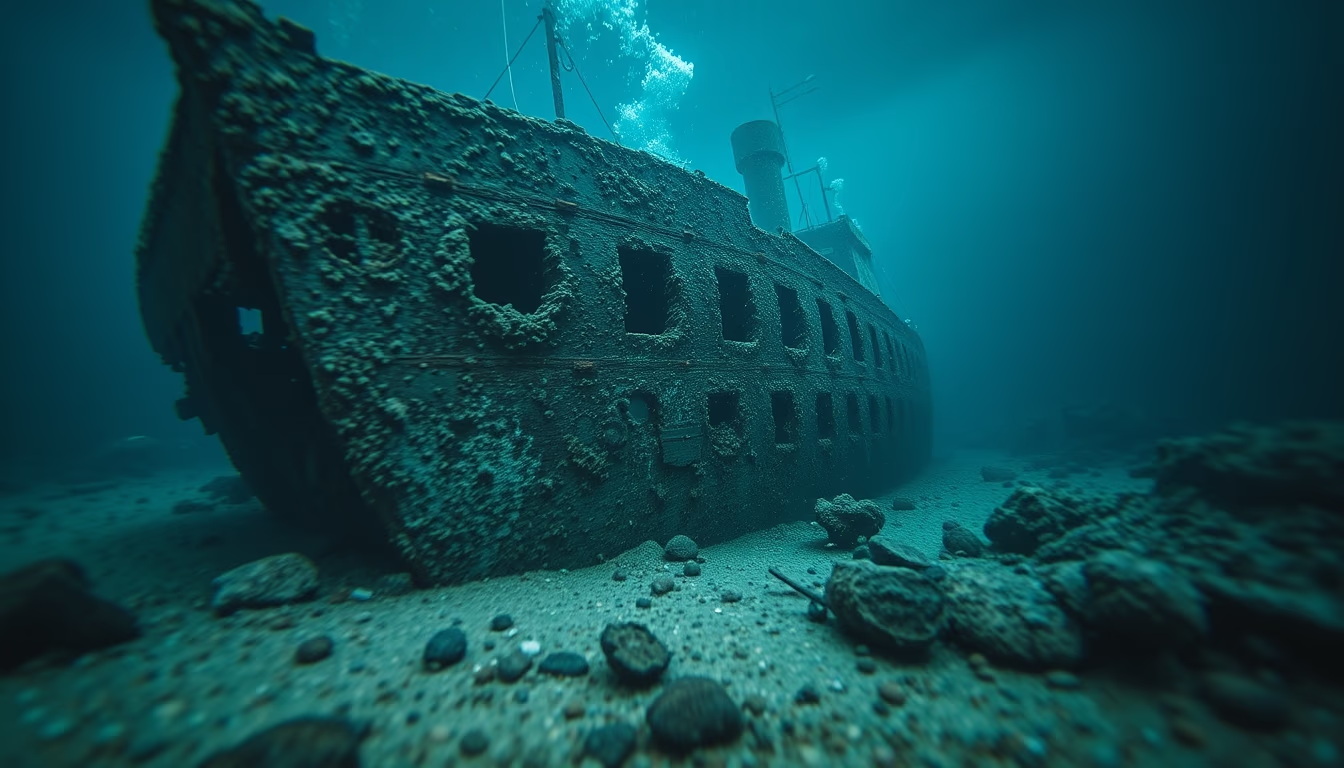
Ancient underwater shipwrecks are rich archaeological sites blending history with marine ecology, such as an 18th-century wreck.
About this subject
Ancient shipwrecks are submerged time capsules, preserving artifacts and structures that reveal centuries of trade, conflict, and navigation. Off Brazil's Atlantic coast, dozens of sunken ships from the colonial period lie in shallow waters accessible to divers. The Sacramento, lost in 1668 off Bahia, is one of the most emblematic, with debris scattered among coral reefs.
These underwater sites function as artificial reefs, attracting fish, crustaceans, and corals that attach to wood and metal. The local macroecology depends on these structures for shelter and food, creating a unique ecosystem. In a macro close-up, one can observe barnacles encrusted on a bronze cannon, with green algae growing in the metal grooves.
Underwater archaeology uses techniques like photogrammetry and sonar to map wrecks without damaging them. The submersible used to explore the Titanic inspired expeditions on Brazilian wrecks, such as the battleship Aquidabã, sunk in 1906. Each recovered item tells a story, from Chinese porcelain to gold coins, helping reconstruct trade routes and naval battles.
Fascinatingly, many wrecks remain intact for centuries due to low temperature and lack of light at great depths. The Baltic Sea holds surprisingly well-preserved medieval ships, while off the coast of Pernambuco, the 1552 Portuguese Galleon still keeps secrets beneath the waves. These sites not only intrigue historians but also recreational divers who can visit them with IPHAN authorization.
Frequently Asked Questions
What is the minimum age to dive on shipwrecks?
The minimum age for recreational diving is 10, but visiting wrecks typically requires advanced certification from age 15 and authorization from the responsible agency, such as IPHAN in Brazil.
Can tourists visit shipwrecks?
Yes, many shallow-water wrecks are accessible to certified divers, but a license from IPHAN is mandatory, and rules must be followed to avoid damaging the historical site.
How does marine life benefit from shipwrecks?
The debris acts as artificial reefs, providing shelter and substrate for corals, sponges, and algae, while attracting fish and crustaceans that form a diverse ecosystem.
Direct URL
https://pub-c7d6a6ea828543ac903a74a341ccb2e1.r2.dev/imagens/shipwreck-underwater-old-macro-closeup-p2.avifHow to credit
Include a visible link back to UtilizAí. Copy one of the snippets below:
<a href="https://xn--utiliza-eza.com/en/midia/imagens/shipwreck-underwater-old-macro-closeup-p2">Shipwreck underwater old</a> by <a href="https://xn--utiliza-eza.com">UtilizAí</a>, licensed under <a href="https://creativecommons.org/licenses/by/4.0/">CC BY 4.0</a>.
[Shipwreck underwater old](https://xn--utiliza-eza.com/en/midia/imagens/shipwreck-underwater-old-macro-closeup-p2) by [UtilizAí](https://xn--utiliza-eza.com), CC BY 4.0
License: CC-BY-4.0