Sea turtle swimming sun rays
1344×768 · AVIF · CC BY 4.0
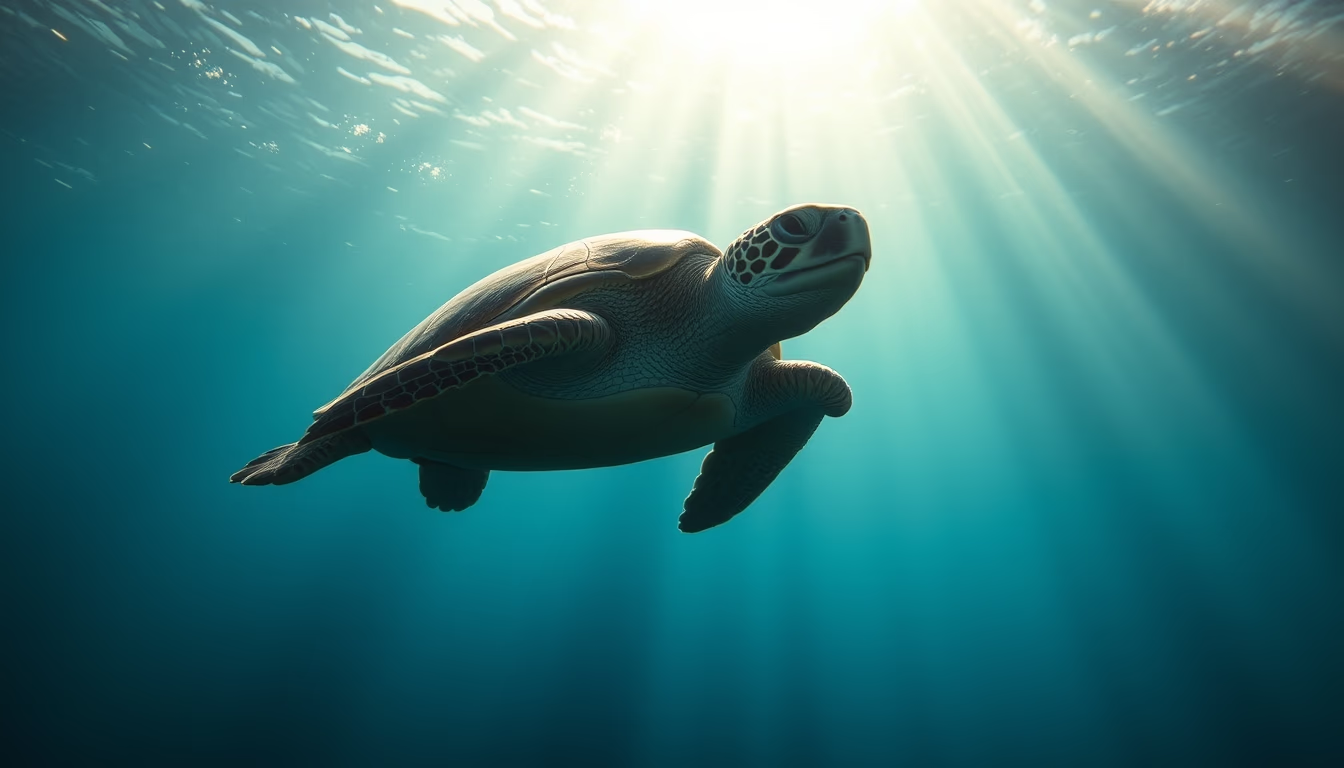
Tartaruga marinha nada em raios solares, um espetáculo natural que revela a graça e a vulnerabilidade desses animais. A luz do sol penetra as águas tropicais, destacando a silhueta do casco e as nadadeiras, enquanto o animal busca alimento ou se desloca entre corais.
Sobre o tema
As tartarugas marinhas são répteis que habitam os oceanos há mais de 100 milhões de anos, sobrevivendo a extinções em massa e adaptando-se a diferentes ambientes marinhos. Existem sete espécies no mundo, das quais cinco ocorrem no Brasil: a tartaruga-cabeçuda (Caretta caretta), a tartaruga-verde (Chelonia mydas), a tartaruga-de-pente (Eretmochelys imbricata), a tartaruga-oliva (Lepidochelys olivacea) e a tartaruga-de-couro (Dermochelys coriacea). Cada espécie possui hábitos alimentares específicos: enquanto a tartaruga-verde se alimenta principalmente de algas e ervas marinhas, a tartaruga-de-pente consome esponjas, contribuindo para o equilíbrio dos recifes de coral.
O comportamento de natação das tartarugas marinhas é influenciado pela temperatura da água, disponibilidade de alimentos e ciclo reprodutivo. Elas podem migrar milhares de quilômetros entre áreas de alimentação e desova. As fêmeas retornam às mesmas praias onde nasceram para depositar seus ovos, um fenômeno conhecido como filopatria. A luz solar desempenha um papel crucial na orientação dos filhotes recém-nascidos, que se dirigem ao mar guiados pelo reflexo da lua e das estrelas na água. Infelizmente, a poluição luminosa nas zonas costeiras desorienta os filhotes, aumentando a mortalidade.
As principais ameaças às tartarugas marinhas incluem a pesca acidental (bycatch), a ingestão de plásticos, a degradação de habitats de desova e as mudanças climáticas, que afetam a temperatura das praias e a proporção de sexos dos filhotes. No Brasil, projetos como o Tamar (Tartarugas Marinhas) atuam desde 1980 na proteção das áreas de desova, monitoramento de praias e educação ambiental. Apesar dos avanços, todas as espécies brasileiras estão em algum grau de ameaça de extinção. A observação responsável de tartarugas marinhas em seu habitat natural, como em mergulhos em Fernando de Noronha ou Abrolhos, requer distância mínima e respeito ao animal.
Perguntas frequentes
Por que as tartarugas marinhas vêm à superfície para respirar?
As tartarugas marinhas são répteis que respiram ar atmosférico. Elas precisam subir à superfície periodicamente para encher os pulmões. Durante o nado, podem prender a respiração por várias horas, especialmente quando estão descansando ou dormindo.
O que as tartarugas marinhas comem?
A dieta varia conforme a espécie. A tartaruga-verde é herbívora, alimentando-se de algas e ervas marinhas. A tartaruga-de-pente come esponjas e invertebrados. Já a cabeçuda e a oliva são carnívoras, consumindo caranguejos, moluscos e águas-vivas.
Como podemos ajudar na conservação das tartarugas marinhas?
Podemos reduzir o uso de plásticos descartáveis, apoiar projetos de conservação como o Tamar, evitar iluminação artificial em praias de desova, não perturbar ninhos e participar de ações de limpeza de praias.
URL direta
https://pub-c7d6a6ea828543ac903a74a341ccb2e1.r2.dev/imagens/sea-turtle-swimming-sun-rays-high-fashion-editorial-p0.avifComo creditar
Inclua um link visível de volta pro UtilizAí. Copie um dos snippets abaixo:
<a href="https://xn--utiliza-eza.com/midia/imagens/sea-turtle-swimming-sun-rays-high-fashion-editorial-p0">Sea turtle swimming sun rays</a> by <a href="https://xn--utiliza-eza.com">UtilizAí</a>, licensed under <a href="https://creativecommons.org/licenses/by/4.0/">CC BY 4.0</a>.
[Sea turtle swimming sun rays](https://xn--utiliza-eza.com/midia/imagens/sea-turtle-swimming-sun-rays-high-fashion-editorial-p0) by [UtilizAí](https://xn--utiliza-eza.com), CC BY 4.0
Licença: CC-BY-4.0