Scuba tank yellow stand
1344×768 · AVIF · CC BY 4.0
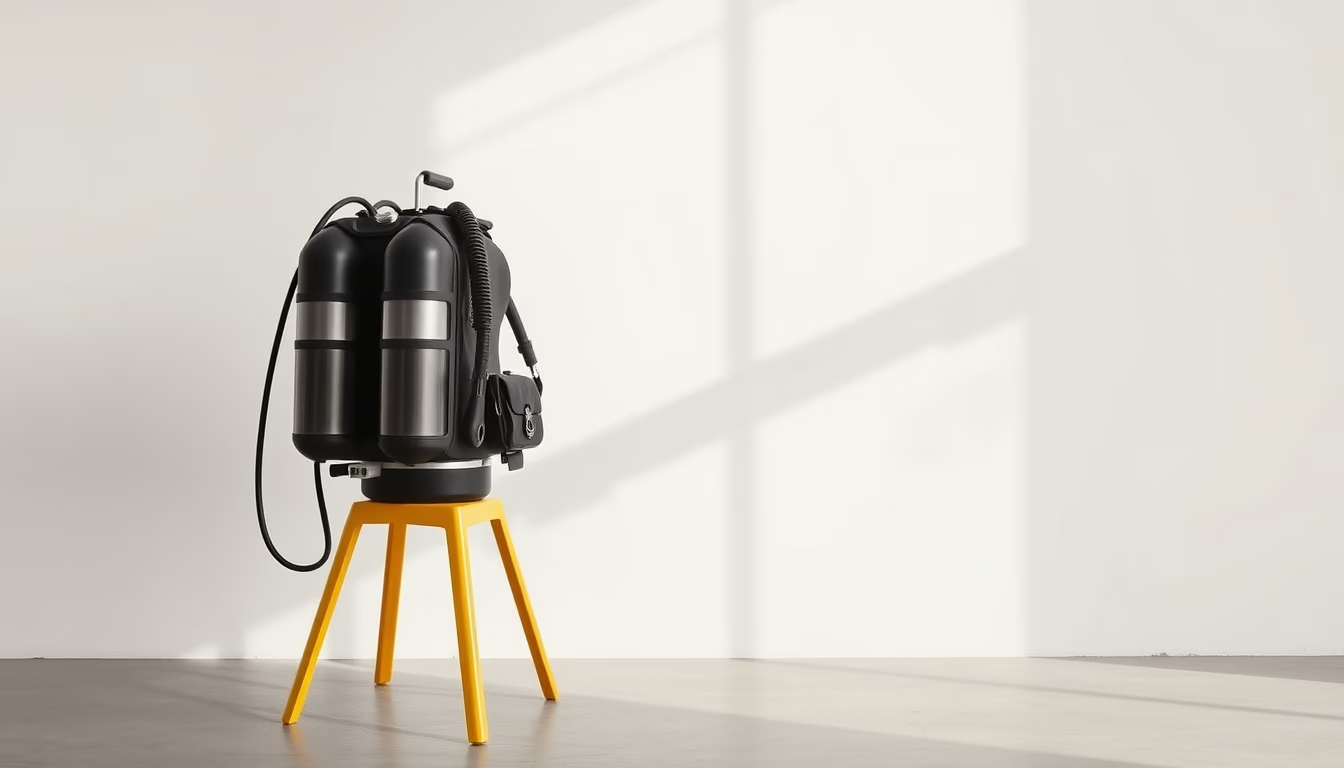
Scuba tank on yellow stand: essential equipment for safety and convenience in autonomous diving.
About this subject
The scuba tank, also known as a diving cylinder, is the core component of autonomous diving equipment. It stores compressed air or breathing mixtures (such as Nitrox or Trimix) at high pressure, typically between 200 and 300 bar. The choice of material varies: steel or aluminum. Aluminum tanks are lighter and more corrosion-resistant, while steel tanks are more durable and offer better negative buoyancy. In Brazil, aluminum cylinders are common in dive schools due to their cost-effectiveness.
The yellow stand highlighted in the composition is not merely an aesthetic detail. It is part of an organization and safety system at dive centers, boats, or fill stations. Vibrant colors like yellow are used for quick identification, especially in low-light environments or to signal full tanks. In many operators, a yellow stand indicates the cylinder is ready for use, while red may signal empty or under maintenance. This visual standardization reduces the risk of human error.
Cylinder maintenance follows strict standards, such as Brazilian NBR 12791 and US DOT regulations. Hydrostatic tests are mandatory every five years to check structural integrity. Additionally, a visual internal inspection (VIP) must be performed annually. The cylinder valve, usually made of chromed brass, connects to the first stage of the regulator. It is crucial that the O-ring is in good condition to prevent leaks.
Interestingly, yellow is also associated with pure oxygen in some medical contexts, but in diving, oxygen cylinders have specific identification (usually green). The contrast between the yellow stand and the gray or black cylinder facilitates location on boat decks. In minimalist compositions, as suggested by the tags, the focus is on form and function, celebrating the utilitarian design of diving.
Frequently Asked Questions
What is the working pressure of a scuba tank?
Typical working pressure ranges from 200 to 300 bar, depending on the material and manufacturer. Aluminum cylinders usually operate at 200 bar, while steel cylinders can reach 300 bar.
Why are cylinder stands color-coded?
Standardized colors help in quick status identification. Yellow usually indicates a full cylinder ready for use, while red may indicate empty or under maintenance.
How often does the cylinder need inspection?
A visual internal inspection (VIP) must be performed annually. A hydrostatic test, which checks structural integrity, is mandatory every five years.
Direct URL
https://pub-c7d6a6ea828543ac903a74a341ccb2e1.r2.dev/imagens/scuba-tank-yellow-stand-minimalist-composition-fresh9.avifHow to credit
Include a visible link back to UtilizAí. Copy one of the snippets below:
<a href="https://xn--utiliza-eza.com/en/midia/imagens/scuba-tank-yellow-stand-minimalist-composition-fresh9">Scuba tank yellow stand</a> by <a href="https://xn--utiliza-eza.com">UtilizAí</a>, licensed under <a href="https://creativecommons.org/licenses/by/4.0/">CC BY 4.0</a>.
[Scuba tank yellow stand](https://xn--utiliza-eza.com/en/midia/imagens/scuba-tank-yellow-stand-minimalist-composition-fresh9) by [UtilizAí](https://xn--utiliza-eza.com), CC BY 4.0
License: CC-BY-4.0