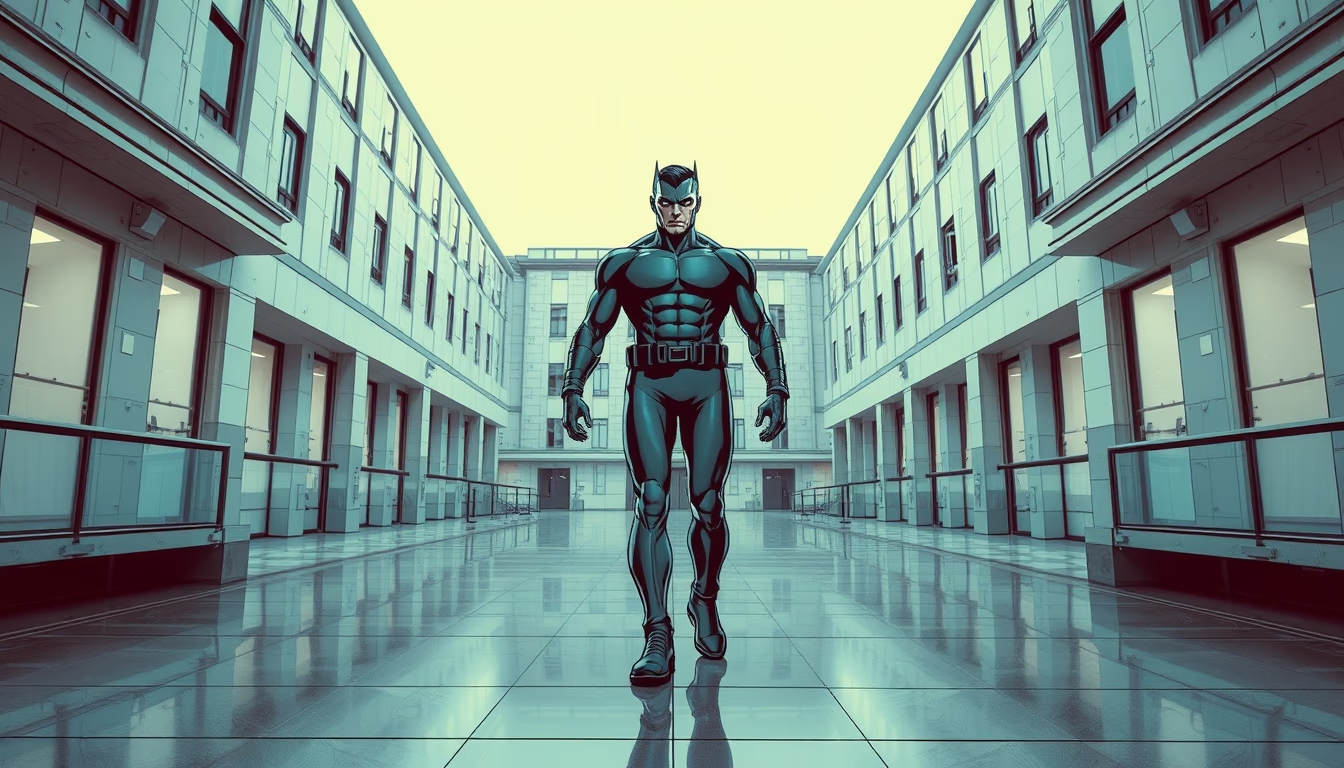
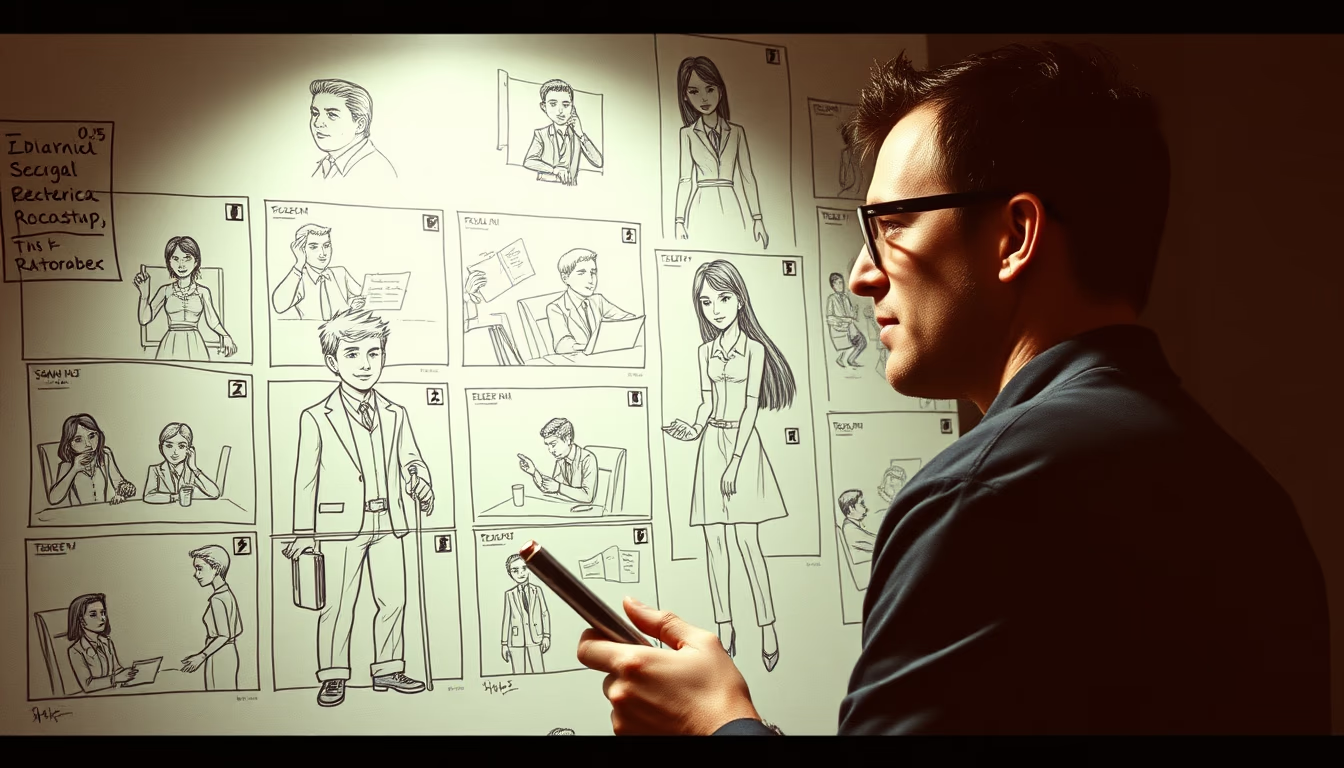
Screentone manga texture
1344×768 · AVIF · CC BY 4.0
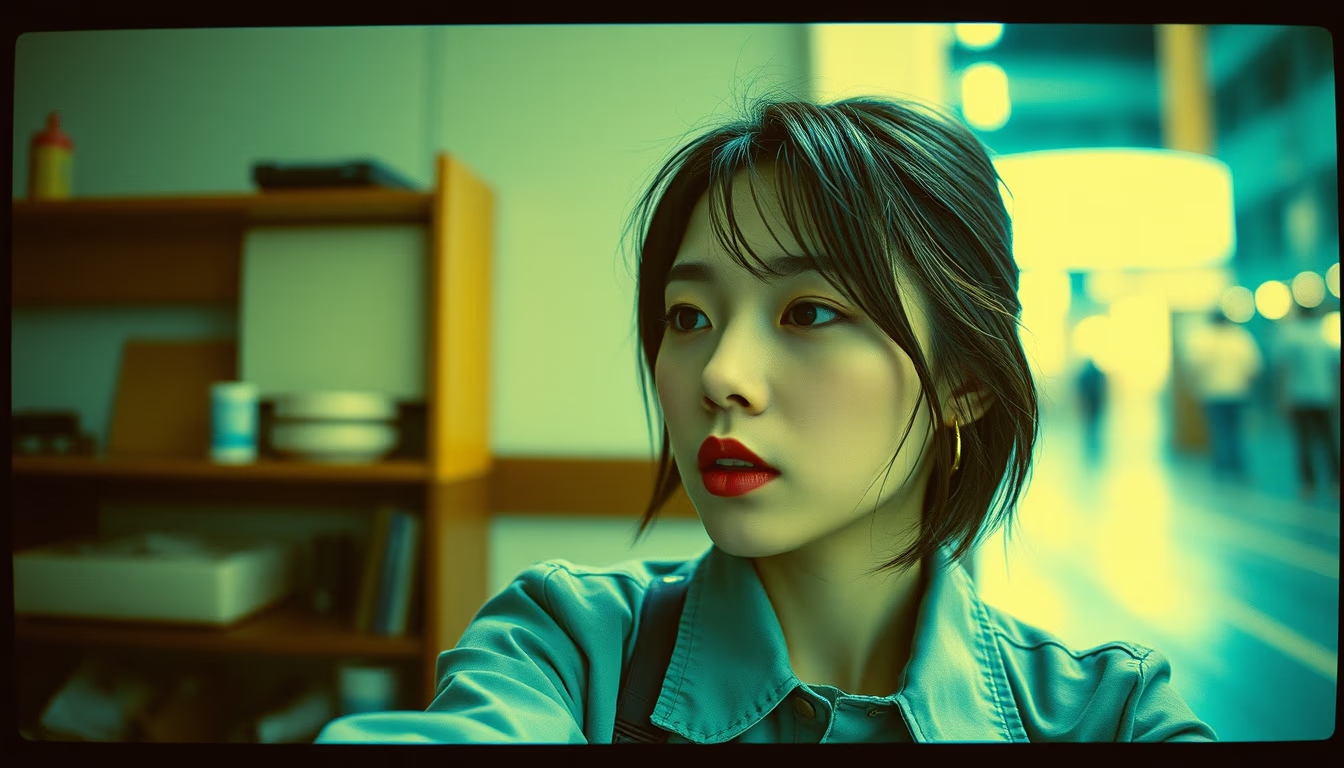
Screentone is a halftone technique used in manga to create shading and textures, composed of dot patterns that simulate gray tones.
About this subject
Screentone consists of adhesive transfer sheets pre-printed with patterns of dots, lines, or textures, used by manga artists to add shading and textures quickly and consistently. Introduced in Japan in the 1960s, screentone became an industry standard, allowing continuous tones without manual hatching. The sheets are applied over ink drawings, cut to shape, and pressed to adhere. Patterns vary in density, measured as a percentage (10%, 20%, 50%), and include types such as dot, tone, mezzotint, and diagonal lines.
Screentone's cultural significance in manga is immense: legendary artists like Osamu Tezuka and Rumiko Takahashi used it extensively to add depth and atmosphere to their works. Even with the rise of digital tools, many mangaka still prefer physical screentone for its organic and unpredictable texture. The technique is also popular in indie manga and fanzines worldwide, including in Brazil, where artists import sheets or create handmade alternatives.
Interesting facts: screentone can be layered to create gradient effects or complex patterns. The brand Letraset pioneered production, but today Japanese companies like Deleter dominate the market. Each sheet has a specific number to identify pattern and density. In digital workflows, screentone is simulated with filters and brushes, but many artists miss the randomness of physical sheets, which avoids mechanical repetition of dots.
Frequently Asked Questions
How do you apply screentone in a manga?
To apply screentone, draw the ink outlines, select a sheet with the desired pattern, cut a piece larger than the area, place it over the drawing, and press with a stylus or spatula. Then cut the excess with a craft knife following the contours.
What is the difference between physical and digital screentone?
Physical screentone is an adhesive sheet with printed pattern, offering organic texture and random variations. Digital screentone is software-generated, allowing infinite adjustments of density and scale, but may appear too uniform and artificial to some artists.
Why is screentone so commonly used in manga?
Screentone allows adding shading and textures quickly and consistently, saving time compared to manual hatching. It also creates a characteristic manga look with smooth tones and gradients that would be difficult to reproduce by hand.
Direct URL
https://pub-c7d6a6ea828543ac903a74a341ccb2e1.r2.dev/imagens/screentone-manga-texture-lo-fi-disposable-camera-fresh14.avifHow to credit
Include a visible link back to UtilizAí. Copy one of the snippets below:
<a href="https://xn--utiliza-eza.com/en/midia/imagens/screentone-manga-texture-lo-fi-disposable-camera-fresh14">Screentone manga texture</a> by <a href="https://xn--utiliza-eza.com">UtilizAí</a>, licensed under <a href="https://creativecommons.org/licenses/by/4.0/">CC BY 4.0</a>.
[Screentone manga texture](https://xn--utiliza-eza.com/en/midia/imagens/screentone-manga-texture-lo-fi-disposable-camera-fresh14) by [UtilizAí](https://xn--utiliza-eza.com), CC BY 4.0
License: CC-BY-4.0