Satellite in orbit earth blue
1344×768 · AVIF · CC BY 4.0
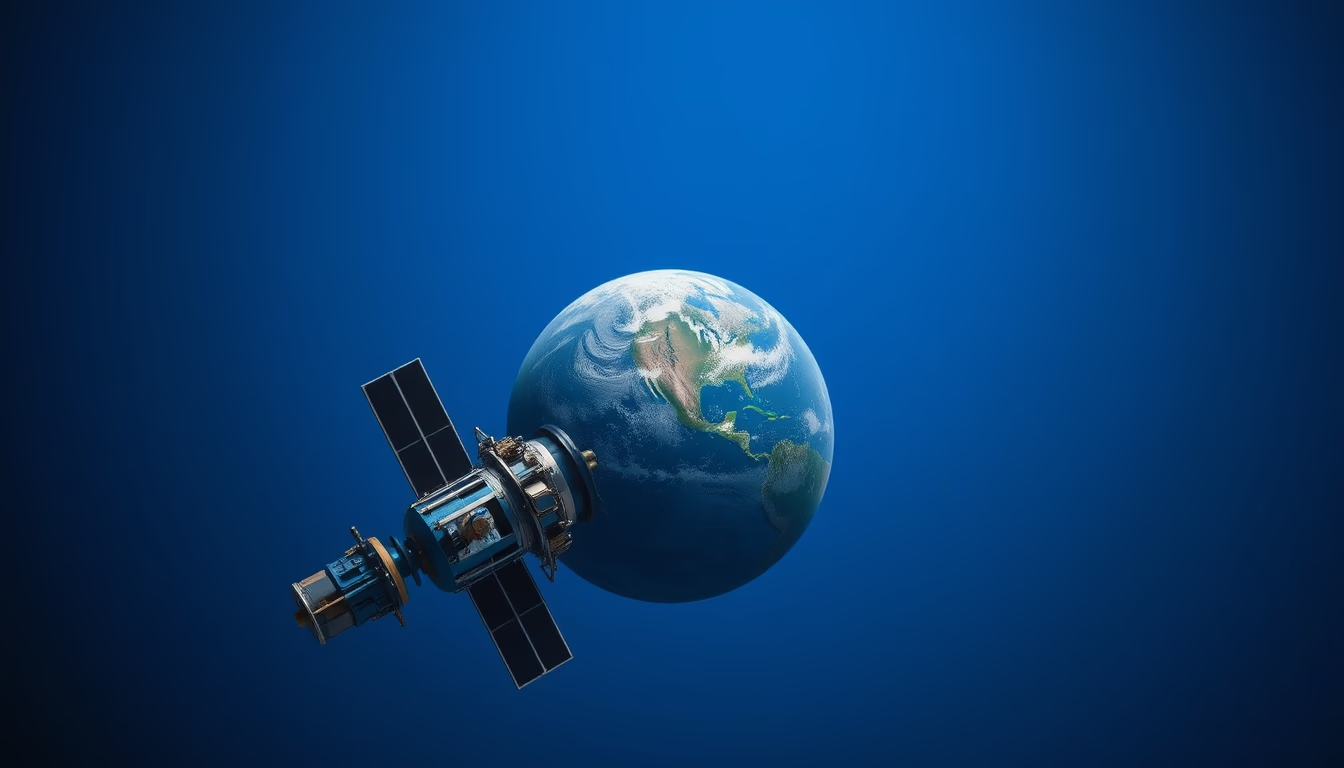
Satélites artificiais em órbita terrestre desempenham funções cruciais como comunicação, observação climática e navegação, com mais de 8.000 lançados desde 1957.
Sobre o tema
Desde o lançamento do Sputnik 1 pela União Soviética em 4 de outubro de 1957, mais de 8.000 satélites artificiais foram colocados em órbita terrestre. Atualmente, cerca de 5.000 ainda estão em operação, distribuídos em diferentes altitudes e inclinações. A maioria desses equipamentos ocupa a órbita baixa da Terra (LEO), localizada entre 160 e 2.000 quilômetros de altitude, onde se concentram satélites de observação remota, como os da série Landsat, e constelações de internet como a Starlink. A órbita geoestacionária (GEO), a aproximadamente 35.786 km, abriga satélites de telecomunicações e meteorológicos, como os da série GOES, que permanecem fixos sobre um ponto da superfície. Já a órbita elíptica de Molniya é usada por satélites russos para cobrir altas latitudes. Os satélites desempenham papéis essenciais no monitoramento de mudanças climáticas, previsão do tempo, GPS, transmissão de TV e internet banda larga. O Brasil possui satélites próprios, como o SCD-1 (lançado em 1993) e o CBERS-4A, desenvolvido em parceria com a China, que fornecem imagens para agricultura e desmatamento. A poluição espacial é uma preocupação crescente: estima-se que haja mais de 34.000 fragmentos maiores que 10 cm em órbita, representando riscos de colisão. Para mitigar esse problema, novas diretrizes internacionais recomendam que satélites sejam removidos da órbita em até 25 anos após o fim de sua vida útil.
Perguntas frequentes
Quantos satélites estão em órbita atualmente?
Cerca de 5.000 satélites estão operacionais, mas mais de 8.000 já foram lançados ao todo. A maioria está na órbita baixa da Terra (LEO).
Qual a diferença entre órbita baixa e geoestacionária?
Órbita baixa (LEO) fica entre 160 e 2.000 km de altura, usada para observação e internet. A órbita geoestacionária (GEO) fica a 35.786 km, onde satélites acompanham a rotação da Terra, sendo ideais para comunicações e meteorologia.
O Brasil possui satélites próprios?
Sim, o Brasil tem satélites como o SCD-1 (lançado em 1993) e o CBERS-4A, em parceria com a China, usados para monitoramento ambiental e agrícola.
URL direta
https://pub-c7d6a6ea828543ac903a74a341ccb2e1.r2.dev/imagens/satellite-in-orbit-earth-blue-studio-editorial-portrait-p2.avifComo creditar
Inclua um link visível de volta pro UtilizAí. Copie um dos snippets abaixo:
<a href="https://xn--utiliza-eza.com/midia/imagens/satellite-in-orbit-earth-blue-studio-editorial-portrait-p2">Satellite in orbit earth blue</a> by <a href="https://xn--utiliza-eza.com">UtilizAí</a>, licensed under <a href="https://creativecommons.org/licenses/by/4.0/">CC BY 4.0</a>.
[Satellite in orbit earth blue](https://xn--utiliza-eza.com/midia/imagens/satellite-in-orbit-earth-blue-studio-editorial-portrait-p2) by [UtilizAí](https://xn--utiliza-eza.com), CC BY 4.0
Licença: CC-BY-4.0