Sacsayhuamán cusco
1344×768 · AVIF · CC BY 4.0
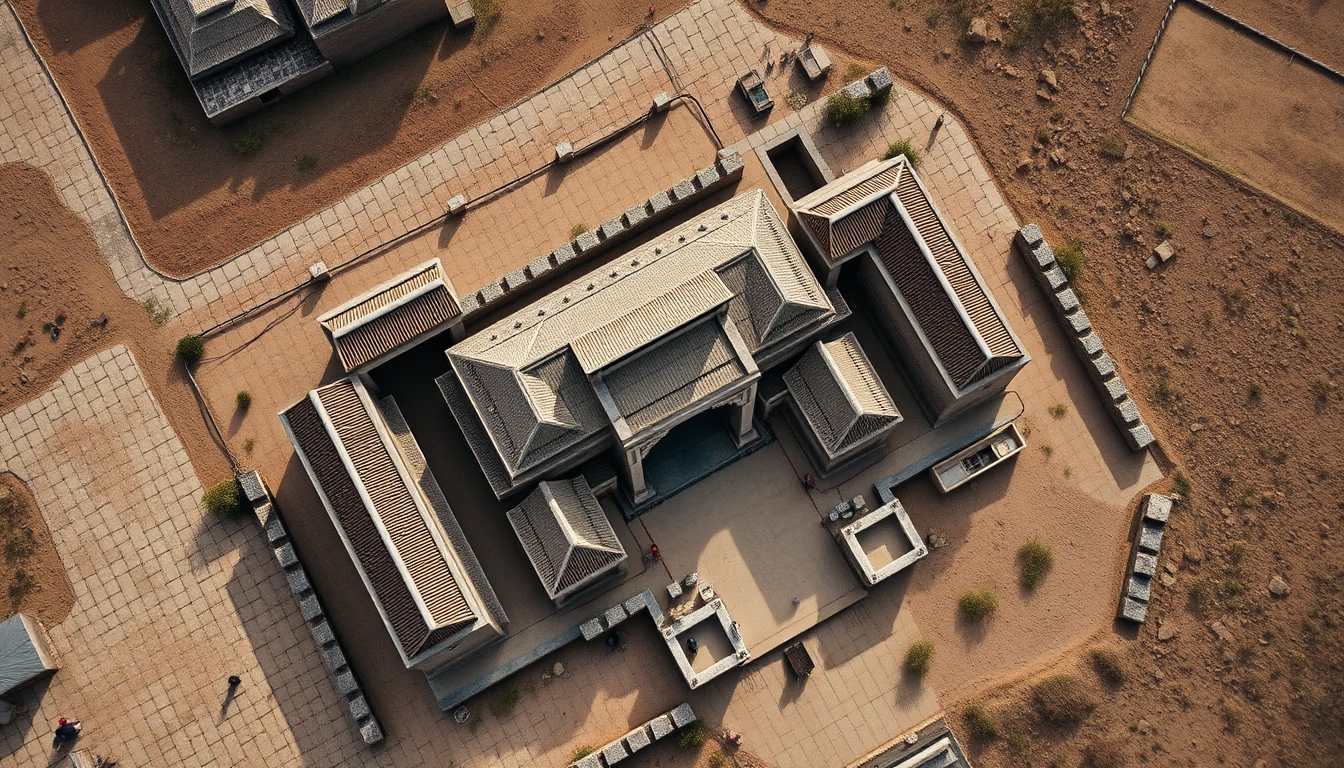
Sacsayhuamán is an Inca ceremonial fortress near Cusco, Peru, famous for its massive stone blocks fitted with millimeter precision.
About this subject
Sacsayhuamán, whose Quechua name means 'satiated falcon', is one of the most impressive archaeological sites of the Inca Empire. Located about 2 km from the historic center of Cusco at 3,700 meters above sea level, the complex served both as a military fortress and a ceremonial center. Construction began around the 15th century under Emperor Pachacuti and continued under his successors. It is estimated that over 20,000 men worked on the site, dragging stones weighing up to 100 tons from distant quarries such as Huacoto, more than 15 km away. The stone fitting technique, without mortar, is so precise that a blade cannot be inserted between the blocks, enduring centuries of earthquakes. The total area is about 3,000 hectares, composed of zigzag walls, towers, gates, and aqueducts. Every year on June 24, Sacsayhuamán hosts Inti Raymi, the Festival of the Sun, a historical reenactment that draws thousands of tourists. In 1983, the site was declared a UNESCO World Heritage Site as part of the City of Cusco. Despite its fame, much of the original structure was dismantled by the Spanish to build colonial buildings in Cusco, leaving only 20% of what once existed. Even so, the remaining stones are a testament to the magnitude and engineering prowess of the Inca civilization.
Frequently Asked Questions
What does the name Sacsayhuamán mean?
Sacsayhuamán comes from Quechua sacsay (satiated) and huamán (falcon), meaning 'satiated falcon', referring to the shape of the site or the belief that falcons fed there.
What was the original function of Sacsayhuamán?
It was a multi-purpose complex: a military fortress to protect Cusco, a ceremonial center for religious rituals, and a storehouse for food and weapons.
How many people worked on the construction of Sacsayhuamán?
It is estimated that over 20,000 men participated, including workers brought from different regions of the Inca Empire under the mita system of mandatory labor.
Direct URL
https://pub-c7d6a6ea828543ac903a74a341ccb2e1.r2.dev/imagens/sacsayhuaman-cusco-isometric-flat-lay-p6.avifHow to credit
Include a visible link back to UtilizAí. Copy one of the snippets below:
<a href="https://xn--utiliza-eza.com/en/midia/imagens/sacsayhuaman-cusco-isometric-flat-lay-p6">Sacsayhuamán cusco</a> by <a href="https://xn--utiliza-eza.com">UtilizAí</a>, licensed under <a href="https://creativecommons.org/licenses/by/4.0/">CC BY 4.0</a>.
[Sacsayhuamán cusco](https://xn--utiliza-eza.com/en/midia/imagens/sacsayhuaman-cusco-isometric-flat-lay-p6) by [UtilizAí](https://xn--utiliza-eza.com), CC BY 4.0
License: CC-BY-4.0