Sacsayhuamán cusco
1344×768 · AVIF · CC BY 4.0
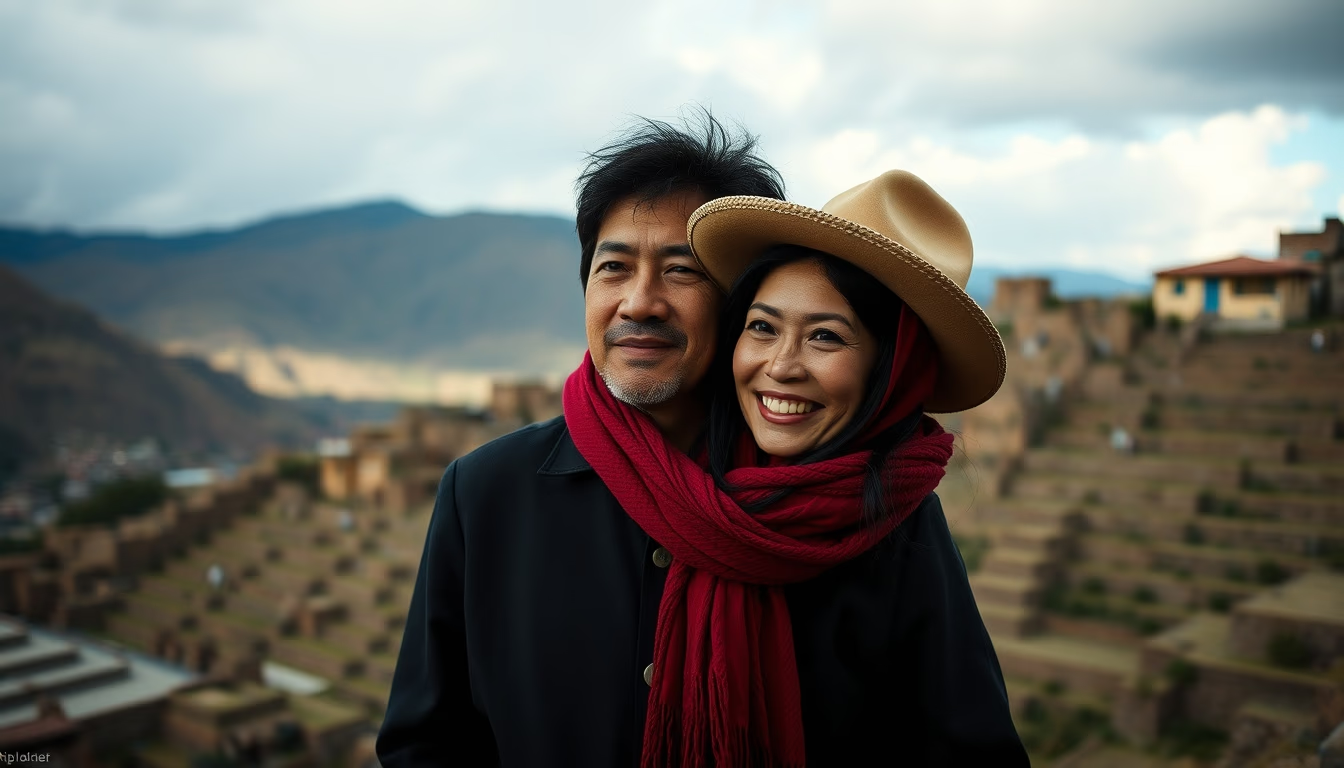
Sacsayhuamán, the impressive Inca fortress on the outskirts of Cusco, displays cyclopean stone walls perfectly fitted without mortar.
About this subject
Sacsayhuamán is an archaeological site located about 2 km from the historic center of Cusco, Peru. Built during the reign of Emperor Pachacuti (15th century), the complex served both as a fortress and a ceremonial center. Its most striking feature is the walls made of enormous stone blocks, some weighing over 100 tons, cut and fitted with millimeter precision without the use of mortar.
The stones were quarried from distant sources and transported by hundreds of workers using ropes, ramps, and levers. The irregular polygonal shape of the blocks, with up to 12 faces, ensured seismic stability and resistance to earthquakes, common in the region. The three zigzag walls dominating the site form a unique defensive structure, with angles that confused attackers and allowed better visual control.
Beyond its military role, Sacsayhuamán held religious significance. During the Inti Raymi, the Inca festival of the sun, the site hosted ceremonies that gathered thousands of people. The Spanish, after the conquest, dismantled parts of the constructions to erect buildings in Cusco, but the original stonework preserves the awe of Inca engineering.
In 1983, Sacsayhuamán was declared a UNESCO World Heritage site as part of the city of Cusco. Today, it is one of the most visited tourist attractions in Peru, drawing travelers interested in Andean construction technology and the history of the Inca Empire.
Frequently Asked Questions
Why do the stones at Sacsayhuamán fit so perfectly?
The stones were individually carved through abrasion and polishing with sand and water, fitting together like a three-dimensional puzzle. The irregular polygonal interlocking distributed weight evenly, making the walls extremely earthquake-resistant.
How did the Incas transport stones weighing over 100 tons?
It is believed that the Incas used ramps, levers, and plant-fiber ropes, along with coordinated human labor. Smaller stones could be rolled on logs, while larger ones were dragged by hundreds of men on wet surfaces to reduce friction.
Was Sacsayhuamán only a fortress, or did it have other uses?
Besides being a fortress, the site functioned as a ceremonial center, especially during the Inti Raymi. Its strategic location also allowed control of the surrounding valleys and defense of Cusco, the empire's capital.
Direct URL
https://pub-c7d6a6ea828543ac903a74a341ccb2e1.r2.dev/imagens/sacsayhuaman-cusco-film-grain-authentic-p2.avifHow to credit
Include a visible link back to UtilizAí. Copy one of the snippets below:
<a href="https://xn--utiliza-eza.com/en/midia/imagens/sacsayhuaman-cusco-film-grain-authentic-p2">Sacsayhuamán cusco</a> by <a href="https://xn--utiliza-eza.com">UtilizAí</a>, licensed under <a href="https://creativecommons.org/licenses/by/4.0/">CC BY 4.0</a>.
[Sacsayhuamán cusco](https://xn--utiliza-eza.com/en/midia/imagens/sacsayhuaman-cusco-film-grain-authentic-p2) by [UtilizAí](https://xn--utiliza-eza.com), CC BY 4.0
License: CC-BY-4.0