Running shoes on track
1344×768 · AVIF · CC BY 4.0
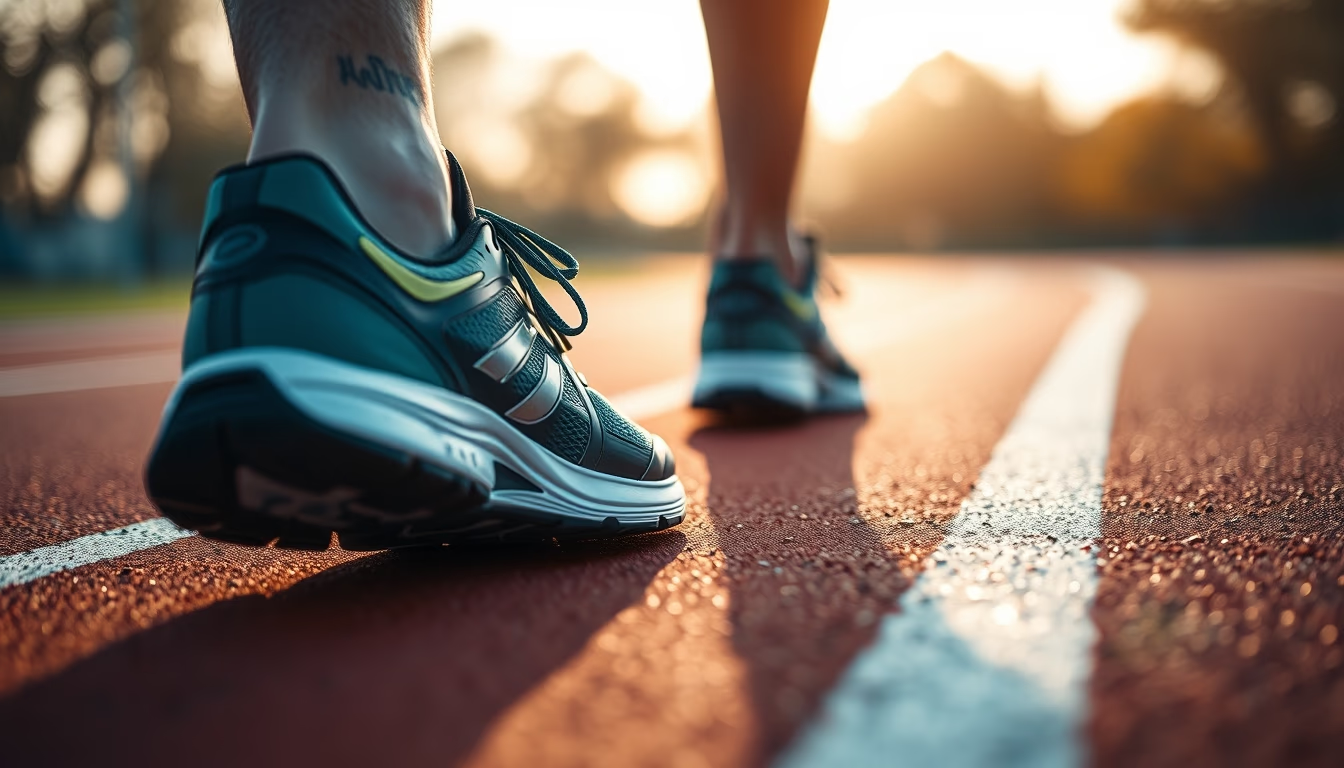
Running shoes on track: sole and cushioning details that enhance performance and prevent injuries.
About this subject
Running shoes are technical footwear designed to optimize stride and absorb impact. On athletic tracks, the choice of model directly influences efficiency and comfort. Categories include neutral, stability, and motion control shoes, each suited to different pronation types and arch heights. The outsole, often with spikes or grooves, ensures traction on synthetic or dirt tracks. Cushioning, made from foams like EVA or technologies such as Nike Air and Adidas Boost, dissipates impact forces, reducing stress on joints.
The history of running shoes dates back to the 1970s, with Bill Bowerman's waffle sole and the Nike Cortez. Evolution has included carbon fiber plates, breathable mesh, and lacing systems like Flywire. On tracks, elite athletes use spike shoes for maximum grip in sprints, while amateur runners prefer cushioned models for long training runs.
Interestingly, the drop (heel-to-toe offset) affects biomechanics: high drops (10-12 mm) favor heel strikers, while low drops (0-4 mm) encourage midfoot striking. Proper care, such as avoiding machine washing and replacing after 500-800 km, extends lifespan and preserves cushioning properties.
Frequently Asked Questions
What is the difference between running shoes for track and road?
Track shoes often have outsoles with spikes or aggressive grooves for traction on synthetic surfaces, while road shoes have flatter, more durable outsoles for concrete. Cushioning also differs: synthetic tracks are softer, allowing less cushioning.
How to choose the right shoe for track training?
Consider your foot strike pattern (pronation, supination, or neutral) and training volume. Stability models help correct overpronation. For interval training, choose lightweight, responsive shoes; for long runs, prioritize cushioning.
What does drop mean in running shoes?
Drop is the height difference between heel and forefoot. High drops (10-12 mm) are common in traditional shoes, encouraging heel striking. Low drops (0-4 mm) promote a more natural midfoot or forefoot strike.
Direct URL
https://pub-c7d6a6ea828543ac903a74a341ccb2e1.r2.dev/imagens/running-shoes-on-track-macro-closeup-p2.avifHow to credit
Include a visible link back to UtilizAí. Copy one of the snippets below:
<a href="https://xn--utiliza-eza.com/en/midia/imagens/running-shoes-on-track-macro-closeup-p2">Running shoes on track</a> by <a href="https://xn--utiliza-eza.com">UtilizAí</a>, licensed under <a href="https://creativecommons.org/licenses/by/4.0/">CC BY 4.0</a>.
[Running shoes on track](https://xn--utiliza-eza.com/en/midia/imagens/running-shoes-on-track-macro-closeup-p2) by [UtilizAí](https://xn--utiliza-eza.com), CC BY 4.0
License: CC-BY-4.0