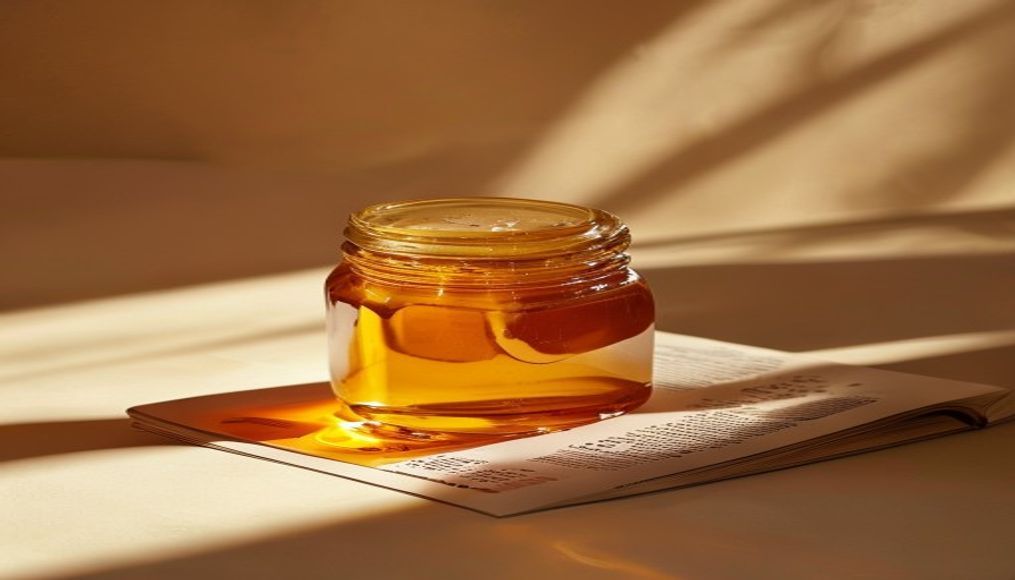
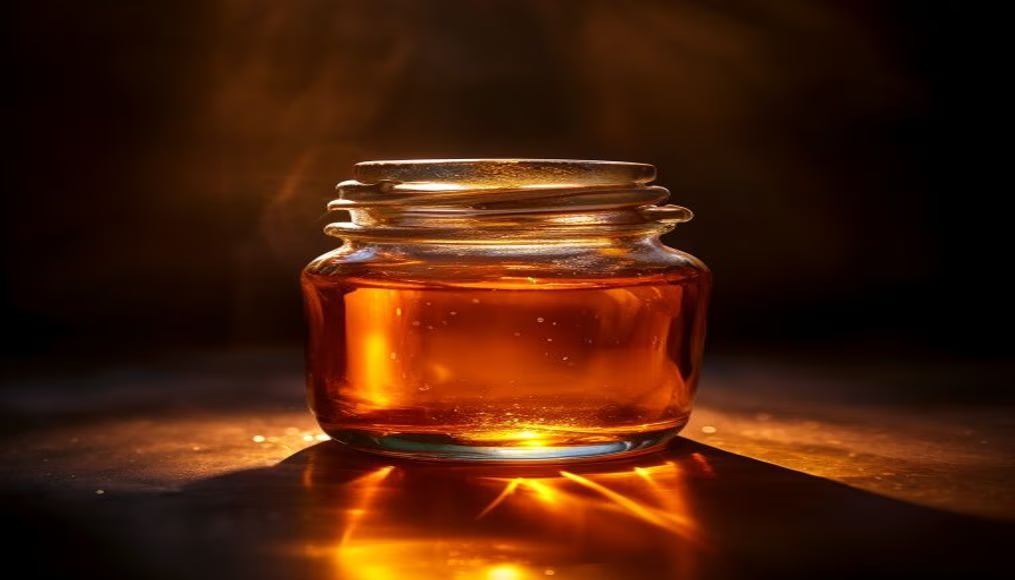
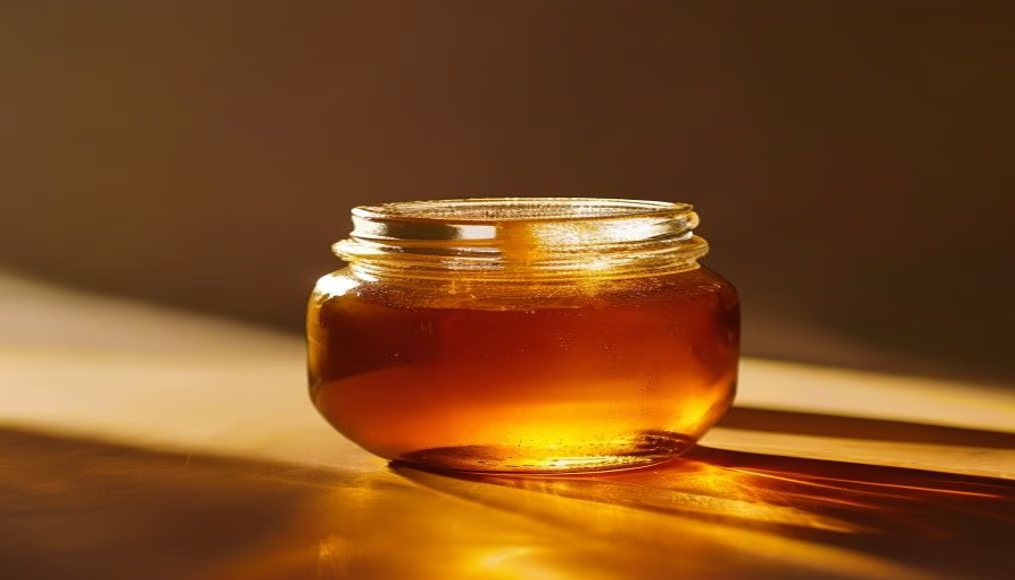
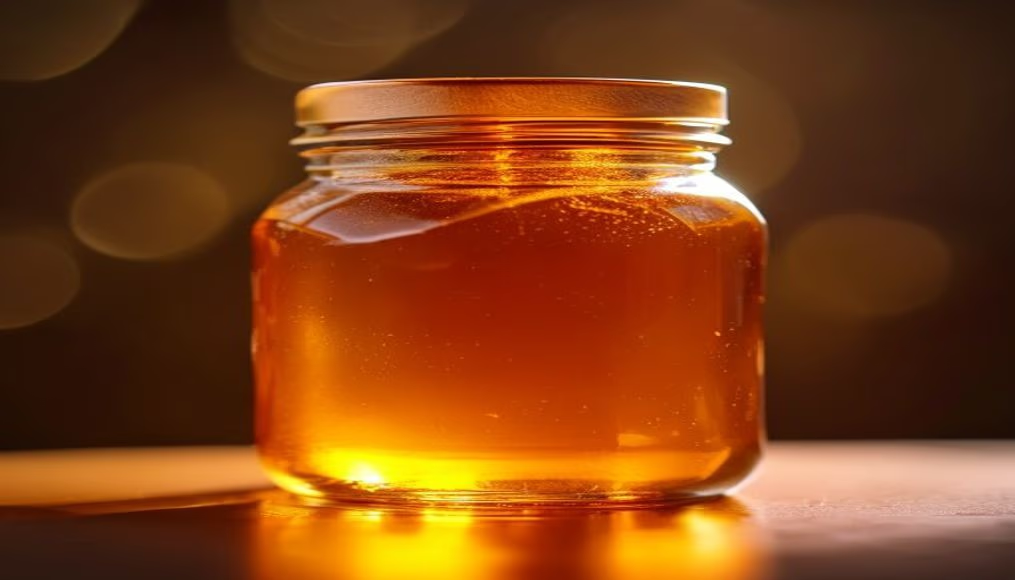
Ruby red gemstone
1344×768 · AVIF · CC BY 4.0
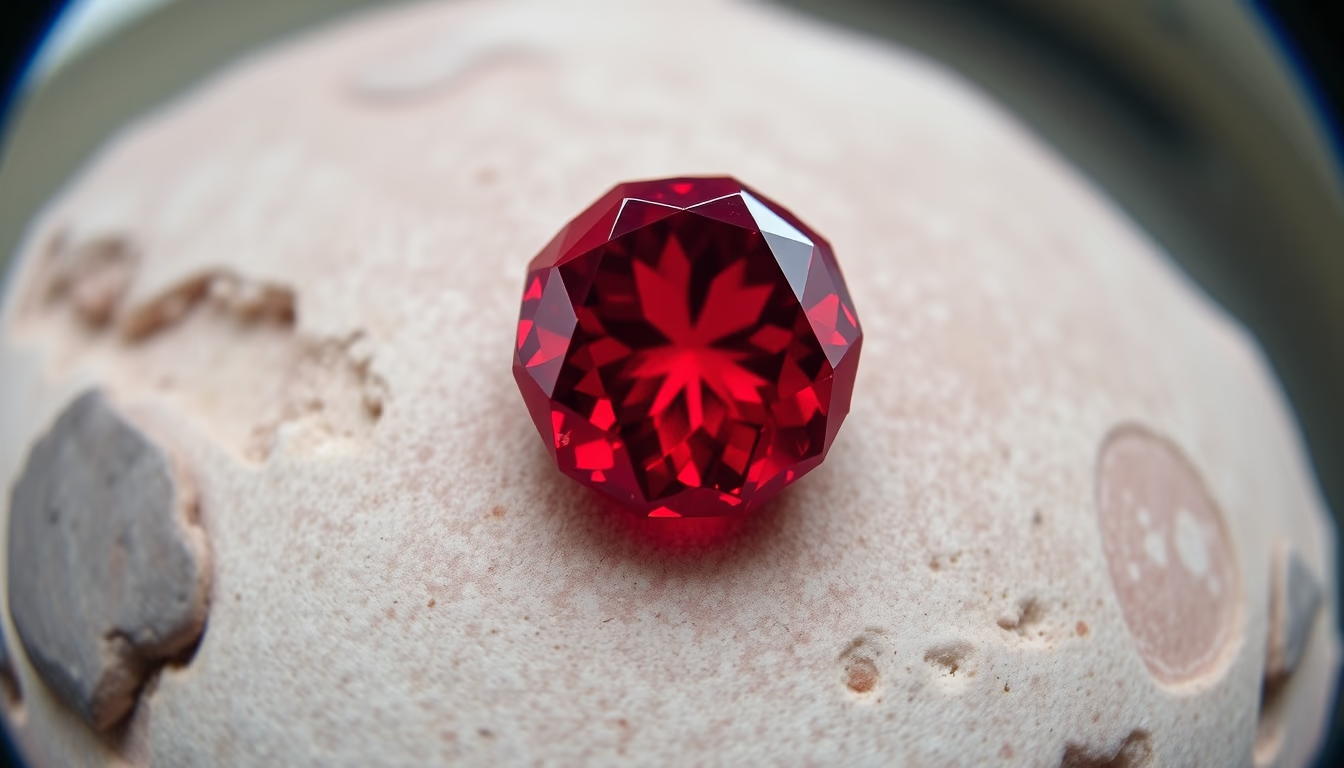
Ruby is a red variety of corundum, one of the hardest minerals on Earth, with a hardness of 9 on the Mohs scale.
About this subject
Ruby is one of the four traditional precious gemstones, alongside diamond, emerald, and sapphire. Its intense red coloration is caused by the presence of chromium in the crystal structure of corundum (Al2O3). The stronger and more vibrant the red, the higher the gem's value. The most coveted shade is "pigeon's blood," a pure red with a slight bluish undertone, mainly found in deposits from Myanmar (formerly Burma).
Major sources of ruby include Myanmar, Thailand, Sri Lanka, Tanzania, and Madagascar. The famous Mogok Valley in Myanmar is historically the source of the finest rubies. In addition to chromium, the presence of iron can influence the hue, resulting in orangish or brownish tints. Natural rubies often contain inclusions, such as rutile needles, which can create a silk or star effect (asterism) when cut as cabochons.
Ruby symbolizes passion, protection, and prosperity in many cultures. It is the birthstone for July and also associated with the 15th and 40th wedding anniversaries. Throughout history, rubies have been coveted by kings and emperors. In ancient India, they were believed to grant invincibility to their wearers. Today, synthetic rubies are produced by methods such as flame fusion (Verneuil), used in jewelry and technological applications like ruby lasers.
Most rubies on the market undergo heat treatment to improve color and clarity. Heating at high temperatures is an accepted and common practice. Untreated rubies of exceptional quality are extremely rare and fetch record prices at auctions. The "Sunrise Ruby," a 25.59-carat ruby from Myanmar, sold for over 30 million dollars, setting a world record.
Frequently Asked Questions
What determines the color of a ruby?
The red color of ruby is caused by the presence of chromium in the corundum structure. The intensity and hue depend on the amount of chromium and the presence of other elements like iron.
Are synthetic rubies different from natural ones?
Synthetic rubies have the same chemical composition and crystal structure as natural ones, but are created in a lab. They are more affordable and may have higher clarity, but lack the rarity of natural gems.
How can I tell if a ruby is real?
Professional identification involves gemological tests such as refractometry and microscopy. Natural rubies typically show characteristic inclusions. Common heat treatments can be detected by specialized laboratories.
Direct URL
https://pub-c7d6a6ea828543ac903a74a341ccb2e1.r2.dev/imagens/ruby-red-gemstone-fish-eye-wide-angle-p2.avifHow to credit
Include a visible link back to UtilizAí. Copy one of the snippets below:
<a href="https://xn--utiliza-eza.com/en/midia/imagens/ruby-red-gemstone-fish-eye-wide-angle-p2">Ruby red gemstone</a> by <a href="https://xn--utiliza-eza.com">UtilizAí</a>, licensed under <a href="https://creativecommons.org/licenses/by/4.0/">CC BY 4.0</a>.
[Ruby red gemstone](https://xn--utiliza-eza.com/en/midia/imagens/ruby-red-gemstone-fish-eye-wide-angle-p2) by [UtilizAí](https://xn--utiliza-eza.com), CC BY 4.0
License: CC-BY-4.0