Rowing machine modern gym
1344×768 · AVIF · CC BY 4.0
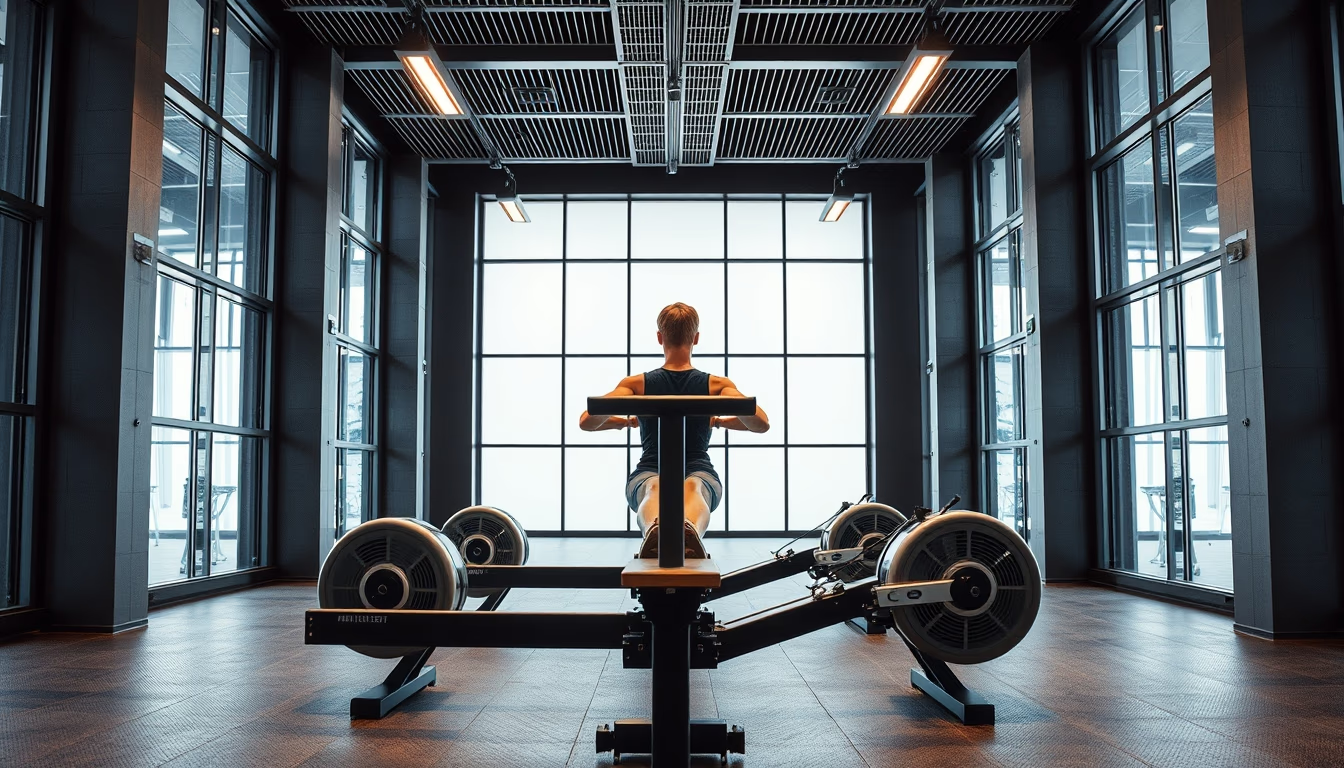
Rowing machine in a modern gym: a low-impact cardio equipment that simulates rowing, ideal for muscle strengthening and aerobic conditioning.
About this subject
The rowing machine is a cardio equipment that replicates the motion of rowing a boat. Popularized in gyms during the 1980s with the Concept2 model, it became a benchmark for providing a full-body workout. Unlike treadmills or exercise bikes, rowing engages legs, core, back, and arms simultaneously, burning up to 600 calories per hour at a moderate pace. Its smooth movement reduces joint impact, making it suitable for rehabilitation and elite athletes.
In modern gyms, rowing machines feature prominently in functional cardio areas. Models like the Concept2 RowErg and WaterRower offer adjustable air or water resistance, respectively. Workouts can be measured by power (watts), stroke rate, and distance covered. Many programs include high-intensity interval training (HIIT) to maximize cardiovascular fitness. Additionally, indoor rowing has been an Olympic sport since 1976, with regular world championships.
A notable fact: the world record for the 2,000-meter indoor rowing distance is about 5 minutes and 35 seconds for men, a test of extreme endurance. Beginners are advised to start with 10 to 15 minutes at a light pace, focusing on proper technique, initiate the pull with the legs, then lean the torso back, and finally pull the arms. The machine requires upright posture and a contracted core to avoid lower back injuries. In gyms, instructors often coach synchronized breathing: exhale during the pull, inhale during the recovery.
From an ergonomic standpoint, modern machines feature displays showing time, distance, calories, and heart rate. Some offer connectivity with training apps like ErgData, allowing virtual rowing on rivers or online competition with other users. Maintenance is simple: cleaning the rails and lubricating the chain or water tank (for water models). The cost of a gym-grade rowing machine ranges from $800 to $5,000, depending on technology and durability.
Frequently Asked Questions
Which muscles does the rowing machine work?
The rowing machine works about 85% of the body's muscles, including legs (quadriceps, hamstrings, and glutes), core (abs and lower back), back (lats and trapezius), shoulders, and arms (biceps and forearms). The integrated movement requires simultaneous coordination and strength.
Is the rowing machine better than the treadmill or exercise bike?
It is not necessarily better, but it offers a superior full-body workout. While the treadmill focuses more on legs and the bike emphasizes legs and glutes, rowing combines aerobic work with total muscle strengthening, with lower joint impact. The choice depends on individual goals.
What is the ideal frequency of using the rowing machine?
For beginners, 2 to 3 times per week with sessions of 15 to 20 minutes is enough for adaptation. Intermediate users can train 3 to 5 times per week, alternating between long steady sessions and intervals. Always respect rest days to avoid overuse injuries.
Direct URL
https://pub-c7d6a6ea828543ac903a74a341ccb2e1.r2.dev/imagens/rowing-machine-modern-gym-architectural-photography-p3.avifHow to credit
Include a visible link back to UtilizAí. Copy one of the snippets below:
<a href="https://xn--utiliza-eza.com/en/midia/imagens/rowing-machine-modern-gym-architectural-photography-p3">Rowing machine modern gym</a> by <a href="https://xn--utiliza-eza.com">UtilizAí</a>, licensed under <a href="https://creativecommons.org/licenses/by/4.0/">CC BY 4.0</a>.
[Rowing machine modern gym](https://xn--utiliza-eza.com/en/midia/imagens/rowing-machine-modern-gym-architectural-photography-p3) by [UtilizAí](https://xn--utiliza-eza.com), CC BY 4.0
License: CC-BY-4.0