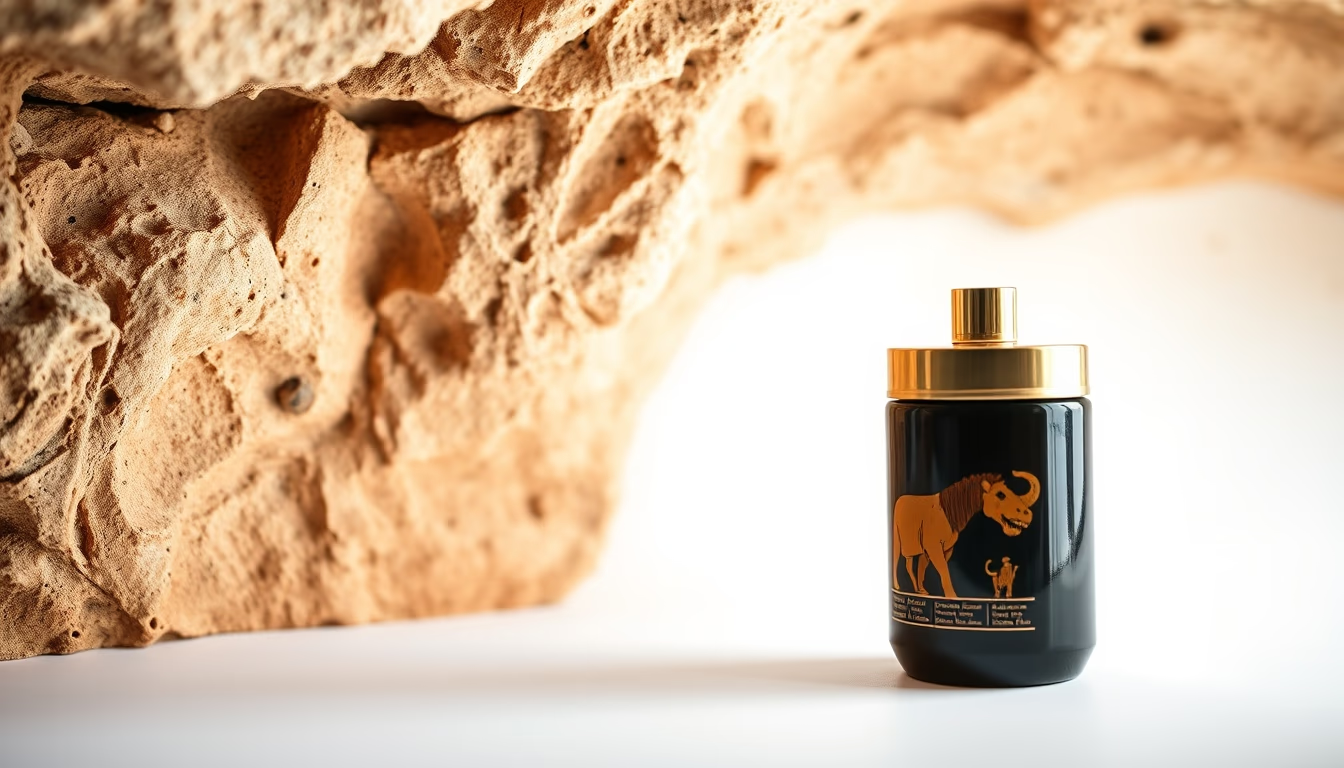
Rosetta stone
1344×768 · AVIF · CC BY 4.0

Rosetta Stone, discovered in 1799, was key to deciphering Egyptian hieroglyphs: granodiorite stele with three scripts.
About this subject
The Rosetta Stone is a fragment of a granodiorite stele dating from 196 BC, during the reign of Ptolemy V in Ptolemaic Egypt. The original stele stood about 1.5 meters tall and weighed approximately 760 kilograms. It was discovered in 1799 by French soldiers during Napoleon's campaign in Egypt, near the town of Rashid (Rosetta). The stone became famous for containing the same text in three different scripts: Egyptian hieroglyphs, Demotic script (a cursive form of late Egyptian), and Ancient Greek. This triple inscription allowed the French scholar Jean-François Champollion to decipher hieroglyphs in 1822, opening the way to understanding ancient Egyptian civilization. The Rosetta Stone has been on public display at the British Museum in London since 1802, despite repeated requests for repatriation by Egypt. The term "Rosetta Stone" has become a metaphor for any crucial key to decoding a complex problem. The stone is made of black granodiorite, with inscriptions worn by time. The decree inscribed on it established the divine cult of Ptolemy V and exempted temples from taxes. The decipherment process involved comparisons between the Greek and Demotic texts, culminating in Champollion's work, who was fluent in Coptic, a language derived from ancient Egyptian. The Rosetta Stone's significance extends beyond Egyptology, symbolizing humanity's ability to overcome linguistic barriers.
Frequently Asked Questions
Where is the Rosetta Stone currently housed?
The Rosetta Stone has been on display at the British Museum in London since 1802. Egypt has repeatedly requested its repatriation, but the museum claims it was legally acquired.
Why was the Rosetta Stone so crucial for deciphering hieroglyphs?
Because it contains the same text in Greek (already known), Demotic, and hieroglyphs, allowing direct comparison. Jean-François Champollion used these correspondences to unlock the hieroglyphic system.
What does the text on the Rosetta Stone say?
The text is a decree honoring Pharaoh Ptolemy V, establishing his divine cult and granting tax exemptions to temples. It was issued by priests in Memphis.
Direct URL
https://pub-c7d6a6ea828543ac903a74a341ccb2e1.r2.dev/imagens/rosetta-stone-tilt-shift-miniature-p0.avifHow to credit
Include a visible link back to UtilizAí. Copy one of the snippets below:
<a href="https://xn--utiliza-eza.com/en/midia/imagens/rosetta-stone-tilt-shift-miniature-p0">Rosetta stone</a> by <a href="https://xn--utiliza-eza.com">UtilizAí</a>, licensed under <a href="https://creativecommons.org/licenses/by/4.0/">CC BY 4.0</a>.
[Rosetta stone](https://xn--utiliza-eza.com/en/midia/imagens/rosetta-stone-tilt-shift-miniature-p0) by [UtilizAí](https://xn--utiliza-eza.com), CC BY 4.0
License: CC-BY-4.0