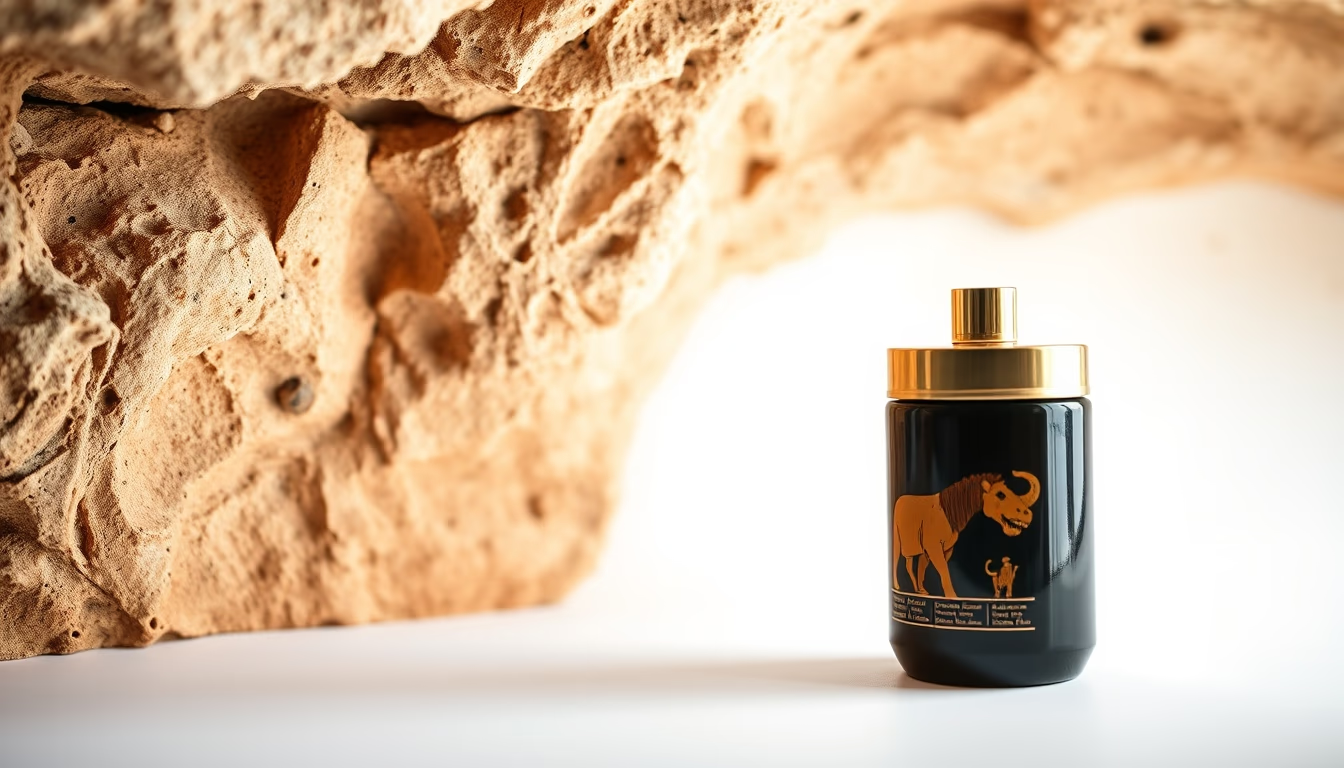
Rosetta stone
1344×768 · AVIF · CC BY 4.0

The Rosetta Stone, discovered in 1799, was key to deciphering Egyptian hieroglyphs and understanding Pharaonic civilization.
About this subject
The Rosetta Stone is a fragment of a granodiorite stele, carved in 196 BC during the reign of Ptolemy V Epiphanes. The text records a priestly decree in three different scripts: Egyptian hieroglyphs, Demotic, and Ancient Greek. This trilingual inscription allowed scholars, such as Jean-François Champollion, to compare the texts and decipher the hieroglyphic writing system, which had remained undeciphered for centuries.
The artifact was discovered in July 1799 by French soldiers during Napoleon's campaign in Egypt, near the city of Rashid (Rosetta). After the French defeat, it was taken to England in 1802 and has since been displayed at the British Museum in London, where it is one of the most visited pieces. The decree itself is one of many Ptolemaic decrees confirming priests' loyalty to the pharaoh, but its importance transcends the content.
The Rosetta Stone measures about 114 centimeters in height, 72 centimeters in width, and 28 centimeters in thickness, weighing approximately 760 kilograms. Its surface has been damaged over time, but the texts remain legible. Champollion's breakthrough in 1822 relied on identifying Greek proper names in the hieroglyphic text, allowing him to decipher sounds and syllables. This advance opened the door to the study of ancient Egyptian culture.
Today, the Rosetta Stone is an icon of archaeology and linguistics, representing the key to a lost civilization. Although other copies of similar decrees exist, the Rosetta Stone remains the most famous. Its influence extends into popular culture, with the term 'Rosetta stone' used metaphorically for any tool that unravels mysteries.
Frequently Asked Questions
What is written on the Rosetta Stone?
The text is a honorary decree issued by Egyptian priests in 196 BC, praising Pharaoh Ptolemy V Epiphanes for his benefactions to the temple. It is inscribed in three scripts: hieroglyphs, Demotic, and Ancient Greek.
Where is the Rosetta Stone currently located?
The Rosetta Stone has been on display at the British Museum in London since 1802. It is one of the museum's most visited objects.
How did the Rosetta Stone help decipher hieroglyphs?
By comparing the known Greek text with the hieroglyphs, scholars identified royal names and repeated words. Jean-François Champollion used this foundation to decipher the system, demonstrating that hieroglyphs represented sounds, not just ideas.
Direct URL
https://pub-c7d6a6ea828543ac903a74a341ccb2e1.r2.dev/imagens/rosetta-stone-fine-art-photography-p7.avifHow to credit
Include a visible link back to UtilizAí. Copy one of the snippets below:
<a href="https://xn--utiliza-eza.com/en/midia/imagens/rosetta-stone-fine-art-photography-p7">Rosetta stone</a> by <a href="https://xn--utiliza-eza.com">UtilizAí</a>, licensed under <a href="https://creativecommons.org/licenses/by/4.0/">CC BY 4.0</a>.
[Rosetta stone](https://xn--utiliza-eza.com/en/midia/imagens/rosetta-stone-fine-art-photography-p7) by [UtilizAí](https://xn--utiliza-eza.com), CC BY 4.0
License: CC-BY-4.0