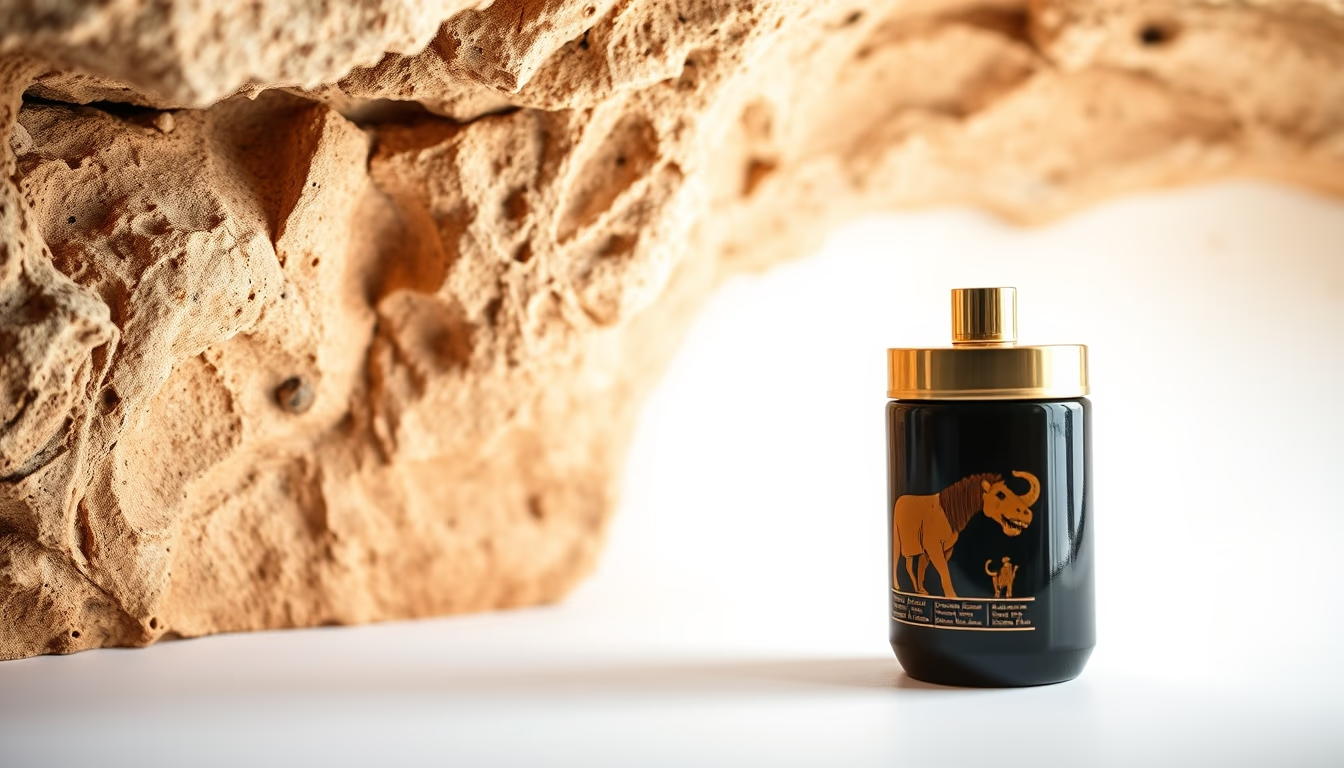
Rosetta stone
1344×768 · AVIF · CC BY 4.0

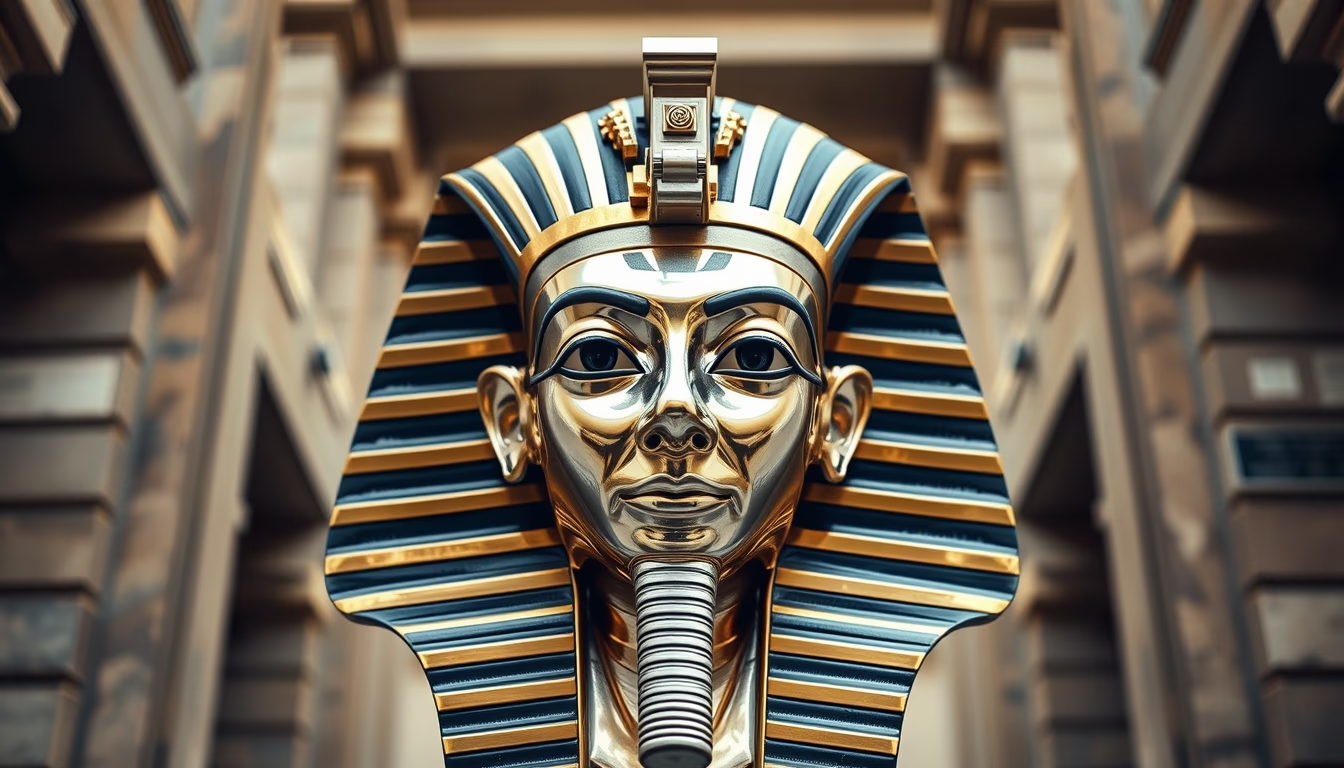
The Rosetta Stone, discovered in 1799, was key to deciphering ancient Egyptian script, bearing the same decree in three writing systems.
About this subject
The Rosetta Stone is a fragment of a granodiorite stele dated to 196 BC, during the reign of Ptolemy V Epiphanes, a pharaoh of Ptolemaic Egypt. It was discovered by French soldiers in July 1799 during Napoleon's campaign in Egypt, near the town of Rashid (Rosetta) in the Nile Delta. The inscribed text is a priestly decree issued by a synod of priests in Memphis, establishing the royal cult of the young pharaoh and granting privileges to the clergy.
The stone's significance lies in the same decree being written in three scripts: Egyptian hieroglyphics, Demotic script (a cursive form of Egyptian), and Ancient Greek. This parallel allowed scholars, notably Jean-François Champollion, to decipher hieroglyphs in the early 19th century, unlocking the understanding of ancient Egyptian civilization. Champollion published his breakthrough in 1822, demonstrating that hieroglyphs were a phonetic and ideographic writing system.
The stone has been housed in the British Museum in London since 1802, after being seized by the British from the French. It is one of the museum's most visited artifacts, sparking ongoing repatriation debates with Egypt. It measures about 1.1 meters tall, 0.75 meters wide, and 0.28 meters thick, weighing approximately 760 kg. The original text has lost about 14 lines at the top and 28 at the bottom, but the content is partially reconstructed from copies of other stelae.
Interestingly, the Rosetta Stone is not unique; other similar trilingual stelae exist, such as the Decree of Canopus and the Decree of Memphis (Ptolemy IV). However, the Rosetta was the first found and deciphered. Its name has become metaphorical for any key that unlocks a mystery, especially in linguistics and computing.
Frequently Asked Questions
Where is the Rosetta Stone currently located?
The Rosetta Stone is in the British Museum in London since 1802. Egypt has requested its return, but it remains in the museum.
How did Champollion decipher hieroglyphs using the Rosetta Stone?
Champollion compared the Greek and Demotic texts with hieroglyphs, identifying proper names (like Ptolemy and Cleopatra) and realizing the system combined phonetic and ideographic signs. In 1822, he presented his decipherment key.
Is the Rosetta Stone the only document with the same text in three scripts?
No. Other similar stelae exist, such as the Decree of Canopus (238 BC) and the Decree of Memphis (Ptolemy IV), but the Rosetta Stone was the first discovered and deciphered, making it the most famous example.
Direct URL
https://pub-c7d6a6ea828543ac903a74a341ccb2e1.r2.dev/imagens/rosetta-stone-cinematic-wide-shot-p2.avifHow to credit
Include a visible link back to UtilizAí. Copy one of the snippets below:
<a href="https://xn--utiliza-eza.com/en/midia/imagens/rosetta-stone-cinematic-wide-shot-p2">Rosetta stone</a> by <a href="https://xn--utiliza-eza.com">UtilizAí</a>, licensed under <a href="https://creativecommons.org/licenses/by/4.0/">CC BY 4.0</a>.
[Rosetta stone](https://xn--utiliza-eza.com/en/midia/imagens/rosetta-stone-cinematic-wide-shot-p2) by [UtilizAí](https://xn--utiliza-eza.com), CC BY 4.0
License: CC-BY-4.0