Roman mosaic floor
1344×768 · AVIF · CC BY 4.0
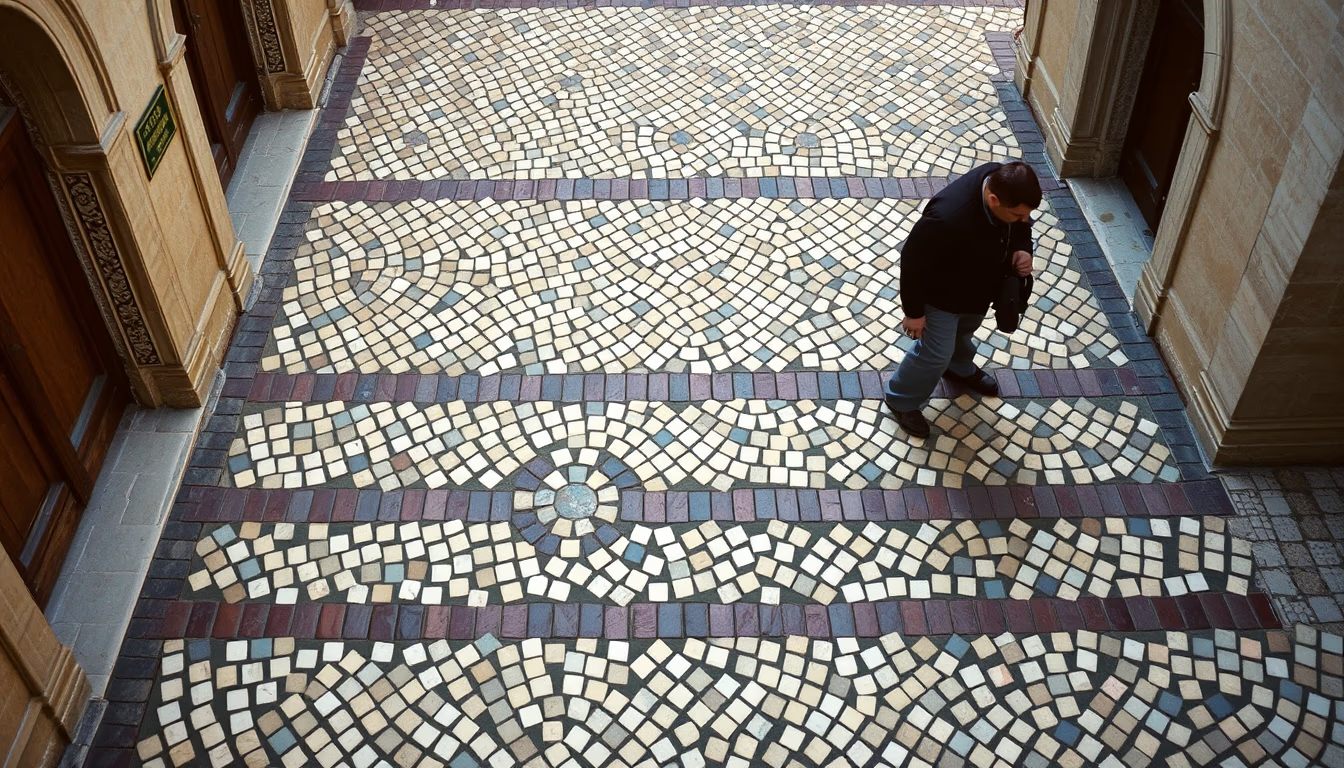
Roman mosaic floors are artworks that blend technique, history, and symbolism, revealing daily life and mythology of the Roman Empire.
About this subject
Roman mosaics, known as opus tessellatum, were crafted with small pieces of stone, glass, or ceramic called tesserae. This technique flourished between the 2nd century BCE and 4th century CE, adorning villas, baths, and temples across the empire. Designs ranged from geometric patterns to complex figurative scenes, often inspired by Greco-Roman mythology, such as the famous "Lion Hunt" from Pella.
In Pompeii, buried by Vesuvius in 79 CE, mosaic floors were preserved in stunning detail. A notable example is the "Alexander Mosaic," depicting the Battle of Issus and composed of about 1.5 million tesserae. Mosaic art also served as a status symbol; patrician villas displayed mosaics reflecting wealth and erudition, with philosophical or literary themes.
Production followed a meticulous method: first, the design was sketched on fresh mortar, then tesserae were pressed by hand, adjusting colors and angles to create shading and perspective. Natural colors like red, yellow, and blue came from minerals such as hematite, ochre, and lapis lazuli. In regions like Roman Britain, mosaics incorporated local motifs, such as the goddess Cernunnos, showing cultural adaptation.
Today, many mosaics are displayed in museums or remain in situ, like those at the Villa del Casale in Sicily, a UNESCO World Heritage site. The technique influenced Byzantine and Renaissance art, and its preservation offers a unique window into Roman life. Interestingly, the word "mosaic" derives from Greek "mousa" (muse), reflecting the artistic inspiration of these works.
Frequently Asked Questions
How were Roman mosaic floors made?
They were made with small pieces (tesserae) of stone, glass, or ceramic set into fresh mortar. The tesserae were manually adjusted to create colors and shading, following a preliminary design.
Where can I see preserved Roman mosaics?
Famous sites include Pompeii (Italy), the Villa del Casale in Sicily, and the Mosaic Museum in Istanbul. Many archaeological sites in Europe and North Africa also display in situ examples.
What is the cultural significance of Roman mosaics?
Beyond decoration, they depicted mythological, daily, and political scenes, serving as propaganda for power and status. Today, they are valuable sources for understanding Roman art, religion, and society.
Direct URL
https://pub-c7d6a6ea828543ac903a74a341ccb2e1.r2.dev/imagens/roman-mosaic-floor-film-grain-authentic-p3.avifHow to credit
Include a visible link back to UtilizAí. Copy one of the snippets below:
<a href="https://xn--utiliza-eza.com/en/midia/imagens/roman-mosaic-floor-film-grain-authentic-p3">Roman mosaic floor</a> by <a href="https://xn--utiliza-eza.com">UtilizAí</a>, licensed under <a href="https://creativecommons.org/licenses/by/4.0/">CC BY 4.0</a>.
[Roman mosaic floor](https://xn--utiliza-eza.com/en/midia/imagens/roman-mosaic-floor-film-grain-authentic-p3) by [UtilizAí](https://xn--utiliza-eza.com), CC BY 4.0
License: CC-BY-4.0