Roman mosaic floor
1344×768 · AVIF · CC BY 4.0
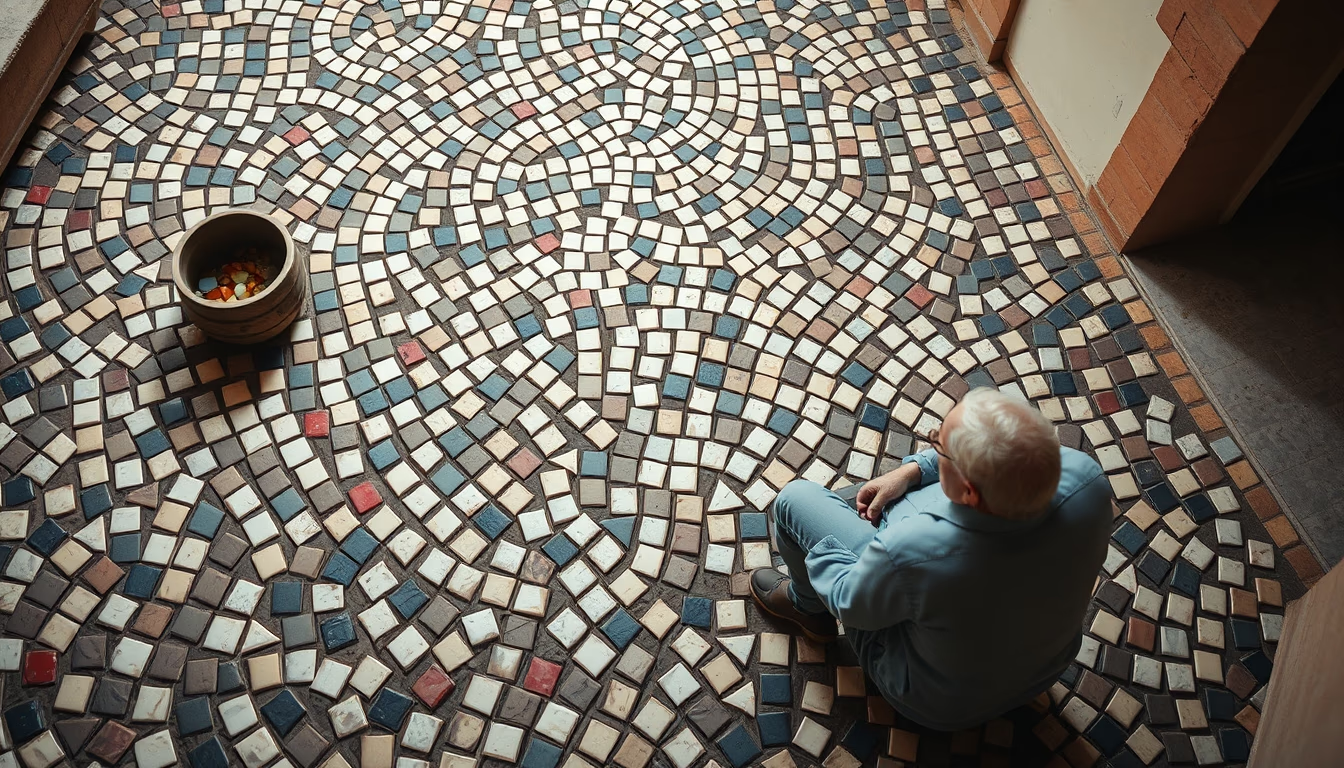
Roman mosaics were artworks made from small pieces of stone, glass, or ceramic, used to decorate floors and walls. They reveal aspects of daily life, mythology, and power in the Roman Empire.
About this subject
Roman mosaics are one of the most impressive visual legacies of the ancient world. They were composed of small cubes called tesserae, made of materials such as marble, glass, or ceramic, arranged in patterns or figurative scenes. The technique, known as opus tessellatum, allowed the creation of everything from simple geometric designs to complex representations of gods, battles, and everyday life. The earliest mosaics were influenced by Greek and Hellenistic art, but the Romans developed a distinctive style with extensive use of color and perspective.
The production of mosaics was linked to social and economic status. Properties of wealthy families, such as villas in Pompeii and Herculaneum, displayed entire floors decorated with mythological or hunting scenes. In public baths, forums, and temples, mosaics also served to convey political or religious messages. The technique spread throughout the Empire, from Britain to North Africa, adapting to local themes.
After the fall of the Empire, many mosaics were buried and preserved for centuries. Archaeological excavations, such as those in Pompeii in the 18th century, uncovered these masterpieces, enabling studies of manufacturing techniques, pigments, and the social life of the time. Today, museums and archaeological sites around the world exhibit mosaics that are valuable sources of information about the Roman world. Preservation of these artifacts faces challenges such as outdoor exposure and pollution.
Interestingly, some Roman mosaics are still in situ, such as the famous Alexander Mosaic in Pompeii depicting the Battle of Issus, or the Gladiator Mosaic at the Villa dei Quintili in Rome. The mosaic technique influenced Byzantine and Islamic art, perpetuating a legacy that continues to inspire contemporary artists.
Frequently Asked Questions
How did the Romans make mosaics?
Roman mosaics were made with small pieces called tesserae, cut from stone, glass, or ceramic. They were set into a mortar base following a pre-drawn design. The artist, known as a musivarius, placed the tesserae one by one to create patterns or scenes.
Where can I see original Roman mosaics?
Many Roman mosaics are on display at archaeological sites such as Pompeii and Herculaneum in Italy, and in museums like the National Roman Museum and the Louvre. There are also examples in Roman villas in Sicily, Spain, and North Africa.
What is the difference between Roman and Byzantine mosaics?
Roman mosaics typically used larger tesserae and were mainly applied to floors, with realistic themes. Byzantine mosaics used smaller, more colorful tesserae, often made of glass and gold, and decorated the walls and ceilings of churches with stylized religious figures.
Direct URL
https://pub-c7d6a6ea828543ac903a74a341ccb2e1.r2.dev/imagens/roman-mosaic-floor-documentary-photography-p10.avifHow to credit
Include a visible link back to UtilizAí. Copy one of the snippets below:
<a href="https://xn--utiliza-eza.com/en/midia/imagens/roman-mosaic-floor-documentary-photography-p10">Roman mosaic floor</a> by <a href="https://xn--utiliza-eza.com">UtilizAí</a>, licensed under <a href="https://creativecommons.org/licenses/by/4.0/">CC BY 4.0</a>.
[Roman mosaic floor](https://xn--utiliza-eza.com/en/midia/imagens/roman-mosaic-floor-documentary-photography-p10) by [UtilizAí](https://xn--utiliza-eza.com), CC BY 4.0
License: CC-BY-4.0