Roman mosaic floor
1344×768 · AVIF · CC BY 4.0
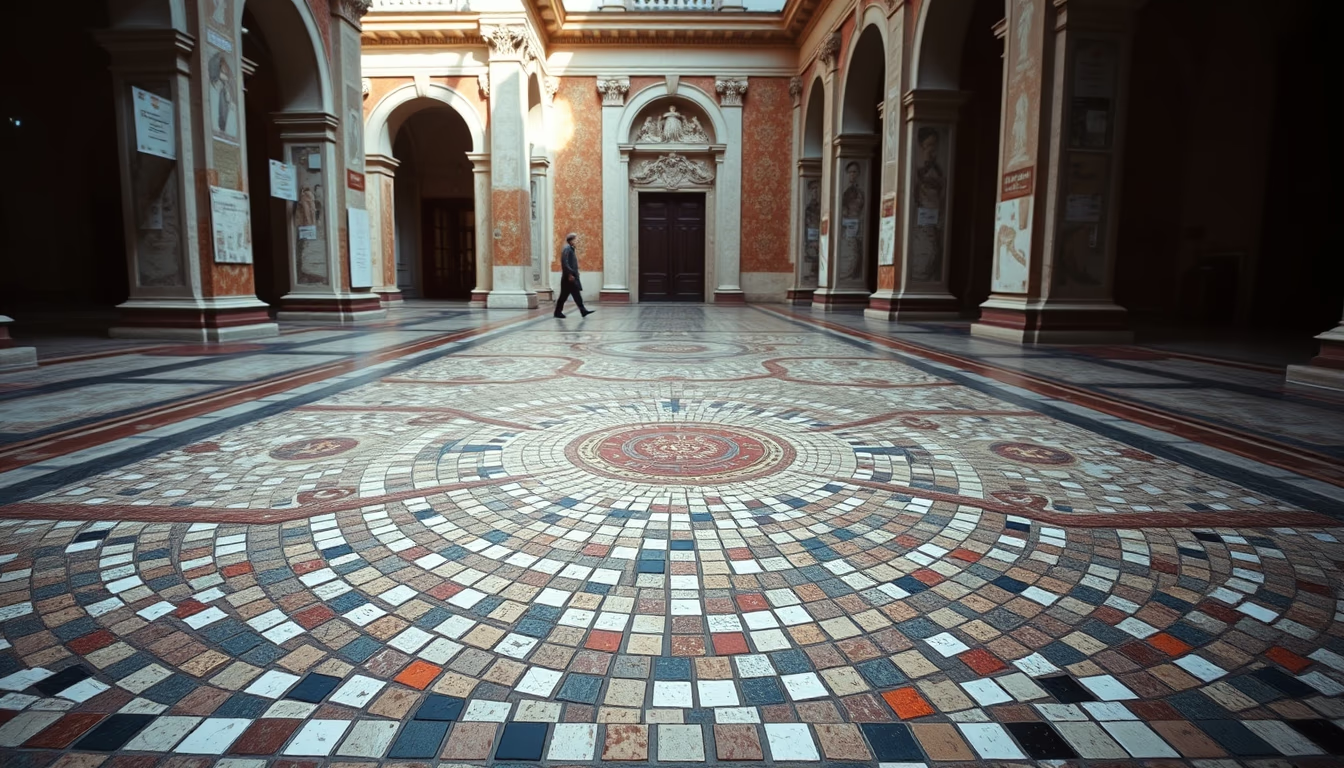
Roman mosaic floors, such as those unearthed in Pompeii and the Villa Romana del Casale, showcase the technical and artistic sophistication of the Roman Empire from the 2nd century BC to the 5th century AD.
About this subject
Roman mosaic floors were made of small pieces of stone, glass, or ceramic called tesserae, arranged to form geometric patterns, mythological scenes, or daily life. The opus tessellatum technique was widespread, while opus vermiculatum allowed for finer details. These floors adorned domus, public baths, and temples, providing thermal insulation and displaying wealth.
One of the most famous examples is at the Villa Romana del Casale in Sicily, featuring mosaics of athletes in modern-looking bikinis, dating to the 4th century AD. In Pompeii, the Alexander Mosaic depicting the Battle of Issus was created with about 1.5 million tesserae. Skilled artisans known as musivarii produced these works either on-site or in workshops.
Preservation relies on specific conditions; many survived due to volcanic ash from Vesuvius or abandonment that prevented remodeling. Today, techniques like strappo (removal with temporary support) allow mosaics to be transferred to museums. Roman influence persists in later styles such as Byzantine mosaic and Art Nouveau.
Frequently Asked Questions
How did the Romans create floor mosaics?
Artisans prepared a mortar base and embedded tesserae (small pieces of stone, glass, or ceramic) following a pre-drawn design. They then filled the gaps with liquid mortar and polished the surface with abrasive stones.
What is the most famous Roman mosaic?
The Alexander Mosaic from Pompeii is one of the most iconic. It depicts the battle between Alexander the Great and Darius III of Persia and contains about 1.5 million tesserae. It is now housed in the National Archaeological Museum of Naples.
Can Roman mosaics still be seen in their original locations?
Yes, many archaeological sites like Pompeii, the Villa Romana del Casale, and Hadrian's Villa in Tivoli preserve mosaics in situ. Others have been moved to museums, but replicas or protective coverings allow visitors to see them.
Direct URL
https://pub-c7d6a6ea828543ac903a74a341ccb2e1.r2.dev/imagens/roman-mosaic-floor-architectural-photography-p2.avifHow to credit
Include a visible link back to UtilizAí. Copy one of the snippets below:
<a href="https://xn--utiliza-eza.com/en/midia/imagens/roman-mosaic-floor-architectural-photography-p2">Roman mosaic floor</a> by <a href="https://xn--utiliza-eza.com">UtilizAí</a>, licensed under <a href="https://creativecommons.org/licenses/by/4.0/">CC BY 4.0</a>.
[Roman mosaic floor](https://xn--utiliza-eza.com/en/midia/imagens/roman-mosaic-floor-architectural-photography-p2) by [UtilizAí](https://xn--utiliza-eza.com), CC BY 4.0
License: CC-BY-4.0