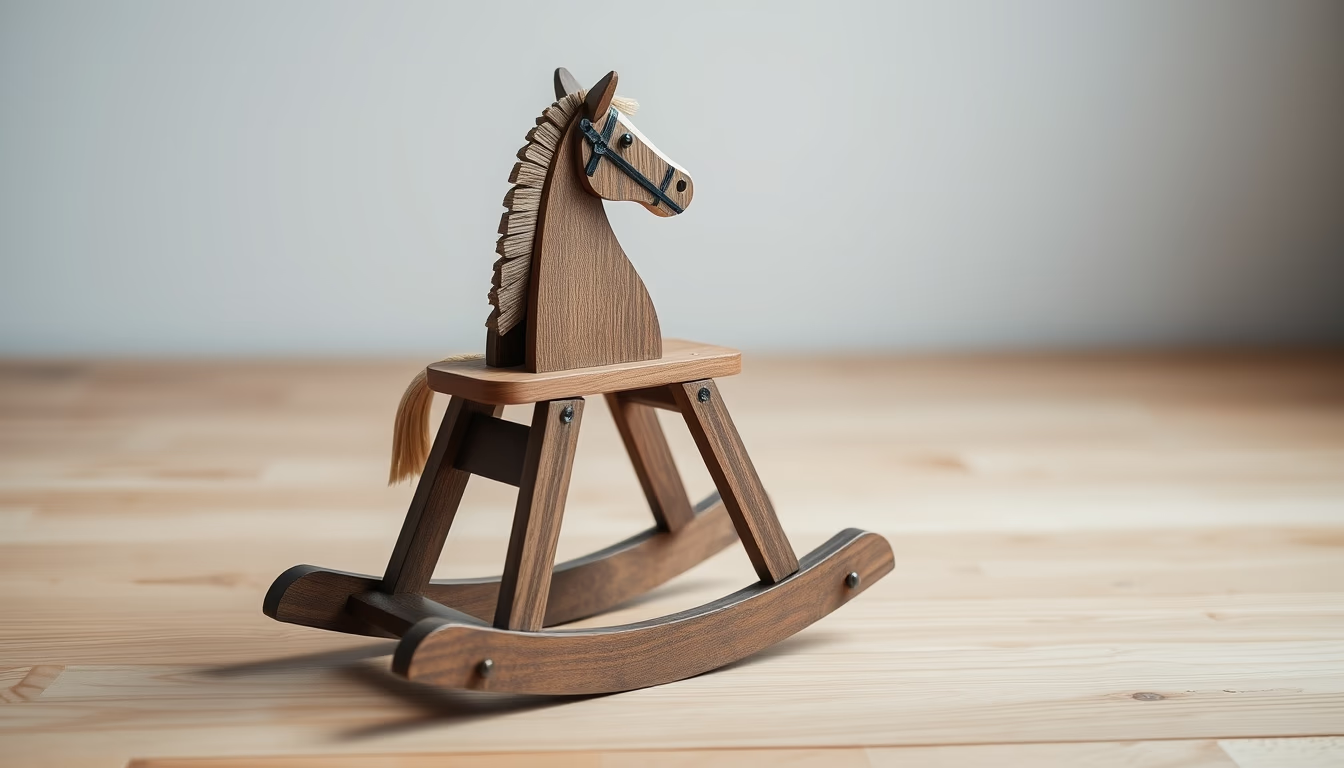
Rocking horse wooden
1344×768 · AVIF · CC BY 4.0
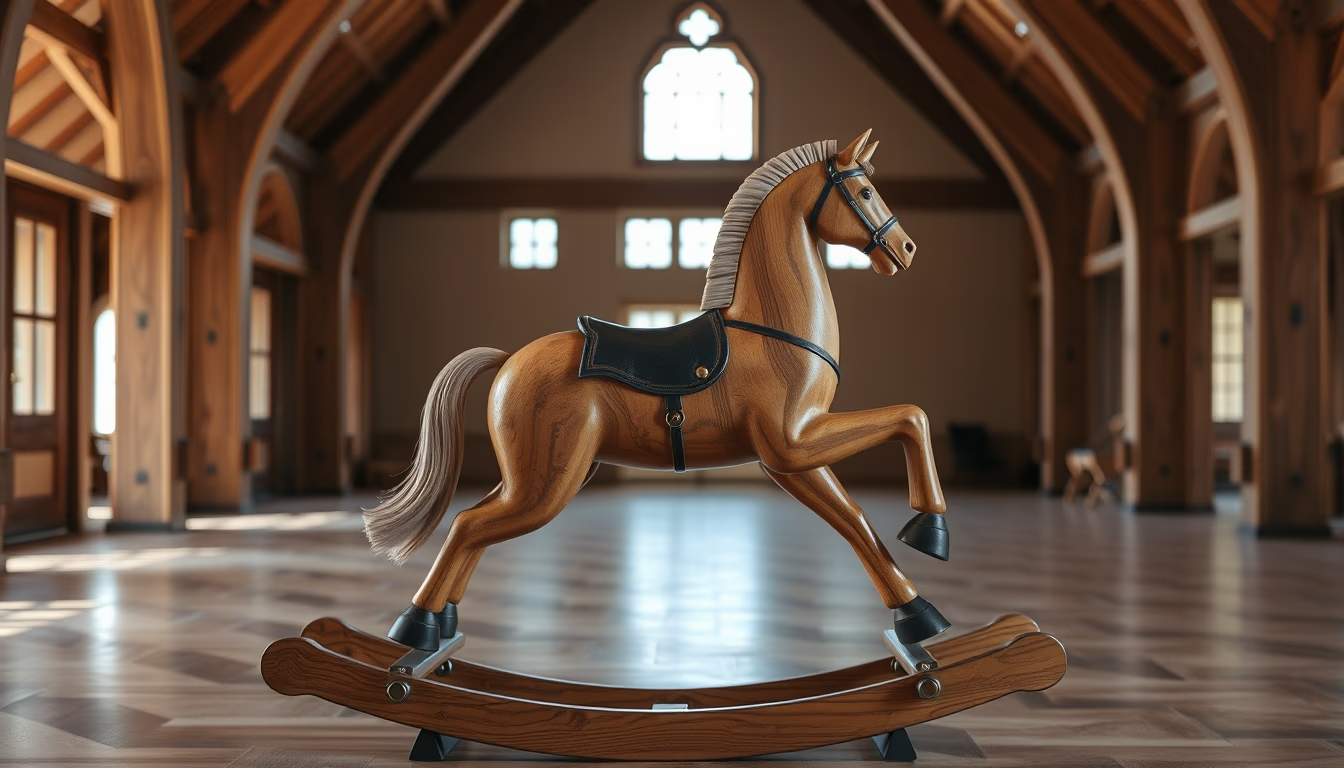
Wooden rocking horse: a classic toy that spans generations, a symbol of childhood and craftsmanship.
About this subject
The wooden rocking horse is one of the oldest and most enduring toys in Western culture. Its origins date back to the 17th century, when European artisans began carving miniature horses mounted on wooden rockers for the children of nobility. By the 19th century, with the Industrial Revolution and mass production, the toy became popular across all social classes, becoming a staple in children's rooms and parks.
Crafting a wooden rocking horse requires woodworking skill and knowledge of equine anatomy. Pieces are traditionally made from solid woods such as pine, oak, or beech, cut and sanded by hand or with power tools. The rockers are steam-bent into a crescent shape to allow the rocking motion. The saddle, reins, and mane are often made of leather or fabric, and eyes may be painted or made of glass. Every detail is designed for safety and durability, as the toy must support a child's weight.
Culturally, the rocking horse represents a child's first playful encounter with the equestrian world, stimulating imagination and motor development. In many countries, it is a decorative and sentimental item passed down from parents to children. In Brazil, it has regional adaptations, such as the 'cavalinho de pau' from the Northeast, but the classic English model remains the most recognized. The sentimental value and timeless design have made antique rocking horses collectible items, sometimes fetching high prices at auction.
Trivia: the world's largest rocking horse was built in Germany in 2017, standing 7.5 meters tall. The oldest preserved example dates from 1610 and is displayed at the National Museum of Scotland. Despite competition from electronic toys, the wooden rocking horse remains an icon of childhood, valued for its simplicity and ability to last for generations.
Frequently Asked Questions
What is the origin of the wooden rocking horse?
The rocking horse originated in 17th century Europe, initially as a toy for noble children. The oldest known example dates from 1610 and is housed in the National Museum of Scotland.
What types of wood are used to make rocking horses?
Traditionally, solid woods like pine, oak, and beech are used. The choice depends on desired durability and local tradition; oak is more robust, while pine is lighter and cheaper.
Is the wooden rocking horse still safe for children?
Yes, when manufactured with current safety standards, such as rounded edges, stable base, and non-toxic paints. Antique models may pose risks, but many are restored for decorative use.
Direct URL
https://pub-c7d6a6ea828543ac903a74a341ccb2e1.r2.dev/imagens/rocking-horse-wooden-architectural-photography-fresh3.avifHow to credit
Include a visible link back to UtilizAí. Copy one of the snippets below:
<a href="https://xn--utiliza-eza.com/en/midia/imagens/rocking-horse-wooden-architectural-photography-fresh3">Rocking horse wooden</a> by <a href="https://xn--utiliza-eza.com">UtilizAí</a>, licensed under <a href="https://creativecommons.org/licenses/by/4.0/">CC BY 4.0</a>.
[Rocking horse wooden](https://xn--utiliza-eza.com/en/midia/imagens/rocking-horse-wooden-architectural-photography-fresh3) by [UtilizAí](https://xn--utiliza-eza.com), CC BY 4.0
License: CC-BY-4.0