Rocket launch night fire
1344×768 · AVIF · CC BY 4.0
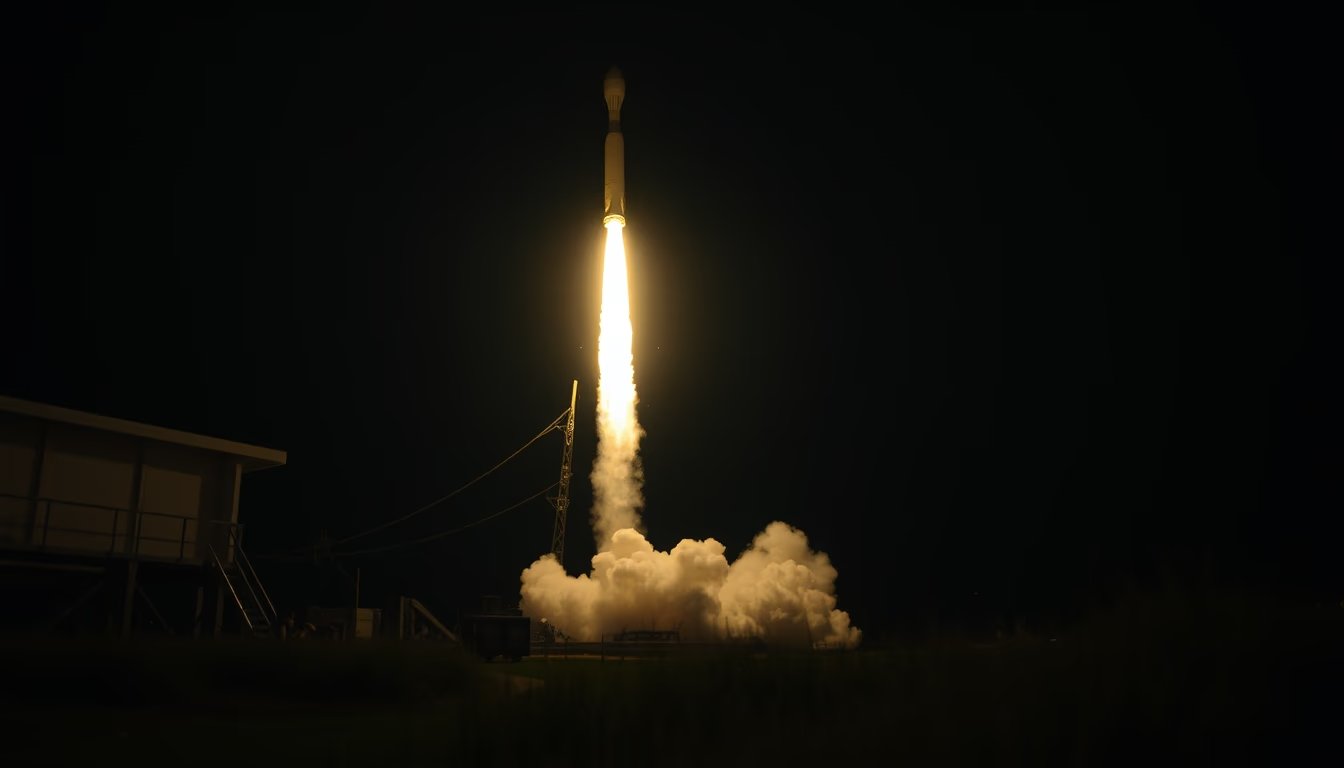
Nighttime rocket launches combine power and visual spectacle, especially through the lo-fi aesthetic of disposable cameras.
About this subject
Nighttime rocket launches are both technically demanding and visually spectacular. The typical sequence begins with engine ignition, producing an intense flame that illuminates the sky. The exhaust plume, composed of superheated gases and soot, creates a dramatic contrast against the darkness. These launches are common for missions to geostationary or interplanetary orbits, where specific launch windows require nighttime hours.
Historically, the first crewed nighttime rocket launch was Apollo 17 in 1972. Since then, agencies like NASA and SpaceX routinely conduct night launches. Key advantages include lower ambient temperatures, which reduce thermal stress on propellant tanks, and easier optical tracking using telescopes and high-speed cameras.
The lo-fi aesthetic, achieved with disposable cameras or digital simulations, has gained popularity among enthusiasts. The grain, saturated colors, and imperfections of film evoke nostalgia from the 1990s and 2000s, contrasting with cutting-edge rocket technology. Photos of night launches in this style go viral on social media, such as the Falcon Heavy launch in 2018.
In Brazil, the Alcântara Launch Center in Maranhão conducts night operations for sounding rockets. Its proximity to the equator optimizes fuel efficiency. Observing nighttime launches, even from a distance, attracts thousands of people who seek to capture the flash and trail of fire cutting across the sky.
Frequently Asked Questions
Why do rocket launches happen at night?
Night launches are scheduled for specific orbital windows. Additionally, lower temperatures reduce thermal stress on propellant tanks, and darkness facilitates optical tracking by telescopes.
What causes the intense flame during a launch?
The flame results from propellant combustion (liquid or solid) in the rocket engines. Temperatures can exceed 3000°C, ionizing gases and producing a bright plasma.
What is the connection between night rockets and lo-fi aesthetics?
Photographs of night launches taken with disposable cameras or lo-fi filters create a contrast between modern technology and a retro feel. The grain and saturated colors highlight the drama of the event, attracting analog photography enthusiasts.
Direct URL
https://pub-c7d6a6ea828543ac903a74a341ccb2e1.r2.dev/imagens/rocket-launch-night-fire-lo-fi-disposable-camera-p5.avifHow to credit
Include a visible link back to UtilizAí. Copy one of the snippets below:
<a href="https://xn--utiliza-eza.com/en/midia/imagens/rocket-launch-night-fire-lo-fi-disposable-camera-p5">Rocket launch night fire</a> by <a href="https://xn--utiliza-eza.com">UtilizAí</a>, licensed under <a href="https://creativecommons.org/licenses/by/4.0/">CC BY 4.0</a>.
[Rocket launch night fire](https://xn--utiliza-eza.com/en/midia/imagens/rocket-launch-night-fire-lo-fi-disposable-camera-p5) by [UtilizAí](https://xn--utiliza-eza.com), CC BY 4.0
License: CC-BY-4.0