Rio carnival float colorful
1344×768 · AVIF · CC BY 4.0
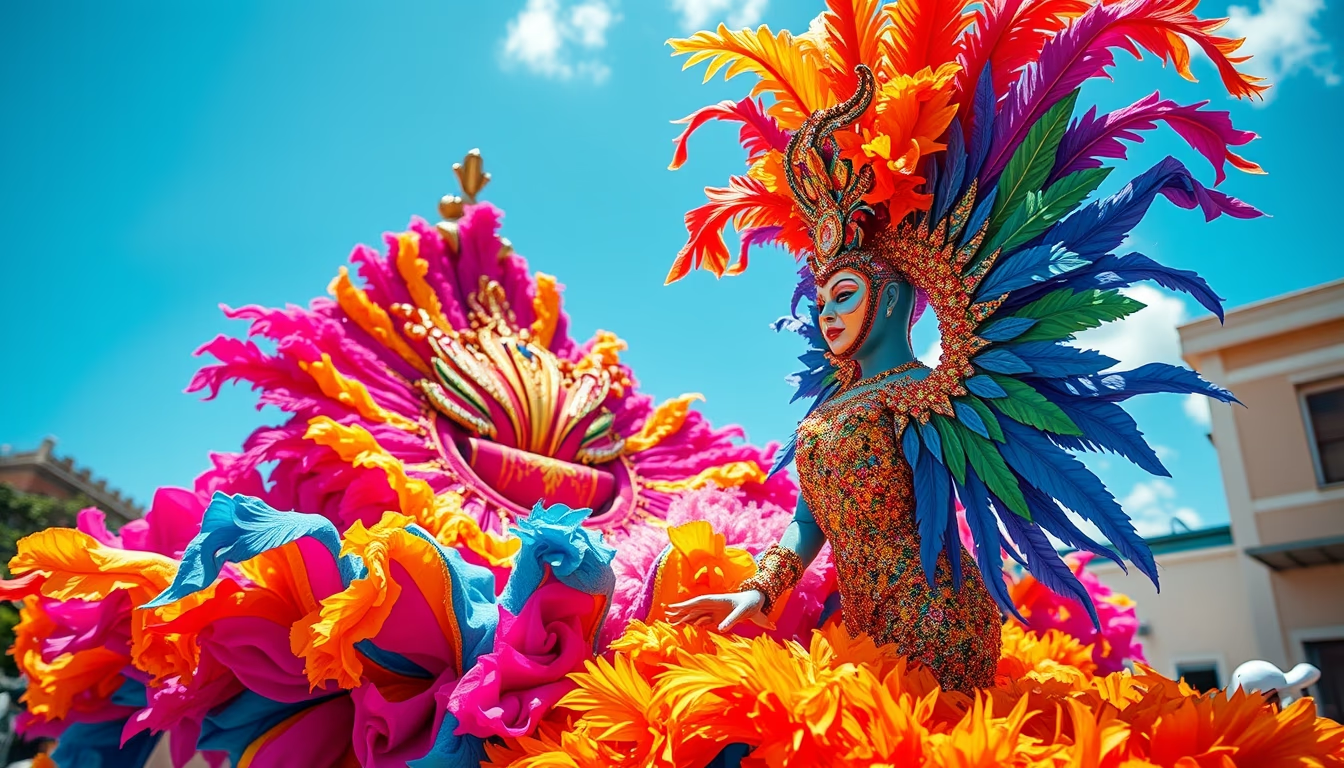
Colorful carnival floats parade in Rio de Janeiro's Carnival, an event that gathers millions at the Marquês de Sapucaí and showcases the creativity of samba schools.
About this subject
Rio de Janeiro's Carnival is globally famous for its stunning floats, which turn the Marquês de Sapucaí Avenue into a spectacle of color and movement. The samba schools, the main protagonists of the celebration, have competed since 1932 at the Sambódromo, designed by Oscar Niemeyer and opened in 1984. Each float is an ephemeral work of art, built over months in the workshops of Cidade do Samba, located in the Port Zone.
Technically, floats can reach up to 10 meters high and 60 meters long, weighing between 30 and 50 tons. They are powered by diesel or electric engines, with a metal structure covered in fiberglass and Styrofoam. Teams of engineers, blacksmiths, sculptors, and painters work intensively to ensure every detail is perfect. Safety is rigorous: firefighters and technicians check stability and fire suppression systems before the parade.
Culturally, floats are not mere ornaments. They visually tell the school's theme, which can address historical, social, or folkloric topics. For instance, in 2019, the Grande Rio school presented a 60-meter float about African culture, while others have honored Zumbi dos Palmares, the Amazon Rainforest, and personalities like Heitor Villa-Lobos. Each float is a three-dimensional narrative that moves the audience.
Interestingly, floats are never reused. After the results are announced, schools dismantle the allegories and recycle the materials. The largest float ever recorded belonged to Grande Rio in 2019, but every year brings innovations. The official parades take place on Carnival Monday and Tuesday, broadcast live worldwide. It is estimated that 70% of tourists visiting Rio during Carnival come specifically to see the floats.
Frequently Asked Questions
How are the Carnival floats in Rio de Janeiro built?
The floats are built in the workshops of the samba schools, known as Cidade do Samba. They use metal structures, Styrofoam and fiberglass sculptures, along with paint and decorations. Hundreds of artisans, such as blacksmiths, sculptors, and painters, work year-round on the process.
What is the largest float ever presented at Rio's Carnival?
The largest float in history was from the Grande Rio samba school in 2019, measuring 60 meters long and 10 meters high. It depicted African culture and was one of the highlights of the parade.
Are the Carnival floats reused in subsequent years?
No, the floats are dismantled after the parade for material recycling. Each year, schools create new allegories to tell different storylines, ensuring originality and creativity.
Direct URL
https://pub-c7d6a6ea828543ac903a74a341ccb2e1.r2.dev/imagens/rio-carnival-float-colorful-minimalist-composition-fresh18.avifHow to credit
Include a visible link back to UtilizAí. Copy one of the snippets below:
<a href="https://xn--utiliza-eza.com/en/midia/imagens/rio-carnival-float-colorful-minimalist-composition-fresh18">Rio carnival float colorful</a> by <a href="https://xn--utiliza-eza.com">UtilizAí</a>, licensed under <a href="https://creativecommons.org/licenses/by/4.0/">CC BY 4.0</a>.
[Rio carnival float colorful](https://xn--utiliza-eza.com/en/midia/imagens/rio-carnival-float-colorful-minimalist-composition-fresh18) by [UtilizAí](https://xn--utiliza-eza.com), CC BY 4.0
License: CC-BY-4.0