Rio carnival float colorful
1344×768 · AVIF · CC BY 4.0
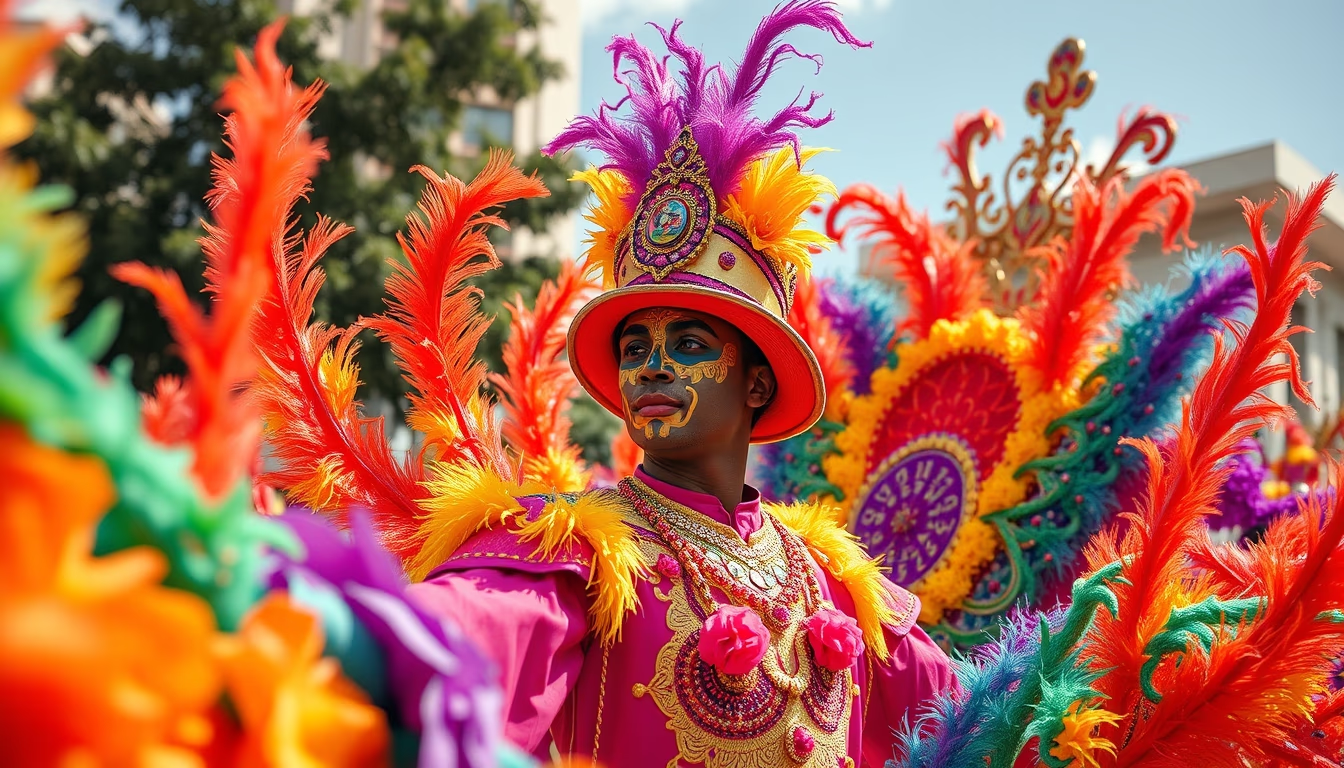
Rio Carnival floats are mobile masterpieces that blend storytelling, music, and scenic engineering in the world's biggest show.
About this subject
Carnival floats are the visual heart of the samba school parades at the Sambódromo in Rio de Janeiro. Each school presents five to eight floats, created over months by hundreds of professionals. The structures can reach up to 8.5 meters in height and 14 meters in length, designed to support dozens of dancers and complex sculptures. Construction involves engineering techniques, carpentry, styrofoam and fiberglass sculpting, along with thousands of LED lights and onboard sound systems.
Historically, the first floats appeared in Rio's Carnival in the 19th century, inspired by European festivities, but it was from the 1930s, with the official parades, that they became monuments of popular creativity. Each float follows the school's narrative, telling a story through allegories, colors, and movement. Sustainability is also a growing concern: many materials are recycled, such as PET bottles, cans, and fabric scraps.
Culturally, carnival floats represent the resistance and innovation of Afro-Brazilian culture. They serve as platforms for social critique, tributes to personalities, and exaltation of Brazilian nature. The biggest challenge is ensuring safety during the parade, as 30-ton floats must maneuver in tight spaces. Every year, millions of people worldwide witness this combination of art and technique that makes Rio's Carnival unique.
Frequently Asked Questions
How are Rio Carnival floats constructed?
Construction starts with sketches and scale models, followed by a metal framework, coating with styrofoam and fiberglass, hand painting, and installation of lights and movement mechanisms. Hundreds of workers labor in workshops across the city.
What is the maximum height allowed for carnival floats in the Sambódromo?
Floats cannot exceed 8.5 meters in height due to the limitations of the Sambódromo. They must also have structures that allow safe passage under walkways and power lines.
What material is most used in float decoration?
Styrofoam (expanded polystyrene) is the main material for its lightness and ease of sculpting. Fiberglass, paper mache, fabrics, recycled plastics, and electronic components like LEDs are also widely used.
Direct URL
https://pub-c7d6a6ea828543ac903a74a341ccb2e1.r2.dev/imagens/rio-carnival-float-colorful-magazine-editorial-fresh0.avifHow to credit
Include a visible link back to UtilizAí. Copy one of the snippets below:
<a href="https://xn--utiliza-eza.com/en/midia/imagens/rio-carnival-float-colorful-magazine-editorial-fresh0">Rio carnival float colorful</a> by <a href="https://xn--utiliza-eza.com">UtilizAí</a>, licensed under <a href="https://creativecommons.org/licenses/by/4.0/">CC BY 4.0</a>.
[Rio carnival float colorful](https://xn--utiliza-eza.com/en/midia/imagens/rio-carnival-float-colorful-magazine-editorial-fresh0) by [UtilizAí](https://xn--utiliza-eza.com), CC BY 4.0
License: CC-BY-4.0