Rio carnival float colorful
1344×768 · AVIF · CC BY 4.0
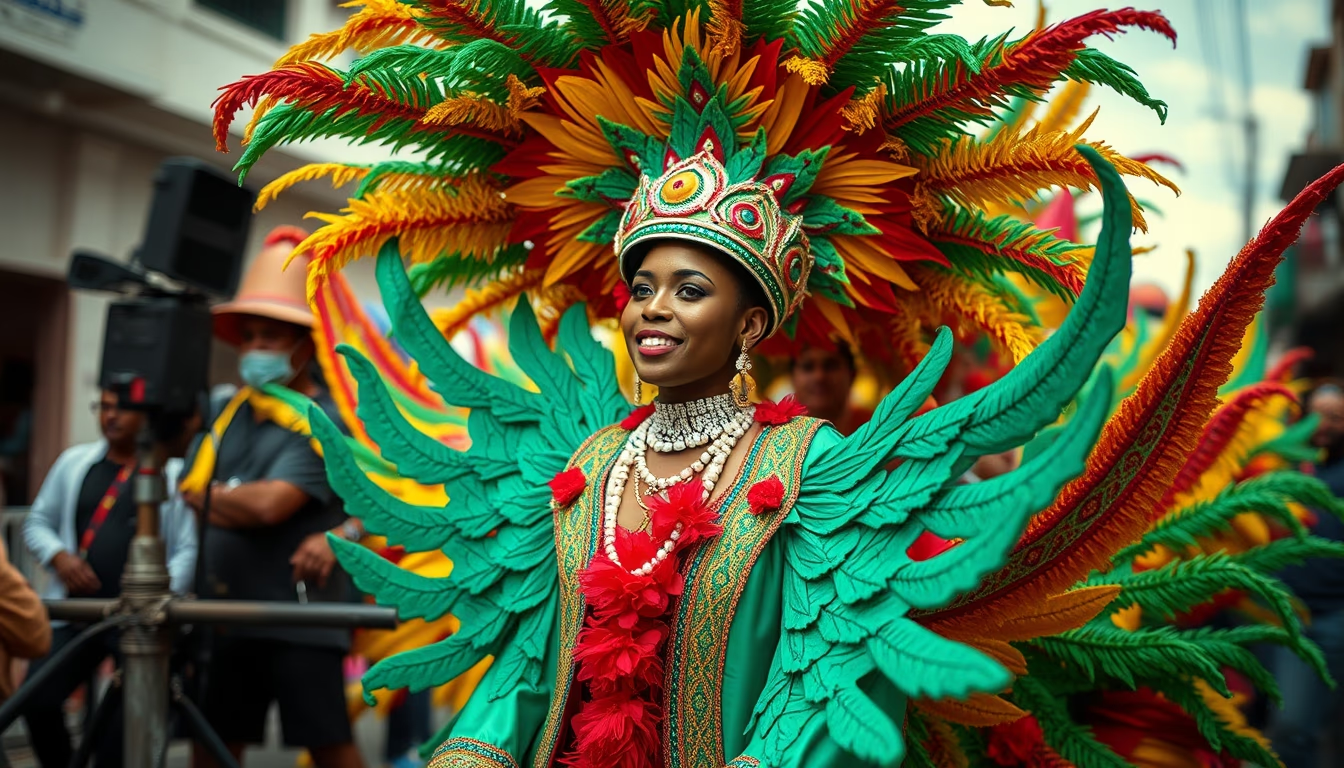
Carros alegóricos do Carnaval do Rio de Janeiro combinam engenharia, arte e cultura em exibições grandiosas que contam histórias por meio de cores, formas e movimento.
Sobre o tema
O Carnaval do Rio de Janeiro é mundialmente conhecido por seus desfiles de escolas de samba, e os carros alegóricos (ou alegorias) são o coração dessas apresentações. Cada carro é uma obra de arte sobre rodas, construído ao longo de meses por artistas, carpinteiros, escultores e aderecistas. As alegorias podem atingir até 12 metros de altura e 45 metros de comprimento, sendo transportadas por caminhões especialmente adaptados. A tradição dos carros alegóricos remonta ao início do século XX, mas ganhou escala monumental a partir dos anos 1950, quando as escolas passaram a competir de forma mais organizada.
Cada escola de samba escolhe um enredo para o desfile, e as alegorias são projetadas para representar visualmente partes dessa narrativa. Os temas variam de fatos históricos e lendas brasileiras a críticas sociais e homenagens a personalidades. A construção envolve materiais como isopor, fibra de vidro, papel machê, luzes de LED e até robótica. A sustentabilidade também tem ganhado espaço, com uso de materiais reciclados e técnicas para reduzir o impacto ambiental. O custo de um único carro alegórico pode ultrapassar R$ 1 milhão, financiado pelas escolas, patrocínios e subvenções públicas.
Durante os desfiles na Marquês de Sapucaí, as alegorias deslizam pela avenida com dezenas de figurantes em fantasias elaboradas, dançarinos e destaques que ficam no alto das estruturas. A segurança é rigorosa: todos os carros passam por inspeções da Liga Independente das Escolas de Samba (LIESA) para evitar acidentes. Um dos momentos mais emblemáticos é a abertura lateral dos carros, formando a ‘boca de cena’, que revela cenários internos. A criatividade e ousadia dos carnavalescos, como Joãosinho Trinta e Leandro Vieira, marcaram época com alegorias que desafiaram limites técnicos e estéticos.
O impacto cultural das alegorias vai além do carnaval: elas influenciam o design, a moda e até o cinema. Imagens de carros alegóricos do Rio circulam o mundo, tornando-se símbolos da identidade brasileira. Nos últimos anos, a tecnologia tem sido incorporada, com efeitos especiais, projeções mapeadas e movimentos mecanizados. Apesar dos desafios financeiros e logísticos, as escolas de samba mantêm viva essa tradição, que atrai milhões de turistas e é transmitida para mais de 150 países.
Perguntas frequentes
Quanto tempo leva para construir um carro alegórico do Carnaval do Rio?
A construção de um carro alegórico pode levar de três a seis meses, dependendo da complexidade. O processo começa com o projeto do carnavalesco e envolve etapas de estruturação, escultura, pintura e acabamento, além da instalação de iluminação e efeitos especiais.
Qual é o maior carro alegórico já exibido na Sapucaí?
O maior carro alegórico já registrado foi da escola Beija-Flor de Nilópolis em 2004, com 60 metros de comprimento e 12 metros de altura. A alegoria representava a história de Ouro Preto e impressionou pelo tamanho e detalhamento.
Como as escolas de samba financiam os carros alegóricos?
As escolas de samba contam com recursos próprios, subvenções da prefeitura, patrocínios de empresas e venda de fantasias para componentes. O custo total de um desfile pode ultrapassar R$ 10 milhões, sendo os carros alegóricos um dos maiores gastos.
URL direta
https://pub-c7d6a6ea828543ac903a74a341ccb2e1.r2.dev/imagens/rio-carnival-float-colorful-documentary-photography-fresh13.avifComo creditar
Inclua um link visível de volta pro UtilizAí. Copie um dos snippets abaixo:
<a href="https://xn--utiliza-eza.com/midia/imagens/rio-carnival-float-colorful-documentary-photography-fresh13">Rio carnival float colorful</a> by <a href="https://xn--utiliza-eza.com">UtilizAí</a>, licensed under <a href="https://creativecommons.org/licenses/by/4.0/">CC BY 4.0</a>.
[Rio carnival float colorful](https://xn--utiliza-eza.com/midia/imagens/rio-carnival-float-colorful-documentary-photography-fresh13) by [UtilizAí](https://xn--utiliza-eza.com), CC BY 4.0
Licença: CC-BY-4.0