Retired investor reviewing real estate fund portfolio
1344×768 · AVIF · CC BY 4.0

Retired investor reviews real estate fund portfolio on a rainy late afternoon, highlighting passive income management in retirement.
About this subject
In Brazil, real estate investment funds (FIIs) have become a leading source of passive income for retirees. Data from B3 shows that by 2023, the number of individual investors in FIIs surpassed 2 million, with a strong presence of seniors seeking tax-free monthly dividends. Regularly reviewing the portfolio is essential, as factors like vacancy rates, defaults, and interest rate fluctuations directly impact returns.
FIIs can be categorized into 'brick' funds (holding physical properties) and 'paper' funds (investing in real estate securities like CRIs). For a retired investor, diversification across categories mitigates risks. For instance, in a high Selic rate scenario, paper funds tend to benefit, while brick funds may suffer from economic slowdown. Analyzing indicators such as dividend yield and P/VP (price-to-book value) helps identify opportunities.
The rainy late afternoon depicted in the image reflects a moment of financial introspection, common among investors who closely monitor the market. Reviewing statements and management reports, available on platforms like CEI (Electronic Investor Channel) and B3's website, allows adjustments to align with long-term goals. The transparency of FIIs, which disclose monthly results, facilitates this monitoring.
Interestingly, the Southeast region concentrates the majority of FII investors, but interest has grown in the Northeast and Central-West. Low initial investments, starting at R$ 100, have democratized access to this asset. For retirees, experts recommend allocating 20% to 40% of income to FIIs, balancing with fixed income to preserve capital.
Frequently Asked Questions
What are the main risks of investing in FIIs during retirement?
The main risks include property vacancy, tenant defaults, and interest rate fluctuations affecting share prices. Diversifying between brick and paper funds helps mitigate these risks.
How can a retiree start investing in FIIs?
Open an account with a brokerage, transfer funds, and buy FII shares on B3. It is advisable to study management reports and indicators like dividend yield and P/VP before investing.
Are FII dividends tax-free for individuals?
Yes, dividends from FIIs are exempt from income tax for individuals, provided the fund has at least 50 unitholders and shares are traded on the stock exchange. Capital gains from selling shares are taxed at 20%.
Direct URL
https://pub-c7d6a6ea828543ac903a74a341ccb2e1.r2.dev/imagens/retired-investor-reviewing-real-estate-fund-portfolio-wide-late-afternoon-5.avifHow to credit
Include a visible link back to UtilizAí. Copy one of the snippets below:
<a href="https://xn--utiliza-eza.com/en/midia/imagens/retired-investor-reviewing-real-estate-fund-portfolio-wide-late-afternoon-5">Retired investor reviewing real estate fund portfolio</a> by <a href="https://xn--utiliza-eza.com">UtilizAí</a>, licensed under <a href="https://creativecommons.org/licenses/by/4.0/">CC BY 4.0</a>.
[Retired investor reviewing real estate fund portfolio](https://xn--utiliza-eza.com/en/midia/imagens/retired-investor-reviewing-real-estate-fund-portfolio-wide-late-afternoon-5) by [UtilizAí](https://xn--utiliza-eza.com), CC BY 4.0
License: CC-BY-4.0
Tags
Related images
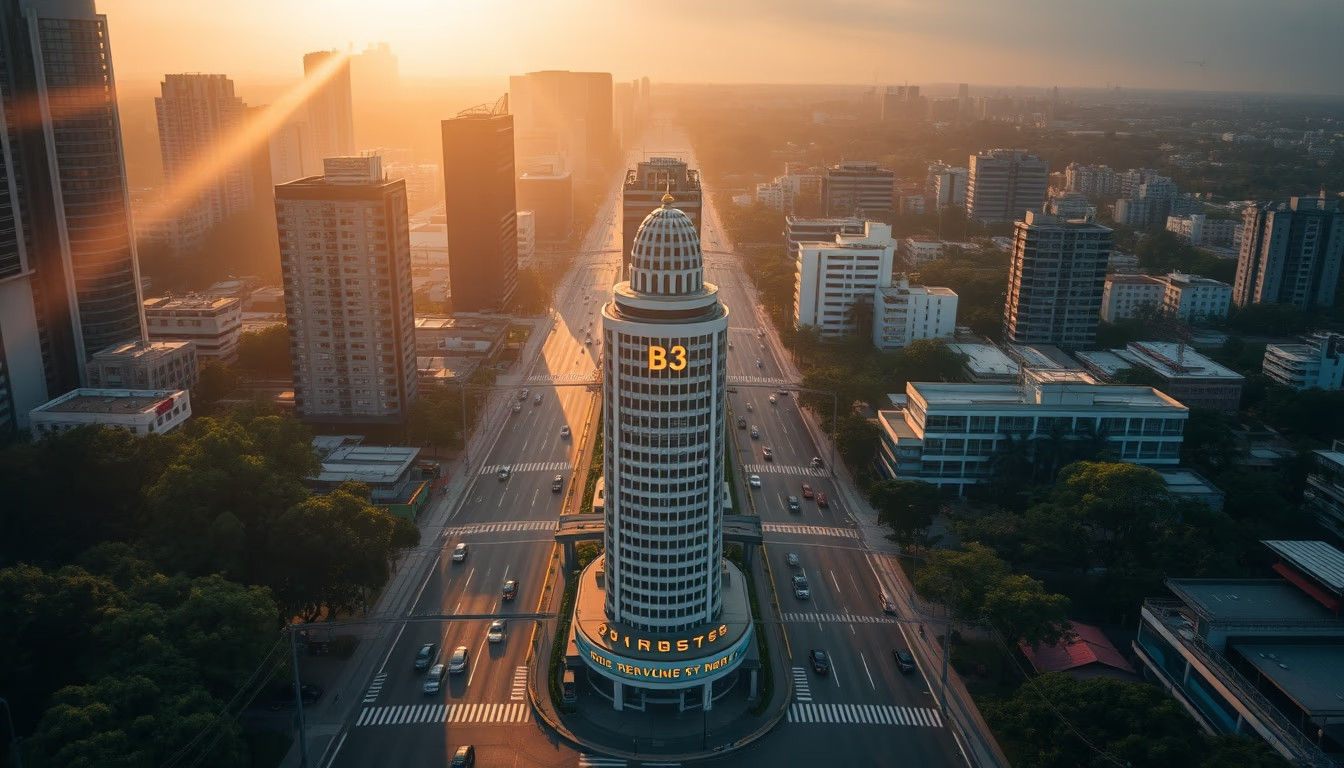 Aerial view of São Paulo financial district at golden hour with B3 building
 Aerial view of São Paulo financial district at golden hour with B3 building
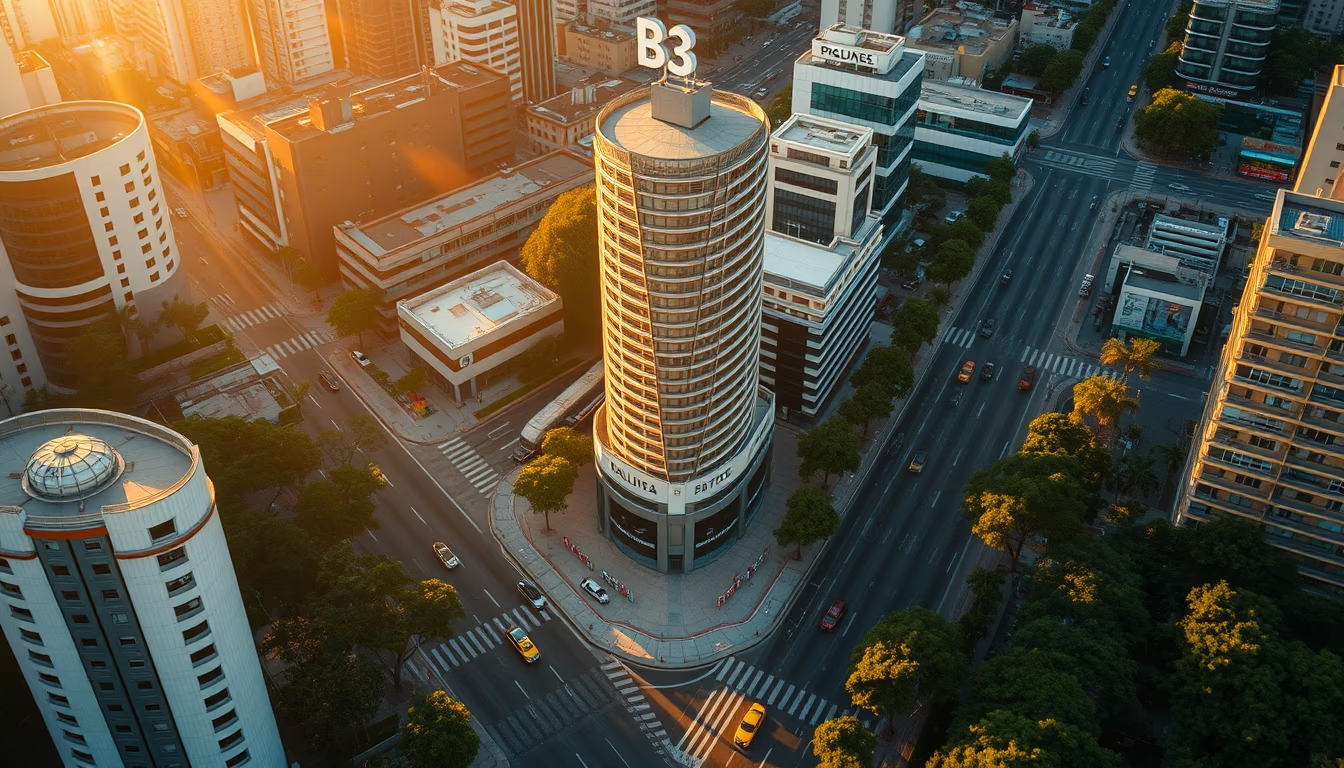 Aerial view of São Paulo financial district at golden hour with B3 building
 Aerial view of São Paulo financial district at golden hour with B3 building
 Aerial view of São Paulo financial district at golden hour with B3 building
 Aerial view of São Paulo financial district at golden hour with B3 building