Red giant star expanding
1344×768 · AVIF · CC BY 4.0

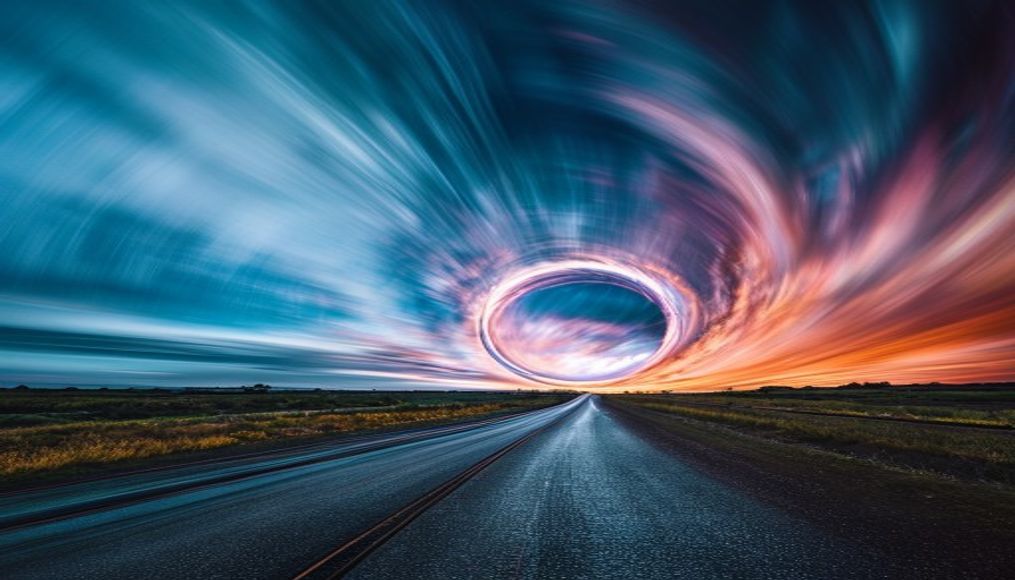
Red giant stars are late stages of stellar evolution, when the star expands and cools after exhausting its nuclear hydrogen.
About this subject
A red giant star represents a late stage in the life of low to intermediate mass stars, such as our Sun. When the stellar core exhausts its hydrogen fuel for fusion, radiation pressure decreases and the core collapses under gravity. This collapse heats the core and initiates helium fusion into carbon and oxygen, while the outer layers expand dramatically, reaching hundreds of times the star's original radius. The surface temperature drops to about 3,000 to 4,000 Kelvin, giving the characteristic reddish color.
The expansion process is relatively rapid on astronomical timescales, lasting a few million years. During this phase, the star loses mass intensely through stellar winds, forming planetary nebulae around it. Notable examples include Betelgeuse, in the constellation Orion, a red supergiant visible to the naked eye, and Mira, a variable red giant that pulsates in brightness. Studying these stars helps astronomers understand the ultimate fate of the Sun, which will become a red giant in about 5 billion years, engulfing Mercury, Venus, and possibly Earth.
Interestingly, the expansion is not uniform; instabilities can cause pulses and matter ejection. The red giant may also exhibit starspots and strong magnetic activity. After the giant phase, the star will shed its outer layers, leaving a compact core of carbon and oxygen, known as a white dwarf. This cycle is fundamental for distributing heavy elements in the universe, as red giants produce and disperse carbon, nitrogen, and other elements essential for life.
Frequently Asked Questions
What happens to the Sun when it becomes a red giant?
In about 5 billion years, the Sun will expand to Earth's orbit, engulfing Mercury, Venus, and possibly Earth. Then it will eject its outer layers, forming a planetary nebula, and the core will become a white dwarf.
What is the difference between a red giant and a red supergiant?
Red giants are low to intermediate mass stars (like the Sun) in an advanced stage. Red supergiants are massive stars (over 8 solar masses) that also expand but are much larger and end in supernovae, not white dwarfs.
Why are red giant stars important for planet formation?
They produce and disperse heavy elements such as carbon and oxygen through stellar winds and matter ejection. These elements become part of gas and dust clouds that can form new planetary systems.
Direct URL
https://pub-c7d6a6ea828543ac903a74a341ccb2e1.r2.dev/imagens/red-giant-star-expanding-national-geographic-style-p12.avifHow to credit
Include a visible link back to UtilizAí. Copy one of the snippets below:
<a href="https://xn--utiliza-eza.com/en/midia/imagens/red-giant-star-expanding-national-geographic-style-p12">Red giant star expanding</a> by <a href="https://xn--utiliza-eza.com">UtilizAí</a>, licensed under <a href="https://creativecommons.org/licenses/by/4.0/">CC BY 4.0</a>.
[Red giant star expanding](https://xn--utiliza-eza.com/en/midia/imagens/red-giant-star-expanding-national-geographic-style-p12) by [UtilizAí](https://xn--utiliza-eza.com), CC BY 4.0
License: CC-BY-4.0