Ram memory module ddr5
1344×768 · AVIF · CC BY 4.0
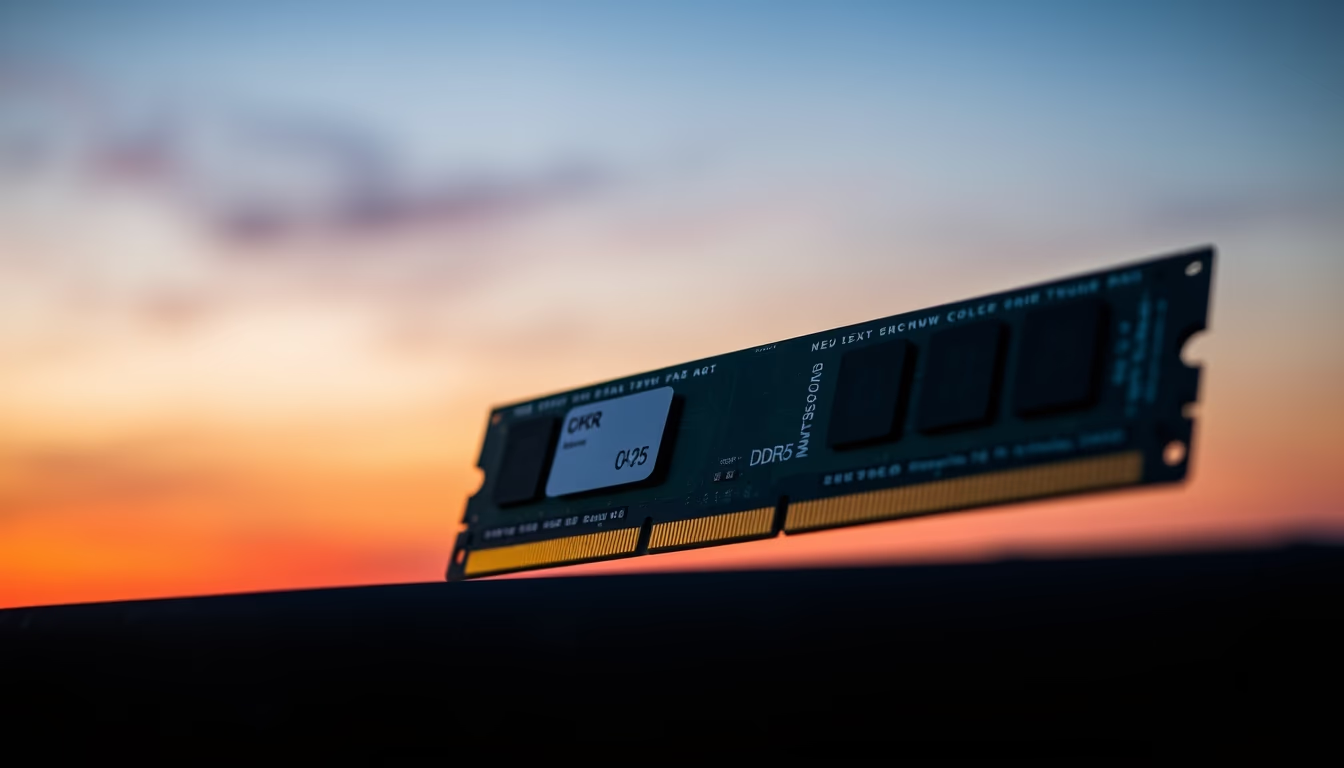
The DDR5 RAM memory module represents the fifth generation of DDR technology, offering higher speed and energy efficiency for modern computers.
About this subject
DDR5 RAM (Double Data Rate 5) is the successor to DDR4, officially released in 2020 by JEDEC (Joint Electron Device Engineering Council). It operates at a reduced voltage of 1.1V, compared to 1.2V for DDR4, leading to lower power consumption and heat generation. Initial transfer rates start at 4800 MT/s (megatransfers per second) and can exceed 8400 MT/s on high-performance modules, whereas common DDR4 tops out at 3200 MT/s.
One of the most significant innovations in DDR5 is the dual-channel architecture per module. Each stick has two independent 32-bit sub-channels, totaling 64 bits, but with improved data access efficiency. Additionally, per-module capacity is expanded: while DDR4 reached up to 64 GB per stick, DDR5 can achieve 256 GB or more, enabling server and workstation configurations with terabytes of RAM.
Another advancement is the inclusion of the PMIC (Power Management Integrated Circuit) directly on the module, regulating voltage locally and improving signal integrity. DDR5 also introduces On-die ECC (Error Correcting Code), which corrects bit errors internally, increasing reliability without requiring CPU support. This feature benefits even common users by reducing faults in intensive applications.
In the market, DDR5 has been gaining traction since 2021, primarily with Intel Alder Lake and AMD Ryzen 7000 platforms that require compatible sockets. Gaming enthusiasts and creative professionals adopt the technology for higher bandwidth, especially in tasks like 8K video editing, data compression, and scientific simulations. DDR5 is expected to become the dominant standard by 2025, gradually replacing DDR4.
Frequently Asked Questions
What is the main difference between DDR5 and DDR4?
DDR5 offers higher bandwidth (starting at 4800 MT/s), reduced voltage of 1.1V, higher capacity per module, and features like PMIC and On-die ECC that improve efficiency and reliability.
Can I use DDR5 on older motherboards?
No. DDR5 requires specific sockets and chipsets, such as LGA1700 (Intel) and AM5 (AMD). Motherboards designed for DDR4 are not electrically or physically compatible.
Is it worth investing in DDR5 today?
For new builds with Intel 12th gen or AMD Ryzen 7000 onwards, yes. The performance gain in gaming and productivity justifies the extra cost, especially in bandwidth-intensive tasks.
Direct URL
https://pub-c7d6a6ea828543ac903a74a341ccb2e1.r2.dev/imagens/ram-memory-module-ddr5-long-exposure-p10.avifHow to credit
Include a visible link back to UtilizAí. Copy one of the snippets below:
<a href="https://xn--utiliza-eza.com/en/midia/imagens/ram-memory-module-ddr5-long-exposure-p10">Ram memory module ddr5</a> by <a href="https://xn--utiliza-eza.com">UtilizAí</a>, licensed under <a href="https://creativecommons.org/licenses/by/4.0/">CC BY 4.0</a>.
[Ram memory module ddr5](https://xn--utiliza-eza.com/en/midia/imagens/ram-memory-module-ddr5-long-exposure-p10) by [UtilizAí](https://xn--utiliza-eza.com), CC BY 4.0
License: CC-BY-4.0