Ram memory module ddr5
1344×768 · AVIF · CC BY 4.0
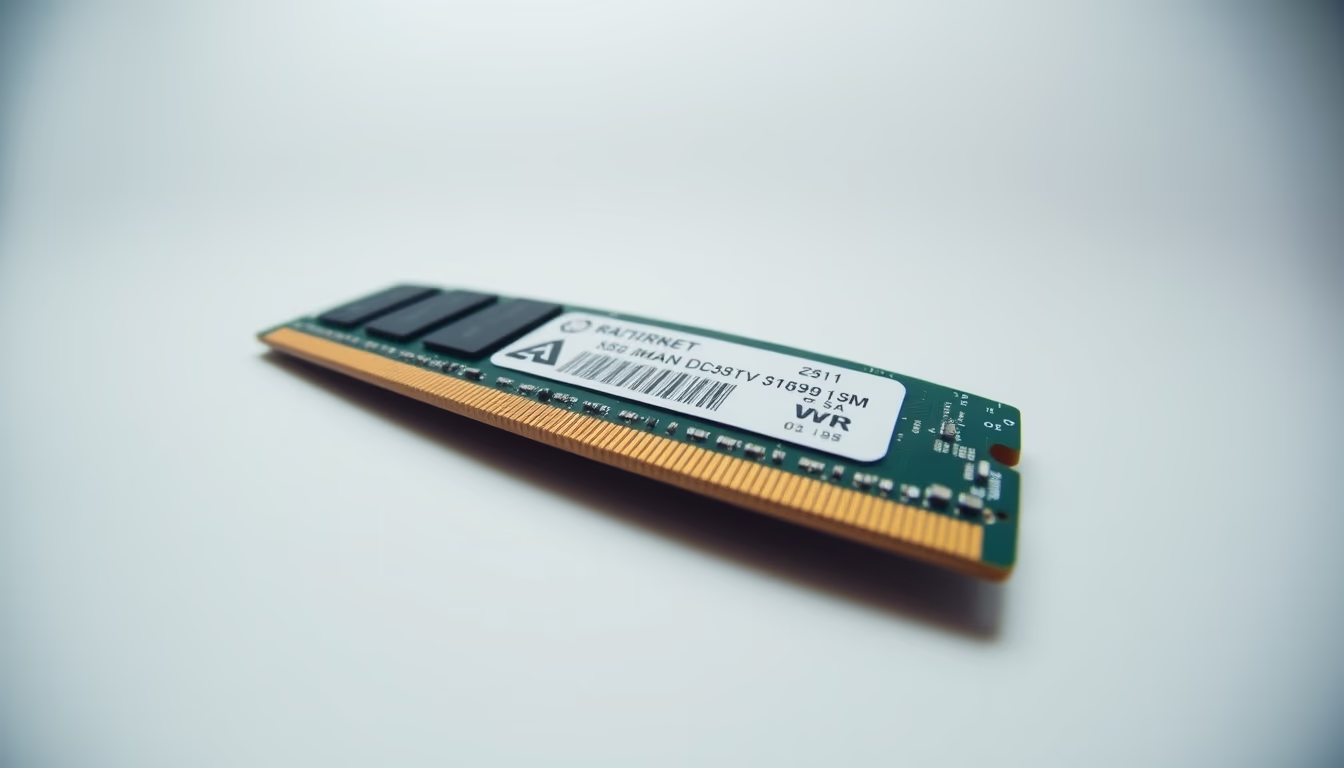
DDR5 memory is the fifth generation of RAM, offering higher speed and energy efficiency for modern computers and servers.
About this subject
DDR5 (Double Data Rate 5) is the latest evolution of RAM, succeeding DDR4 with significant improvements in performance and capacity. Officially released in 2021, it was designed to meet the demands of intensive data processing, such as high-resolution gaming, 8K video editing, artificial intelligence, and cloud computing. Entry-level DDR5 speeds start at 4800 MT/s and can exceed 8000 MT/s in overclocked modules, compared to the practical ceiling of 3200 MT/s for DDR4.
Key technical enhancements include higher chip density: while DDR4 supports up to 16 GB per module, DDR5 allows capacities of 64 GB or more, thanks to internal dual channels and integrated power management. Operating voltage drops from 1.2V (DDR4) to 1.1V, reducing power consumption and heat generation, crucial for laptops and high-performance servers. Additionally, DDR5 introduces on-die error correction (ECC), improving reliability in critical environments.
In the consumer market, DDR5 adoption has been gradual, driven by the launch of Intel Alder Lake (12th Gen) and AMD Ryzen 7000 platforms. Initial high prices and component shortages slowed the transition, but from 2023 onward modules became more affordable. For those building a new PC for gaming or productivity, DDR5 is a future-proof choice, though DDR4 remains sufficient for many applications.
Manufacturing DDR5 modules involves advanced technologies such as 10nm lithography and 3D chip stacking. Companies like Samsung, SK Hynix, and Micron lead production, with modules ranging from 16 GB to 128 GB for workstations. The physical interface remains the same as DDR4 (288 pins), but DDR5 motherboards are not backward compatible with DDR4 modules due to differences in voltage rail and channel architecture.
Frequently Asked Questions
What are the main differences between DDR5 and DDR4?
DDR5 offers higher bandwidth (4800 MT/s vs 3200 MT/s), larger capacities per module (up to 64 GB or more), lower voltage (1.1V vs 1.2V), and on-die ECC. It also features internal dual channels and integrated power management.
Is DDR5 compatible with DDR4 motherboards?
No. Although the pin count is the same (288), the pinout and voltage rail are different. You need a processor and motherboard that support DDR5.
Is it worth buying DDR5 in 2025?
Yes, for new high-performance builds, especially for gaming, video editing, or servers. DDR5 is now mature and prices have dropped significantly, making it a recommended choice for future-proofing.
Direct URL
https://pub-c7d6a6ea828543ac903a74a341ccb2e1.r2.dev/imagens/ram-memory-module-ddr5-fish-eye-wide-angle-p12.avifHow to credit
Include a visible link back to UtilizAí. Copy one of the snippets below:
<a href="https://xn--utiliza-eza.com/en/midia/imagens/ram-memory-module-ddr5-fish-eye-wide-angle-p12">Ram memory module ddr5</a> by <a href="https://xn--utiliza-eza.com">UtilizAí</a>, licensed under <a href="https://creativecommons.org/licenses/by/4.0/">CC BY 4.0</a>.
[Ram memory module ddr5](https://xn--utiliza-eza.com/en/midia/imagens/ram-memory-module-ddr5-fish-eye-wide-angle-p12) by [UtilizAí](https://xn--utiliza-eza.com), CC BY 4.0
License: CC-BY-4.0