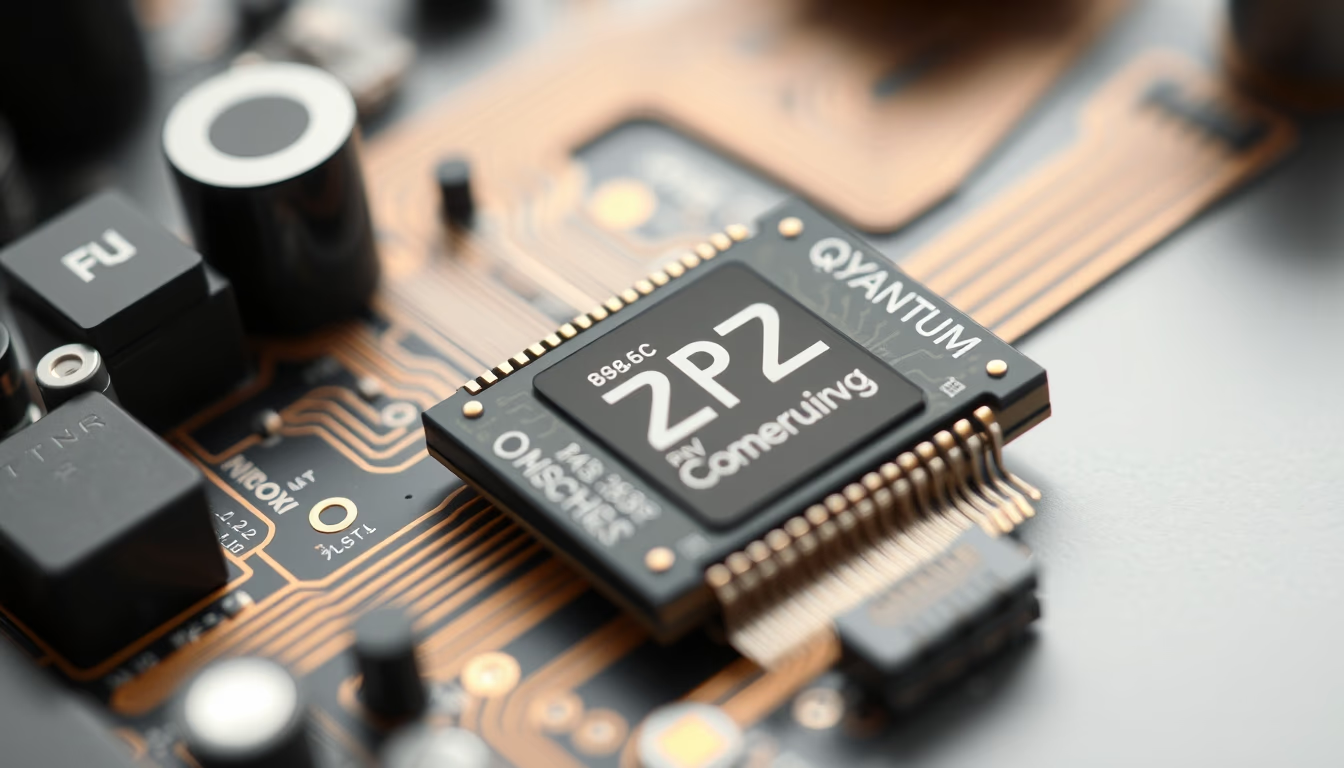
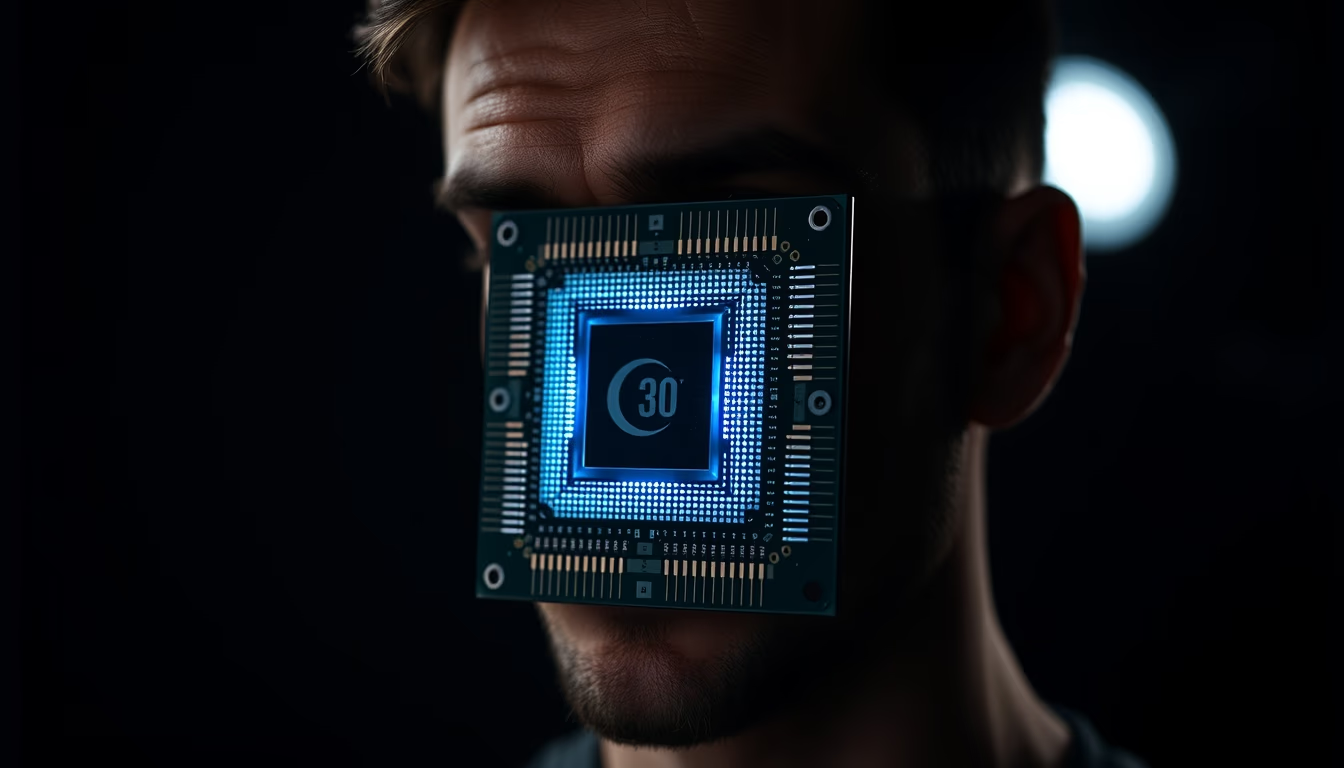
Quantum computer chip
1344×768 · AVIF · CC BY 4.0
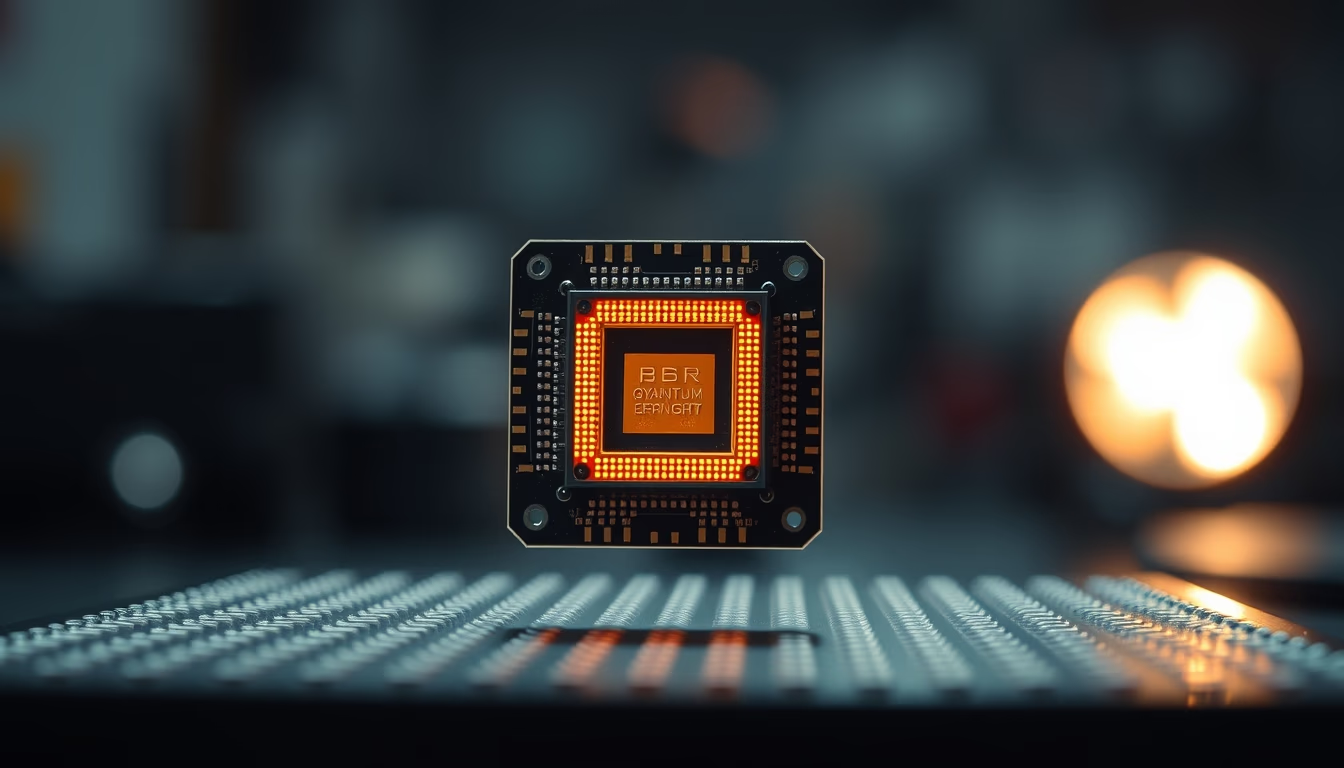
A quantum computer chip is the core of a processor that uses qubits to perform complex calculations, revolutionizing fields like cryptography and molecular simulation.
About this subject
Quantum computer chips represent a technological leap over classical processors. Instead of binary bits (0 or 1), they use qubits, which can exist in superposition states, thanks to quantum mechanics phenomena. This allows operations to be performed in parallel, exponentially accelerating certain types of problems.
Currently, companies like IBM, Google, and startups like Rigetti compete to build quantum chips with dozens or hundreds of qubits. The main challenge is maintaining quantum coherence long enough to run algorithms. To achieve this, these chips operate at temperatures near absolute zero inside sophisticated cryostats.
The practical advantage of quantum chips is still debated. Although they have demonstrated quantum supremacy in specific tasks (e.g., Google's 2019 experiment), error correction and scalability remain obstacles. Researchers explore different architectures: superconducting qubits, trapped ions, and topological qubits, each with trade-offs.
In the future, quantum chips could transform sectors such as pharmaceuticals (molecule simulation), finance (portfolio optimization), and artificial intelligence. However, it will likely take decades before universal, fault-tolerant quantum computers become a reality.
Frequently Asked Questions
What is the difference between a quantum chip and a classical chip?
A classical chip uses bits representing 0 or 1, while a quantum chip uses qubits that can be in superposition of both states simultaneously, enabling parallel processing.
Why do quantum chips need to be cooled to such low temperatures?
To preserve quantum coherence, qubits must be isolated from thermal interference. Therefore, chips are kept in vacuum chambers at temperatures near absolute zero (about -273°C).
When will we have quantum computers at home?
There is no near-term forecast. Today's quantum computers are experimental, expensive, and require complex infrastructure. Practical applications are expected to emerge first in research centers and large companies in the coming decades.
Direct URL
https://pub-c7d6a6ea828543ac903a74a341ccb2e1.r2.dev/imagens/quantum-computer-chip-lo-fi-disposable-camera-p4.avifHow to credit
Include a visible link back to UtilizAí. Copy one of the snippets below:
<a href="https://xn--utiliza-eza.com/en/midia/imagens/quantum-computer-chip-lo-fi-disposable-camera-p4">Quantum computer chip</a> by <a href="https://xn--utiliza-eza.com">UtilizAí</a>, licensed under <a href="https://creativecommons.org/licenses/by/4.0/">CC BY 4.0</a>.
[Quantum computer chip](https://xn--utiliza-eza.com/en/midia/imagens/quantum-computer-chip-lo-fi-disposable-camera-p4) by [UtilizAí](https://xn--utiliza-eza.com), CC BY 4.0
License: CC-BY-4.0