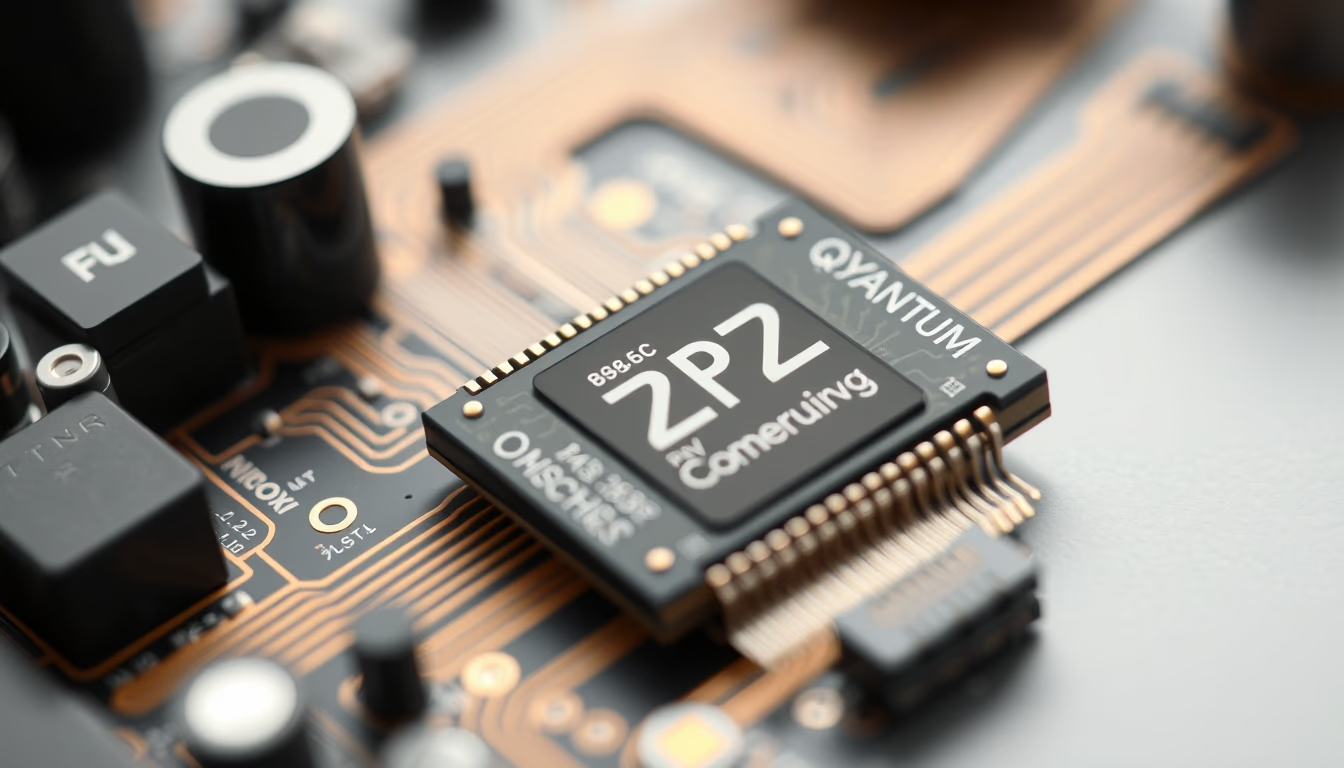
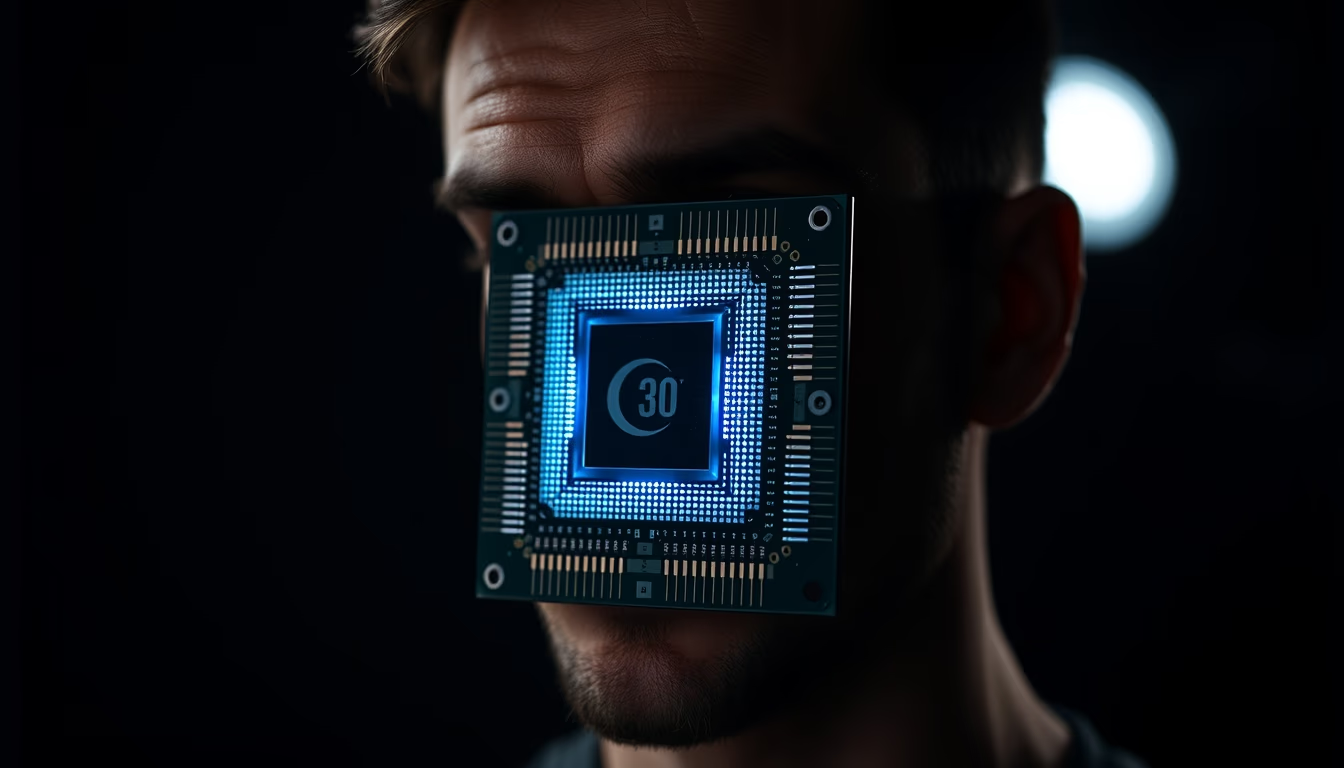
Quantum computer chip
1344×768 · AVIF · CC BY 4.0
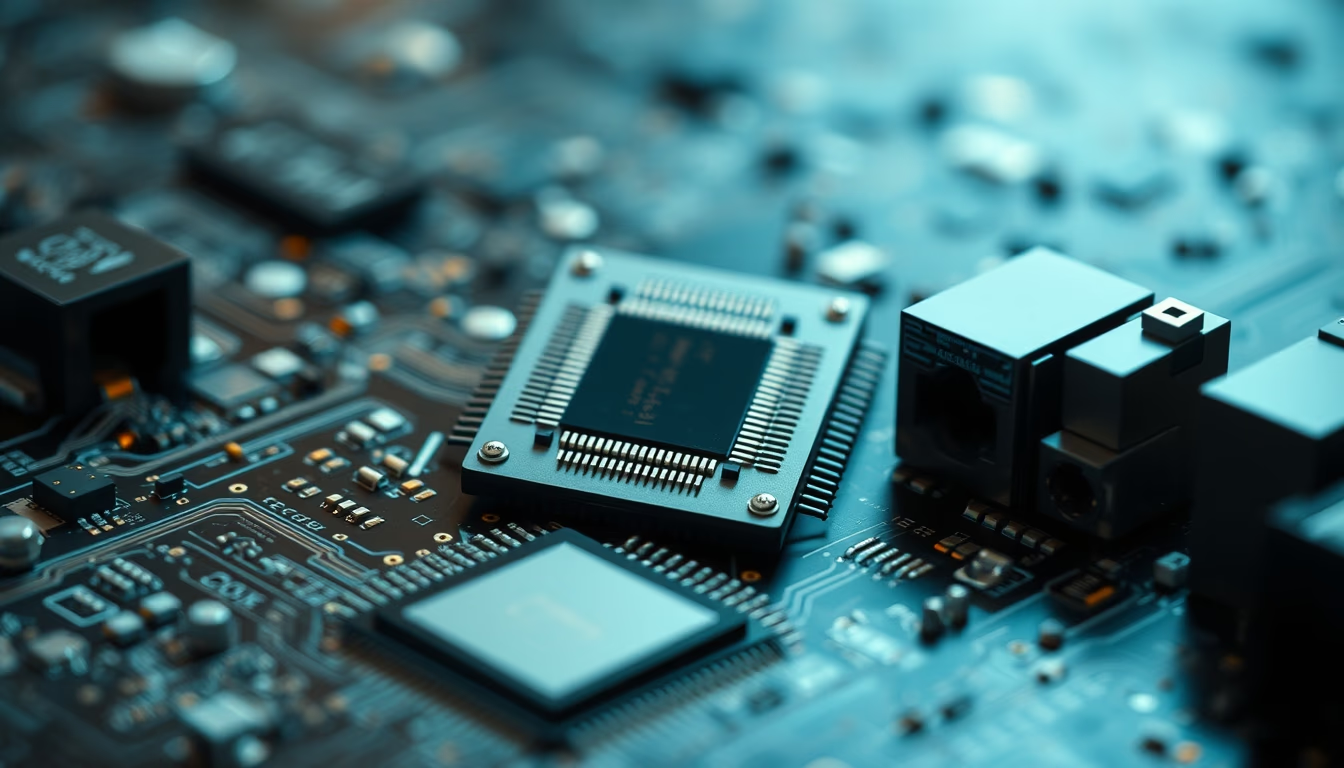
Quantum processors leverage qubits to process information exponentially faster than classical chips, revolutionizing fields like cryptography and molecular simulation.
About this subject
A quantum computer chip is the core component of a quantum computer, composed of qubits, the fundamental unit of quantum information. Unlike classical bits (0 or 1), qubits can exist in a superposition of states, allowing a single qubit to represent multiple values simultaneously. Moreover, qubits can become entangled, so that the state of one instantly influences another regardless of distance. This property underpins the exponential computational power of quantum computers. Current leading technologies include superconducting qubits (used by IBM, Google, and Rigetti) and trapped ions (pioneered by IonQ and Honeywell).
Despite progress, quantum computing remains in the NISQ (Noisy Intermediate-Scale Quantum) era, where chips feature tens to hundreds of qubits but are prone to errors due to decoherence. In 2019, Google's Sycamore processor demonstrated quantum supremacy by solving a problem in seconds that would take a classical supercomputer millennia. IBM has an ambitious roadmap to reach thousands of qubits, with the Condor chip planned for 2023. However, quantum error correction remains a critical challenge, as noise protection requires many physical qubits to represent a single logical qubit.
Practical applications of quantum chips range from cryptography, Shor's algorithm can break RSA encryption, to molecular simulation for drug discovery, logistics optimization, and artificial intelligence. In Brazil, research centers such as CBPF (Brazilian Center for Physics Research) and Unicamp study entanglement, quantum algorithms, and experimental implementations. Another curiosity: these chips operate at temperatures near absolute zero (around -273°C), requiring complex cryogenic systems. Companies like Microsoft are investing in topological qubits, promising greater stability.
Frequently Asked Questions
What is a quantum computer chip?
It is a processor that uses qubits, quantum information units capable of superposition and entanglement, to perform calculations exponentially faster than classical chips in specific tasks.
What is the difference between a quantum chip and a classical chip?
Classical chips use bits (0 or 1), while quantum chips use qubits that can be 0, 1, or both simultaneously (superposition), and can become entangled, enabling massive parallel processing.
What are the main current applications of quantum chips?
They are used in cryptography (code breaking), molecular simulation for drug discovery, logistics optimization, artificial intelligence, and factoring large numbers.
Direct URL
https://pub-c7d6a6ea828543ac903a74a341ccb2e1.r2.dev/imagens/quantum-computer-chip-film-grain-authentic-p3.avifHow to credit
Include a visible link back to UtilizAí. Copy one of the snippets below:
<a href="https://xn--utiliza-eza.com/en/midia/imagens/quantum-computer-chip-film-grain-authentic-p3">Quantum computer chip</a> by <a href="https://xn--utiliza-eza.com">UtilizAí</a>, licensed under <a href="https://creativecommons.org/licenses/by/4.0/">CC BY 4.0</a>.
[Quantum computer chip](https://xn--utiliza-eza.com/en/midia/imagens/quantum-computer-chip-film-grain-authentic-p3) by [UtilizAí](https://xn--utiliza-eza.com), CC BY 4.0
License: CC-BY-4.0