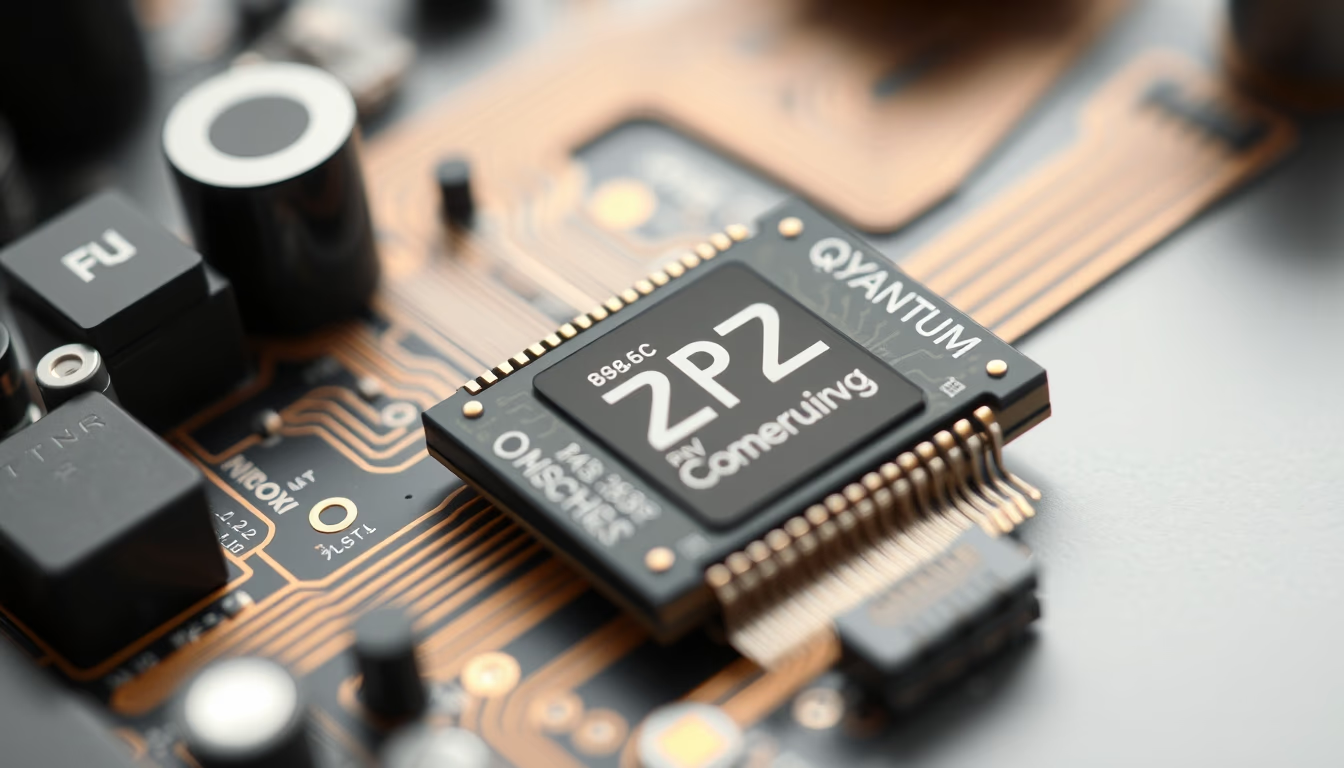
Quantum computer chip detail
1344×768 · AVIF · CC BY 4.0
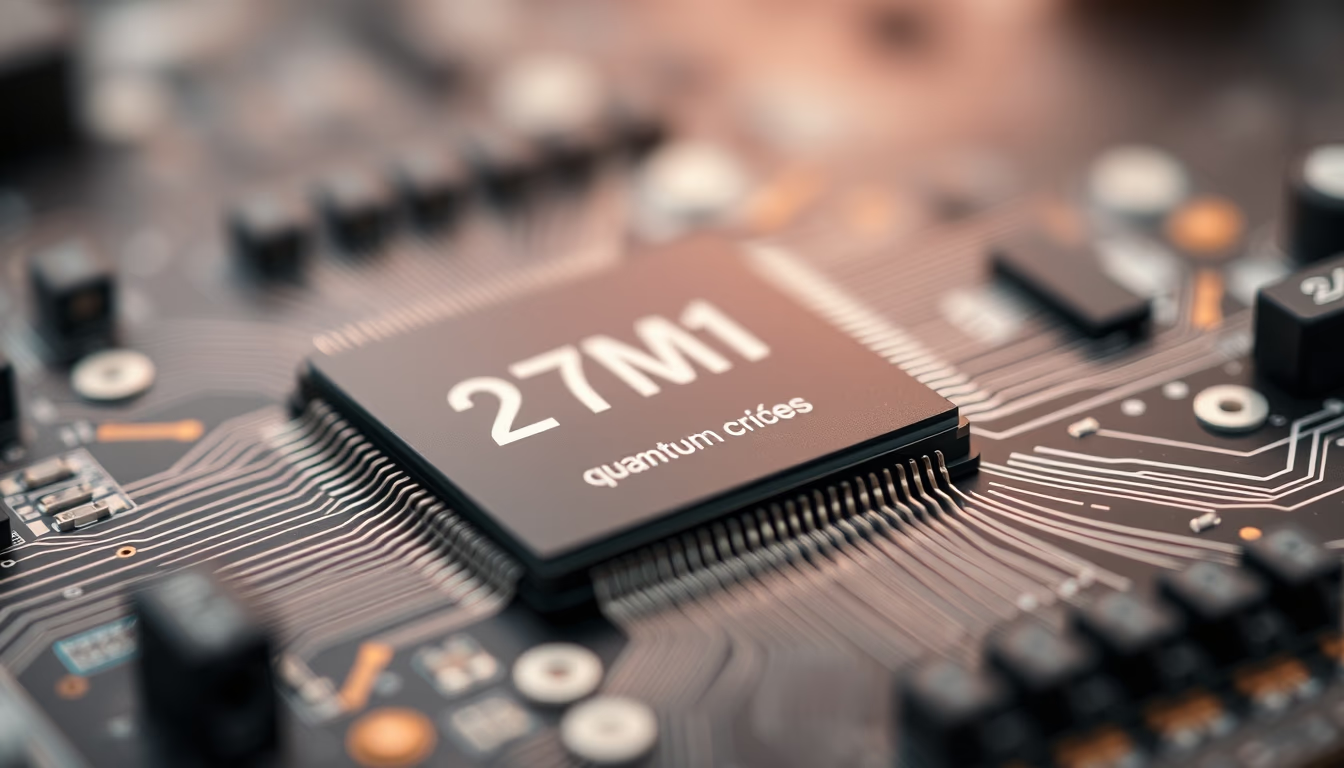
Close-up detail of a quantum computer chip, highlighting the intricate design of superconducting qubits and the cryogenic architecture required for operation.
About this subject
Quantum computer chips represent a technological leap over traditional semiconductor chips. Unlike classical bits, which store information as 0 or 1, qubits (quantum bits) can exist in a superposition of states, enabling parallel processing of multiple possibilities. The chip in the image displays an array of superconducting qubits, typically made of materials like niobium or aluminum, cooled to near absolute zero (about -273 °C) to minimize thermal noise and preserve quantum coherence.
The architecture of these chips is extremely sensitive. Each qubit consists of Josephson junctions, ultra-thin oxide layers sandwiched between two superconductors. The gold lines visible in the image are coaxial cables that deliver microwave signals to control the qubits, while the zigzag structures act as resonators to read out the quantum states. The geometric layout is designed to minimize crosstalk between neighboring qubits, one of the biggest challenges in quantum computing.
Today, companies such as IBM, Google, and Brazilian startups like QuBit Tecnologia develop chips with dozens to hundreds of qubits. The world record for qubits on a single chip is 1,121, achieved by IBM in 2023, but the number of qubits is not the only determining factor: error rates and coherence time are equally critical. The integration scale required for useful quantum computers (millions of qubits) still demands advances in materials, fabrication, and error correction.
In Brazil, the Institute of Physics of São Carlos (USP) and the National Center for Research in Energy and Materials (CNPEM) conduct quantum computing research for academic and industrial purposes. The image, obtained via scanning electron microscopy, illustrates extreme miniaturization: each qubit measures on the order of micrometers, comparable to a human hair split into 100 parts. These chips are manufactured in class 10 cleanrooms, where particle counts are rigorously controlled.
Frequently Asked Questions
What is a superconducting qubit?
A superconducting qubit is a device that uses superconducting circuits cooled to cryogenic temperatures to create a two-level quantum system. It is implemented with Josephson junctions and can be controlled by microwave pulses.
Why do quantum chips need to be cooled to such low temperatures?
To maintain quantum coherence, qubits require an environment with minimal thermal interference. Temperatures near absolute zero (about -273 °C) reduce noise and prevent quantum states from decaying rapidly.
What is the difference between a quantum chip and a classical chip?
Classical chips process bits that are either 0 or 1, while quantum chips use qubits that can be in superposition. This allows quantum computers to solve certain problems exponentially faster, such as molecular simulations and combinatorial optimization.
Direct URL
https://pub-c7d6a6ea828543ac903a74a341ccb2e1.r2.dev/imagens/quantum-computer-chip-detail-macro-closeup-p8.avifHow to credit
Include a visible link back to UtilizAí. Copy one of the snippets below:
<a href="https://xn--utiliza-eza.com/en/midia/imagens/quantum-computer-chip-detail-macro-closeup-p8">Quantum computer chip detail</a> by <a href="https://xn--utiliza-eza.com">UtilizAí</a>, licensed under <a href="https://creativecommons.org/licenses/by/4.0/">CC BY 4.0</a>.
[Quantum computer chip detail](https://xn--utiliza-eza.com/en/midia/imagens/quantum-computer-chip-detail-macro-closeup-p8) by [UtilizAí](https://xn--utiliza-eza.com), CC BY 4.0
License: CC-BY-4.0