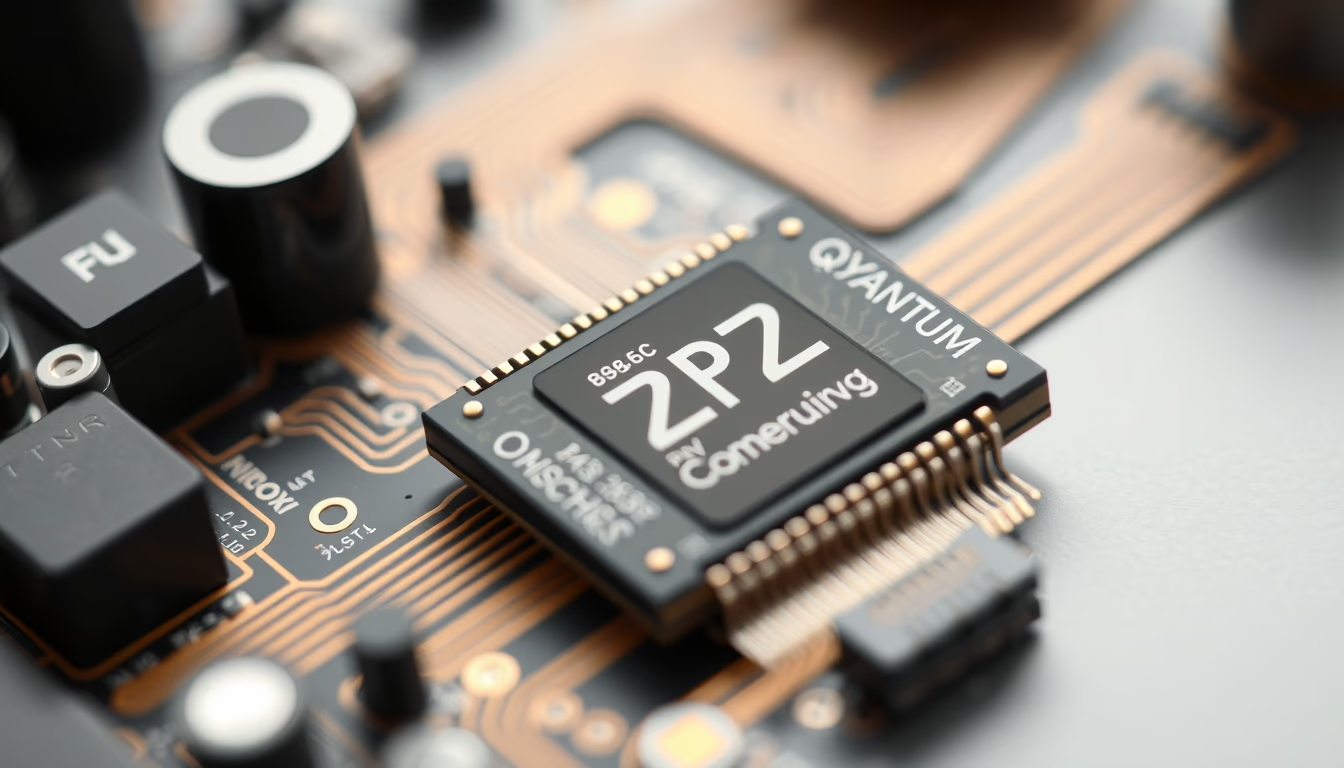
Quantum computer chip
1344×768 · AVIF · CC BY 4.0
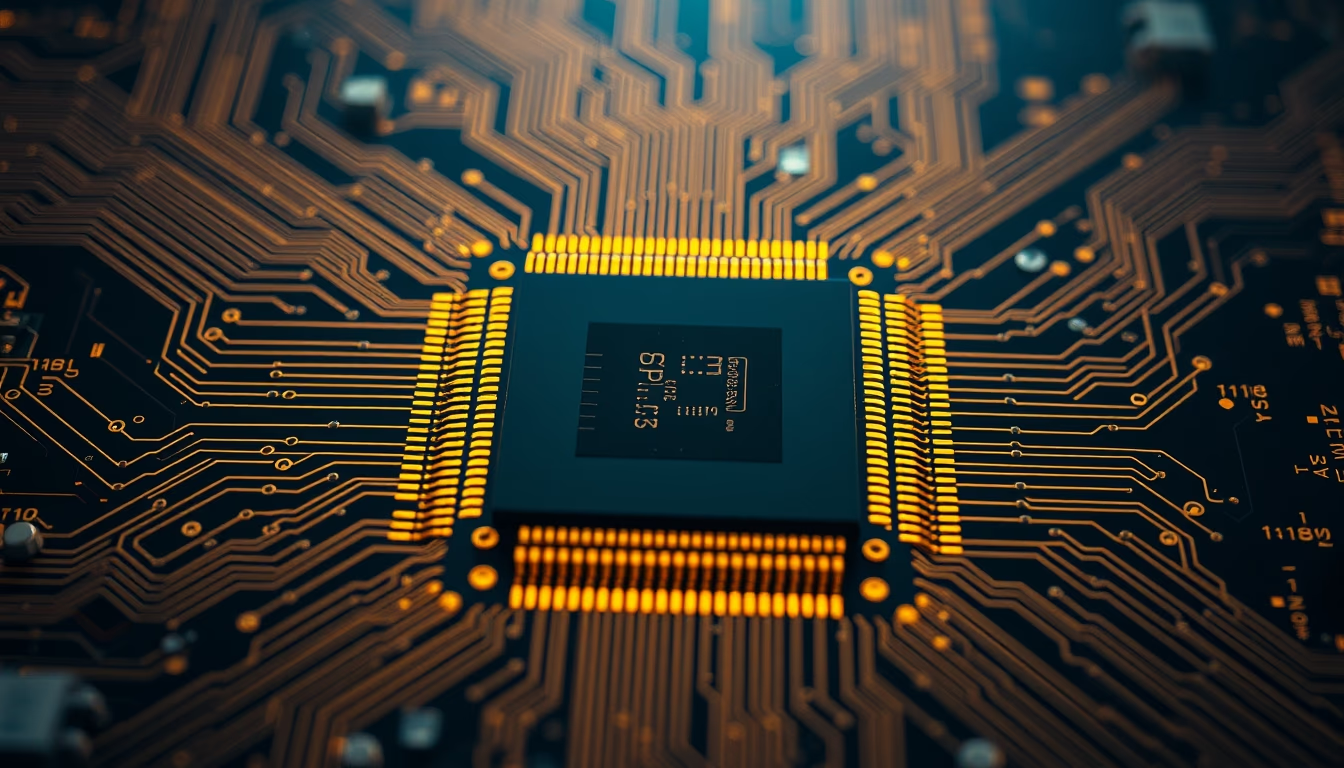
Quantum processors use qubits to perform calculations exponentially faster than classical chips, revolutionizing fields like cryptography and molecular simulation.
About this subject
A quantum computer chip is the core component of a quantum computer, processing information using qubits (quantum bits) instead of classical bits. Unlike classical bits representing 0 or 1, qubits can exist in superposition states, enabling massive parallel operations. These chips are built from materials like silicon, superconductors, or trapped ions, operating at near absolute zero (around -273°C) to minimize environmental interference.
The significance of quantum chips extends beyond computing: they promise to accelerate discoveries in chemistry, materials science, and artificial intelligence. Companies like Google, IBM, and D-Wave have demonstrated functional prototypes, though challenges such as error correction and scalability remain. The term quantum supremacy was coined when a Google quantum processor performed a calculation in seconds that would take classical supercomputers thousands of years.
In Brazil, quantum computing research is underway at institutions like Unicamp and ITA, focusing on algorithms and hardware. The technology is still emerging, but commercial quantum chips are projected within the next decade, impacting sectors like cybersecurity and logistics. Interestingly, qubit operation relies on quantum mechanics, the theory behind phenomena like quantum tunneling, which is also essential for modern electronic components.
Frequently Asked Questions
What is a qubit and how is it different from a classical bit?
A qubit is the basic unit of quantum information, analogous to a classical bit, but it can exist in superposition of 0 and 1 simultaneously. This allows quantum computers to process many possibilities at once, speeding up certain computations.
What are the main applications of quantum chips?
They are used in cryptography, molecular simulation for drug and material discovery, logistics optimization, and artificial intelligence. Still experimental, they promise to solve problems intractable for classical computers.
What temperature is required to operate a quantum chip?
Most superconducting quantum chips require temperatures near absolute zero (about -273°C), maintained by dilution refrigerators, to reduce thermal noise and preserve qubit coherence.
Direct URL
https://pub-c7d6a6ea828543ac903a74a341ccb2e1.r2.dev/imagens/quantum-computer-chip-cinematic-wide-shot-p11.avifHow to credit
Include a visible link back to UtilizAí. Copy one of the snippets below:
<a href="https://xn--utiliza-eza.com/en/midia/imagens/quantum-computer-chip-cinematic-wide-shot-p11">Quantum computer chip</a> by <a href="https://xn--utiliza-eza.com">UtilizAí</a>, licensed under <a href="https://creativecommons.org/licenses/by/4.0/">CC BY 4.0</a>.
[Quantum computer chip](https://xn--utiliza-eza.com/en/midia/imagens/quantum-computer-chip-cinematic-wide-shot-p11) by [UtilizAí](https://xn--utiliza-eza.com), CC BY 4.0
License: CC-BY-4.0