Pyrite gold cubes
1344×768 · AVIF · CC BY 4.0
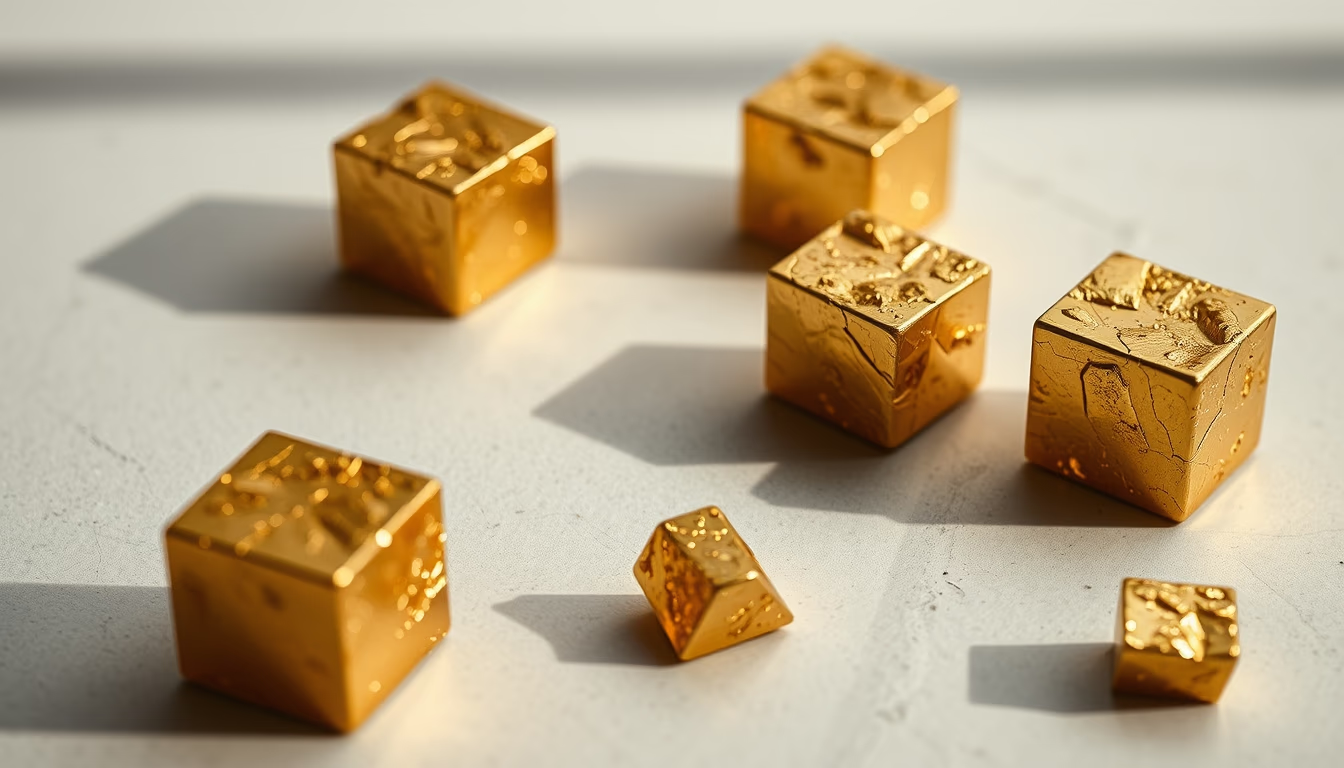
Pirita, conhecida como ouro dos tolos, é um mineral de sulfeto de ferro que forma cristais cúbicos dourados. Fatos geológicos, ocorrências e usos.
Sobre o tema
A pirita, cuja fórmula química é FeS2, é um mineral do grupo dos sulfetos. Sua coloração dourada e brilho metálico intenso a tornam facilmente confundível com ouro, daí o apelido de ouro dos tolos. Os cristais frequentemente exibem formas cúbicas perfeitas, com estrias nas faces, resultado de seu sistema cristalino isométrico. A pirita não é um metal precioso; é um composto de ferro e enxofre.
Esse mineral se forma em uma variedade de ambientes geológicos, incluindo veios hidrotermais de alta e baixa temperatura, rochas sedimentares ricas em matéria orgânica e metamórficas. No Brasil, ocorrências importantes são encontradas em Minas Gerais, especialmente na região de Ouro Preto e Mariana, associadas a depósitos de ouro. Mundialmente, destaca-se a região de Huanzala no Peru, as minas de Navajún na Espanha (famosas por seus cubos perfeitos) e os depósitos de carvão nos Estados Unidos.
Historicamente, a pirita foi usada na produção de ácido sulfúrico, fundamental para a indústria química. Durante a corrida do ouro, muitos garimpeiros foram enganados pela sua semelhança com o ouro. A pirita pode conter quantidades traço de ouro verdadeiro em sua estrutura, mas em geral não é economicamente viável para extração de ouro. Atualmente, é muito valorizada por colecionadores de minerais, especialmente os cristais cúbicos bem formados.
Um aspecto ambiental relevante é que a pirita, quando exposta ao ar e à água, oxida e gera ácido sulfúrico, contribuindo para a drenagem ácida de minas. Esse fenômeno é um grande desafio para a remediação de sítios minerários. Apesar disso, a beleza e a geometria dos cubos de pirita continuam a fascinar geólogos e amantes de minerais ao redor do mundo.
Perguntas frequentes
Por que a pirita é chamada de ouro dos tolos?
Por causa de sua cor dourada e brilho metálico, que enganam pessoas inexperientes fazendo-as acreditar que encontraram ouro. O ouro verdadeiro é maleável e não produz faísca quando golpeado, ao contrário da pirita.
A pirita tem algum valor econômico?
Sim, foi usada na produção de ácido sulfúrico e pode conter pequenas quantidades de ouro. Hoje, cristais bem formados têm valor para colecionadores.
Onde posso encontrar cristais cúbicos de pirita?
Os exemplares mais famosos vêm da mina de Navajún, na Espanha, que produz cubos quase perfeitos. No Brasil, há ocorrências em Minas Gerais, como na região de Ouro Preto.
URL direta
https://pub-c7d6a6ea828543ac903a74a341ccb2e1.r2.dev/imagens/pyrite-gold-cubes-magazine-editorial-p2.avifComo creditar
Inclua um link visível de volta pro UtilizAí. Copie um dos snippets abaixo:
<a href="https://xn--utiliza-eza.com/midia/imagens/pyrite-gold-cubes-magazine-editorial-p2">Pyrite gold cubes</a> by <a href="https://xn--utiliza-eza.com">UtilizAí</a>, licensed under <a href="https://creativecommons.org/licenses/by/4.0/">CC BY 4.0</a>.
[Pyrite gold cubes](https://xn--utiliza-eza.com/midia/imagens/pyrite-gold-cubes-magazine-editorial-p2) by [UtilizAí](https://xn--utiliza-eza.com), CC BY 4.0
Licença: CC-BY-4.0