Pyrite gold cubes
1344×768 · AVIF · CC BY 4.0
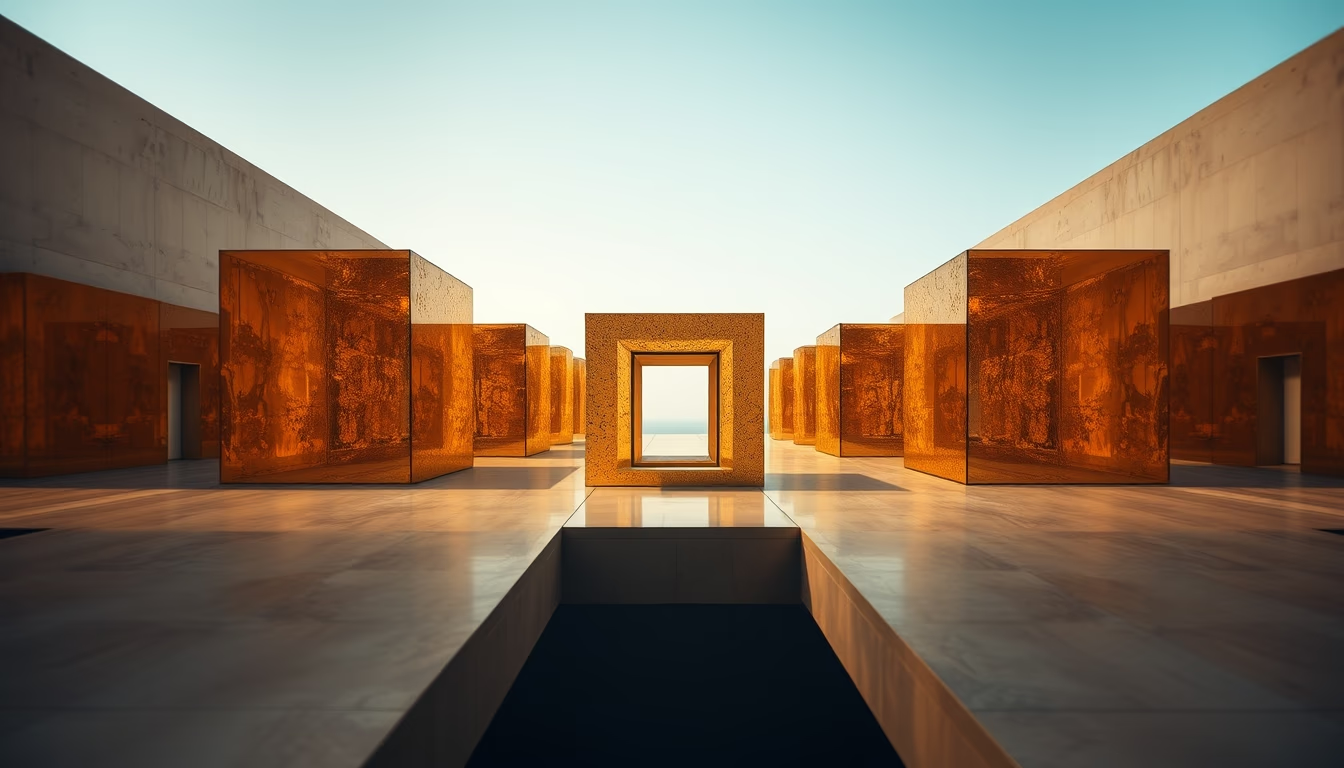
Pyrite, also known as fool's gold, forms golden cubes that deceive many. Discover its properties, uses, and curiosities.
About this subject
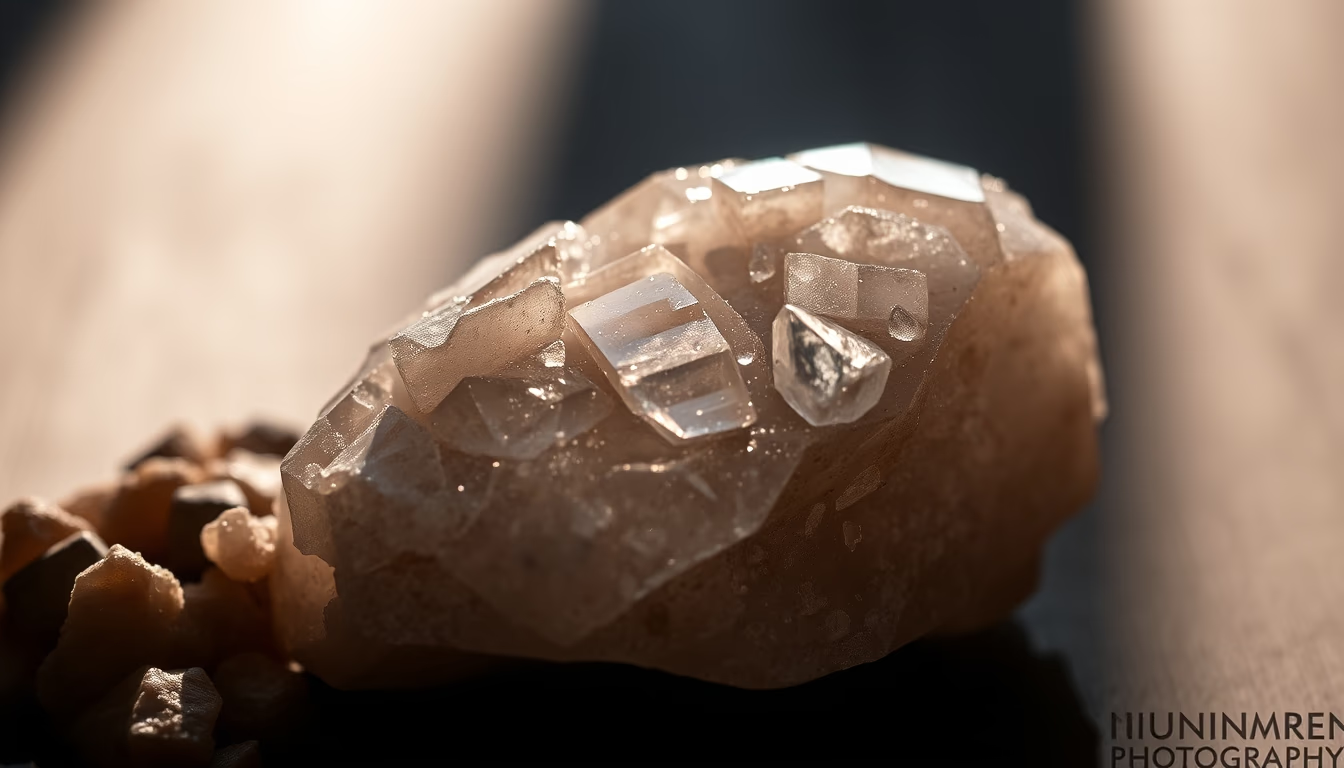
Pyrite is a mineral composed of iron sulfide (FeS2), famous for its cubic crystals with a metallic golden luster. Often mistaken for real gold, it is distinguished by being harder (Mohs scale 6-6.5) and less dense. Its color and cubic habit make it a popular item among collectors.
This mineral occurs in various geological settings, such as hydrothermal veins, sedimentary deposits, and even meteorites. The main deposits are in Peru, Spain, and the United States. In Brazil, significant occurrences are found in Minas Gerais and Bahia, often associated with quartzites and schists.
Historically, pyrite was used to produce sparks in flintlocks, giving rise to its Greek name "pyr" (fire). Today, it is a crucial raw material in the production of sulfuric acid. In interior design, polished pyrite cubes are used as decorative elements, adding a metallic and natural touch to architectural spaces.
Interestingly, pyrite can undergo oxidation when exposed to moisture, generating sulfuric acid and contributing to the phenomenon of acid mine drainage. Its perfect cubic structure is a classic example of crystal symmetry, widely studied in mineralogy.
Frequently Asked Questions
What is the difference between pyrite and gold?
Pyrite (FeS2) is an iron sulfide, while gold (Au) is a native element. Pyrite is harder and less dense than gold, and not malleable. A simple test: gold scratches easily and does not react to acids, whereas pyrite produces a sulfur smell when heated.
Does pyrite have economic value?
Yes, but not as gold. Pyrite is used industrially in the production of sulfuric acid and, to a lesser extent, as a gemstone in jewelry. Well-formed crystals are valued by collectors. The value depends on size, crystal perfection, and origin.
Where can I find pyrite cubes in Brazil?
Famous deposits include the Morro Velho region in Minas Gerais and the city of Jacobina in Bahia. There are also occurrences in Goiás and Rio Grande do Sul. Collectors often purchase specimens at mineral fairs or specialized shops.
Direct URL
https://pub-c7d6a6ea828543ac903a74a341ccb2e1.r2.dev/imagens/pyrite-gold-cubes-architectural-photography-p7.avifHow to credit
Include a visible link back to UtilizAí. Copy one of the snippets below:
<a href="https://xn--utiliza-eza.com/en/midia/imagens/pyrite-gold-cubes-architectural-photography-p7">Pyrite gold cubes</a> by <a href="https://xn--utiliza-eza.com">UtilizAí</a>, licensed under <a href="https://creativecommons.org/licenses/by/4.0/">CC BY 4.0</a>.
[Pyrite gold cubes](https://xn--utiliza-eza.com/en/midia/imagens/pyrite-gold-cubes-architectural-photography-p7) by [UtilizAí](https://xn--utiliza-eza.com), CC BY 4.0
License: CC-BY-4.0