Puppet theater venetian
1344×768 · AVIF · CC BY 4.0
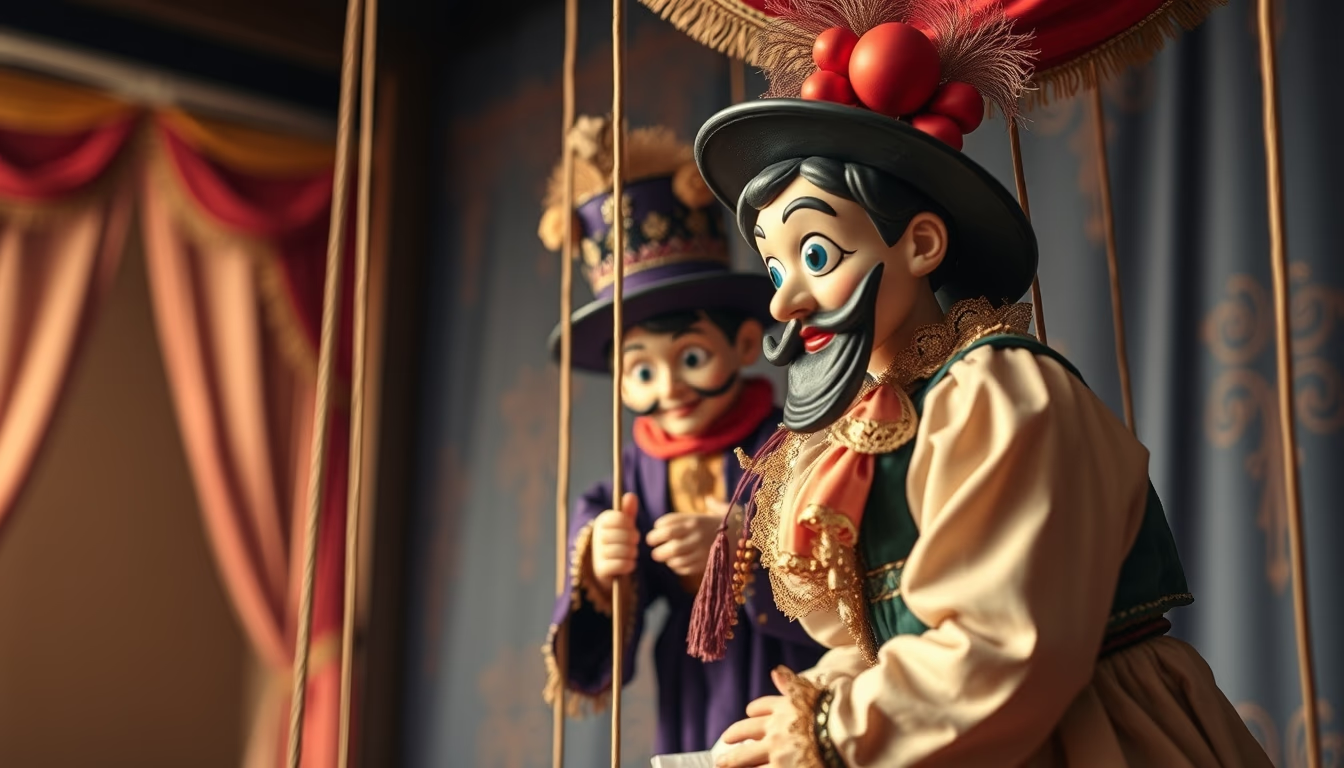
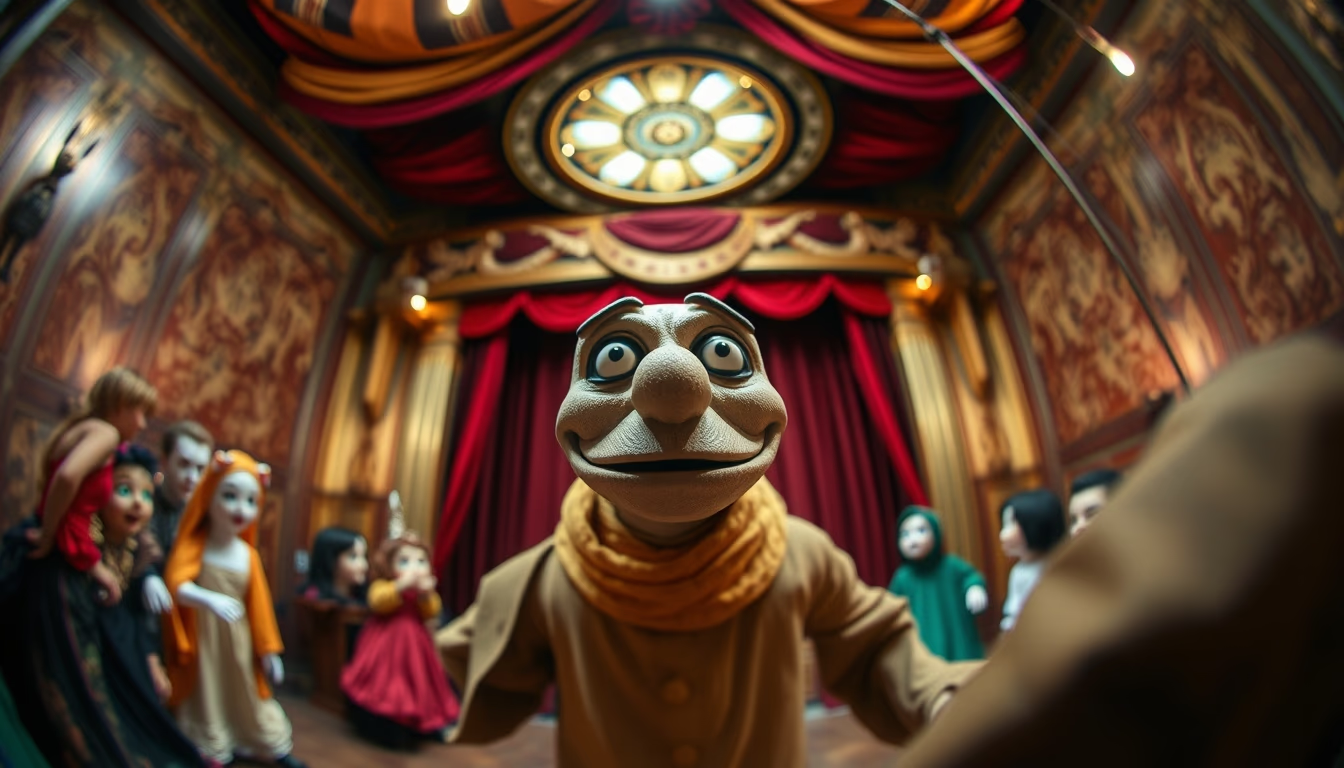
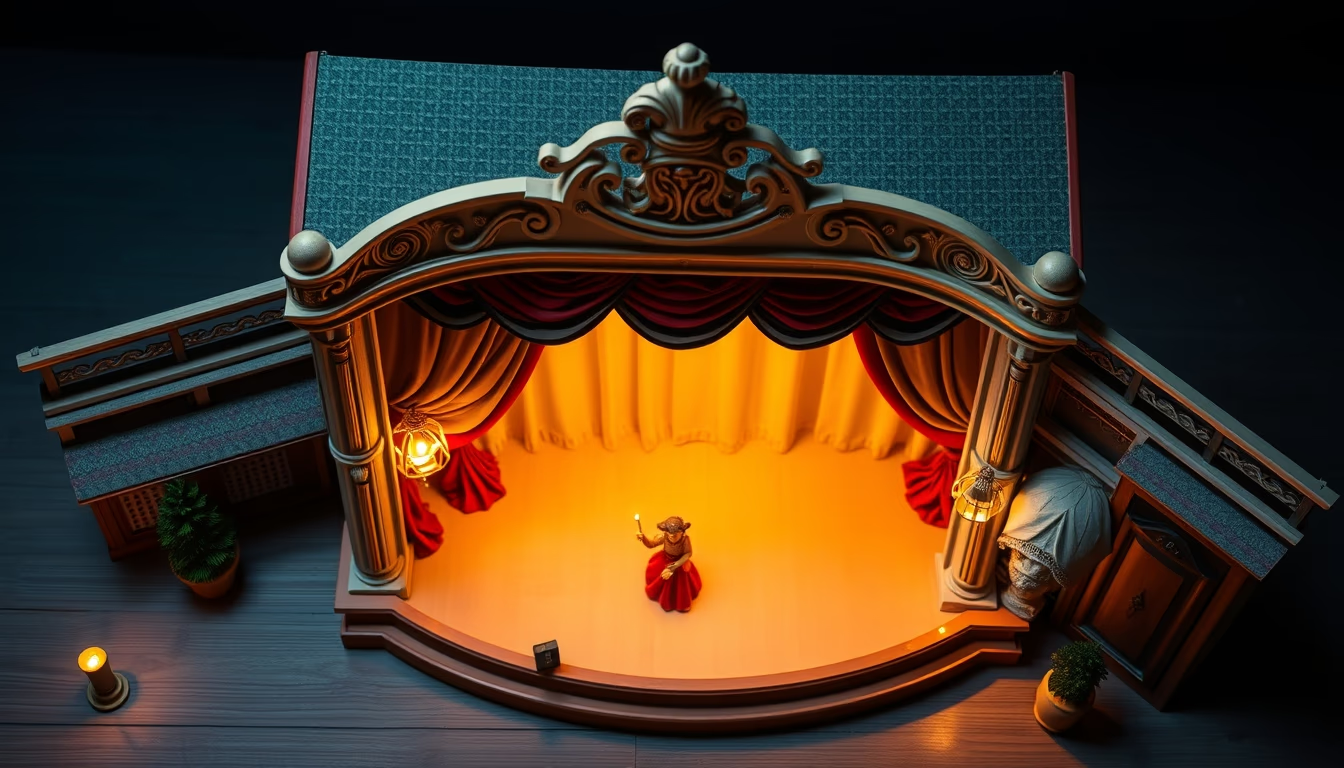
Venetian puppet theater, a centuries-old tradition in the streets of Venice, delights with wooden marionettes and commedia dell'arte plots, keeping Italian popular culture alive.
About this subject
Venetian puppet theater dates back to the 16th century, when traveling performers used string marionettes to tell commedia dell'arte stories, especially in Venice's squares. These wooden puppets, hand-carved and painted, portrayed characters like Arlecchino, Colombina, and Pantalone, iconic figures of Italian improvised theater. The manipulation technique involves strings and rods, requiring skill from puppeteers who often performed on small stages set up on carts or street corners.
Unlike hand puppets (burattini), Venetian string marionettes allow more complex movements, such as arm and leg gestures. During the Venice Carnival, puppet shows are common, blending political satire and popular comedy. Venice was a key center for this theater in the Renaissance, influencing companies across Europe. Today, groups like Compagnia Marionettistica Carlo Colla and Teatro dei Burattini di Venezia preserve the tradition, with performances in historic theaters like Teatro Goldoni.
Creating marionettes is an art in itself: limewood is carved, joints are made with leather or metal, and clothes are hand-embroidered with fine fabrics. Each puppet can take weeks to complete. Beyond entertainment, Venetian puppet theater served as social commentary, subtly criticizing nobles and clergy. UNESCO has acknowledged the cultural relevance of this art form, though it is not on its intangible heritage list; local efforts aim to revitalize it among youth.
Fun fact: in the Venetian language, puppets are called "mariónete" or "buratìn", and records show performances in the 17th century at squares like Piazza San Marco. The tradition endures with annual festivals such as the Festival del Teatro di Figura in Venice, gathering artists from around the world.
Frequently Asked Questions
What is the difference between Venetian marionettes and hand puppets?
Venetian marionettes are articulated puppets controlled by strings and rods, allowing detailed movements. Hand puppets (burattini) are operated directly by the puppeteer's hand, who wears the puppet like a glove and moves the head and arms with fingers.
Where can I watch puppet theater performances in Venice today?
You can see shows at Teatro Goldoni, Teatro dei Burattini di Venezia, or during the Venice Carnival, when groups perform in squares like Piazza San Marco and Campo Santa Margherita.
Are Venetian puppets related to commedia dell'arte?
Yes, Venetian marionettes often portray classic commedia dell'arte characters like Arlecchino, Colombina, and Pantalone, adapting the improvised and satirical plots of that theatrical style for puppet theater.
Direct URL
https://pub-c7d6a6ea828543ac903a74a341ccb2e1.r2.dev/imagens/puppet-theater-venetian-documentary-photography-fresh0.avifHow to credit
Include a visible link back to UtilizAí. Copy one of the snippets below:
<a href="https://xn--utiliza-eza.com/en/midia/imagens/puppet-theater-venetian-documentary-photography-fresh0">Puppet theater venetian</a> by <a href="https://xn--utiliza-eza.com">UtilizAí</a>, licensed under <a href="https://creativecommons.org/licenses/by/4.0/">CC BY 4.0</a>.
[Puppet theater venetian](https://xn--utiliza-eza.com/en/midia/imagens/puppet-theater-venetian-documentary-photography-fresh0) by [UtilizAí](https://xn--utiliza-eza.com), CC BY 4.0
License: CC-BY-4.0