Puffin nesting cliff
1344×768 · AVIF · CC BY 4.0
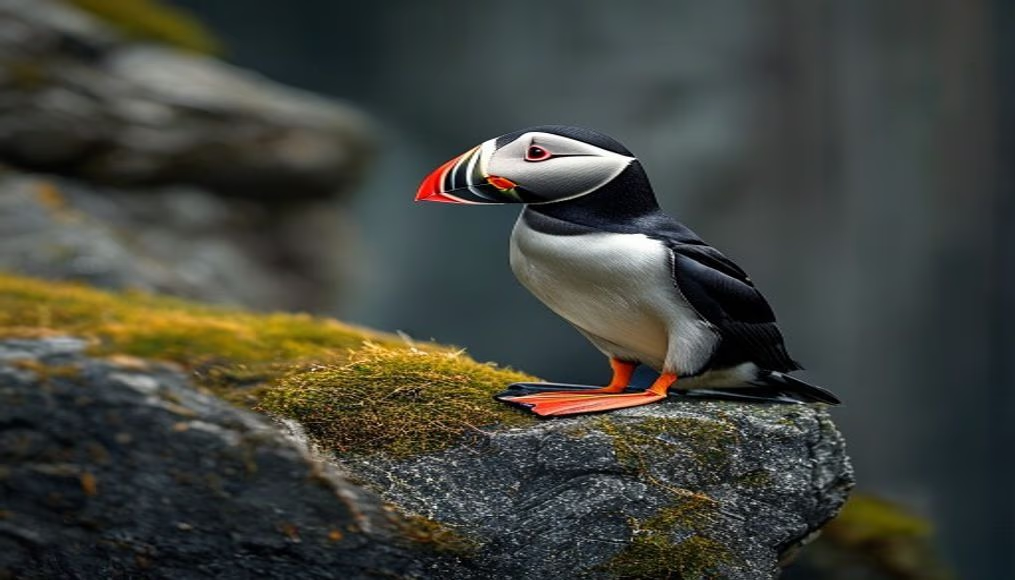
Os papagaios-do-mar (Fratercula arctica) nidificam em penhascos isolados do Atlântico Norte, formando colônias ruidosas que escavam tocas no solo gramado.
Sobre o tema
Os papagaios-do-mar são aves marinhas icônicas reconhecidas pelo bico colorido e comportamento cativante. Durante a primavera e o verão, centenas de milhares de indivíduos migram para ilhas e penhascos do Atlântico Norte, como os arquipélagos de Vestmannaeyjar (Islândia), St. Kilda (Escócia) e a Ilha de Skomer (País de Gales). Nessas áreas, eles escavam tocas de até 1,5 metro de comprimento para proteger seus ovos e filhotes de predadores como gaivotas e skúas.
Cada casal de puffins geralmente bota um único ovo por ano. Ambos os pais se revezam na incubação, que dura cerca de 36 a 45 dias. Após a eclosão, o filhote (chamado puffling) permanece no ninho por aproximadamente seis semanas, sendo alimentado com pequenos peixes, como arenques e capelins, que os pais carregam no bico em fileiras organizadas, um espetáculo de eficiência que atrai observadores de aves do mundo todo.
Apesar de sua aparência charmosa, os puffins enfrentam desafios crescentes. As alterações climáticas afetam a disponibilidade de peixes, e a poluição por plásticos nos oceanos ameaça sua alimentação. Em colônias bem preservadas, como na Islândia, onde cerca de 60% da população mundial de puffins se reproduz, medidas de conservação incluem o controle de predadores introduzidos e a restrição do turismo durante a época de nidificação. Estima-se que a população global tenha sofrido um declínio de 30% nas últimas décadas, levando a espécie a ser classificada como Vulnerável pela IUCN.
Perguntas frequentes
Onde os papagaios-do-mar constroem seus ninhos?
Eles nidificam em penhascos e ilhas costeiras do Atlântico Norte, escavando tocas no solo gramado ou entre rochas. Colônias famosas incluem as Ilhas Farne (Inglaterra) e os penhascos de Látrabjarg (Islândia).
Por que os puffins estão ameaçados?
As principais ameaças são a escassez de peixes devido ao aquecimento dos oceanos, a poluição por plástico, a predação por espécies invasoras e eventos climáticos extremos que alagam as tocas. A IUCN classifica a espécie como Vulnerável.
Quantos filhotes um casal de puffins cria por ano?
Geralmente apenas um filhote por temporada. O ovo é incubado por ambos os pais, e o jovem puffling fica no ninho de seis a sete semanas antes de partir para o mar.
URL direta
https://pub-c7d6a6ea828543ac903a74a341ccb2e1.r2.dev/imagens/puffin-nesting-cliff-studio-still-life-p1.avifComo creditar
Inclua um link visível de volta pro UtilizAí. Copie um dos snippets abaixo:
<a href="https://xn--utiliza-eza.com/midia/imagens/puffin-nesting-cliff-studio-still-life-p1">Puffin nesting cliff</a> by <a href="https://xn--utiliza-eza.com">UtilizAí</a>, licensed under <a href="https://creativecommons.org/licenses/by/4.0/">CC BY 4.0</a>.
[Puffin nesting cliff](https://xn--utiliza-eza.com/midia/imagens/puffin-nesting-cliff-studio-still-life-p1) by [UtilizAí](https://xn--utiliza-eza.com), CC BY 4.0
Licença: CC-BY-4.0