Pottery wheel hands clay
1344×768 · AVIF · CC BY 4.0
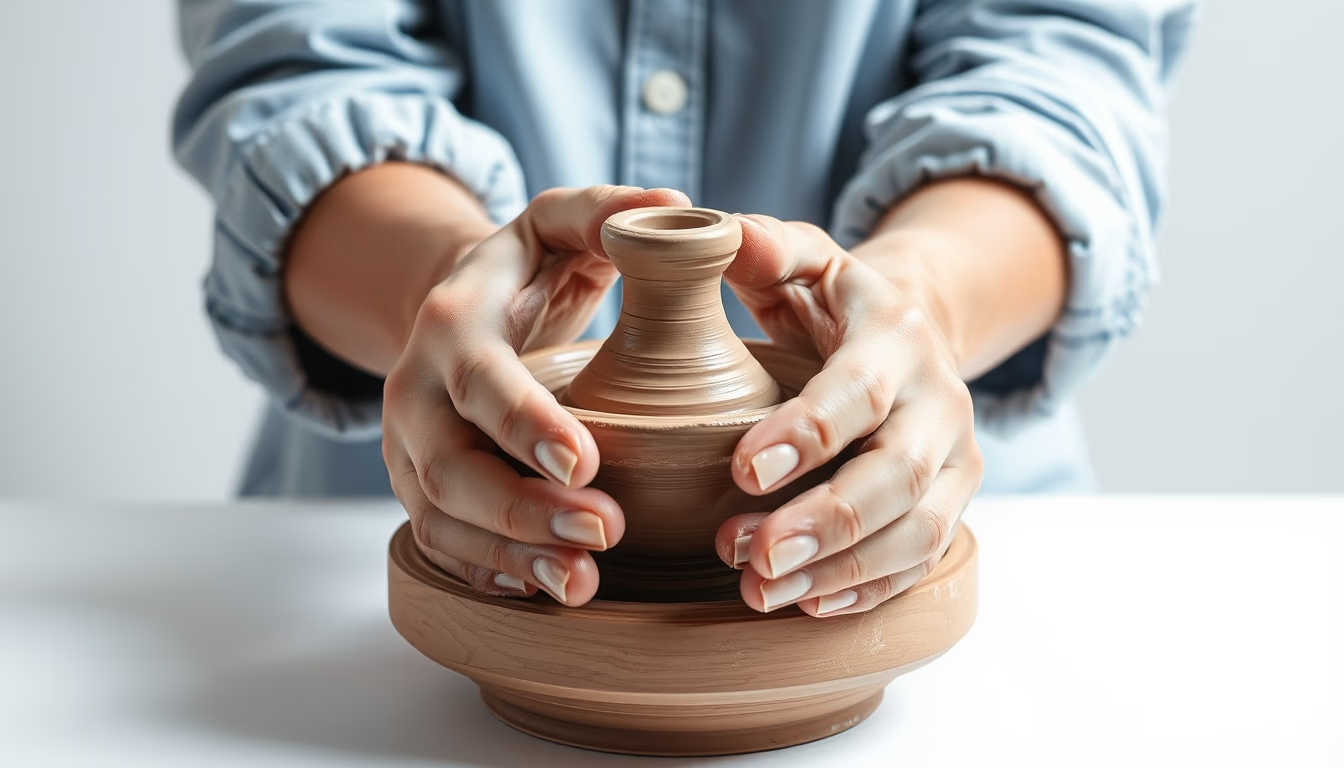
The ancient technique of shaping clay on the potter's wheel is one of humanity's oldest artistic expressions, combining manual skill and creativity.
About this subject
The potter's wheel, also known as a throwing wheel, is a tool that revolutionized the production of clay artifacts. Its invention dates back to Mesopotamia around 3000 BCE, enabling the creation of symmetrical and uniform pieces much faster than hand-building. This innovation spread throughout the ancient world, from Egypt to China, becoming essential for the cultural and economic development of various civilizations. In Brazil, handmade pottery has indigenous roots and was enriched by Portuguese tradition, with notable regions such as the Jequitinhonha Valley in Minas Gerais, where clay work is a source of income and cultural identity.
In the throwing process, the potter places a lump of clay on the center of the spinning wheel. With wet hands, they perform the steps of centering, opening, and pulling up the wall, controlling pressure and movement to shape the piece. Each movement requires fine coordination and tactile sensitivity, as the clay responds to any variation in force. After shaping, the piece undergoes drying, firing, and often glazing. The practice not only produces utilitarian or decorative objects but also offers therapeutic benefits: the rhythm of the wheel and the required concentration promote a state of mindfulness, reducing stress and stimulating creativity.
Currently, handmade pottery is experiencing a global renaissance. Industry data indicates a 15% annual growth in the market for pottery workshops, driven by the search for manual and sustainable hobbies. Furthermore, UNESCO has recognized the potter's craft as Intangible Cultural Heritage in some regions. The image of hands shaping clay on the wheel symbolizes this ancestral connection between humans and the earth, a practice that continues to enchant and transform simple raw materials into works of art.
Frequently Asked Questions
What is the origin of the potter's wheel?
The potter's wheel originated in Mesopotamia around 3000 BCE, revolutionizing pottery production by enabling symmetrical and faster pieces.
How is shaping done on the wheel?
The potter places a lump of clay on the center of the spinning wheel, centers it, opens a hole with thumbs, pulls up the walls, and shapes it with hands and tools. Pressure and speed determine the final form.
Why is wheel pottery therapeutic?
It requires full concentration and steady rhythm, promoting mindfulness and stress reduction. It also stimulates creativity and provides a sense of accomplishment by transforming clay into functional or artistic objects.
Direct URL
https://pub-c7d6a6ea828543ac903a74a341ccb2e1.r2.dev/imagens/pottery-wheel-hands-clay-commercial-product-photography-p2.avifHow to credit
Include a visible link back to UtilizAí. Copy one of the snippets below:
<a href="https://xn--utiliza-eza.com/en/midia/imagens/pottery-wheel-hands-clay-commercial-product-photography-p2">Pottery wheel hands clay</a> by <a href="https://xn--utiliza-eza.com">UtilizAí</a>, licensed under <a href="https://creativecommons.org/licenses/by/4.0/">CC BY 4.0</a>.
[Pottery wheel hands clay](https://xn--utiliza-eza.com/en/midia/imagens/pottery-wheel-hands-clay-commercial-product-photography-p2) by [UtilizAí](https://xn--utiliza-eza.com), CC BY 4.0
License: CC-BY-4.0