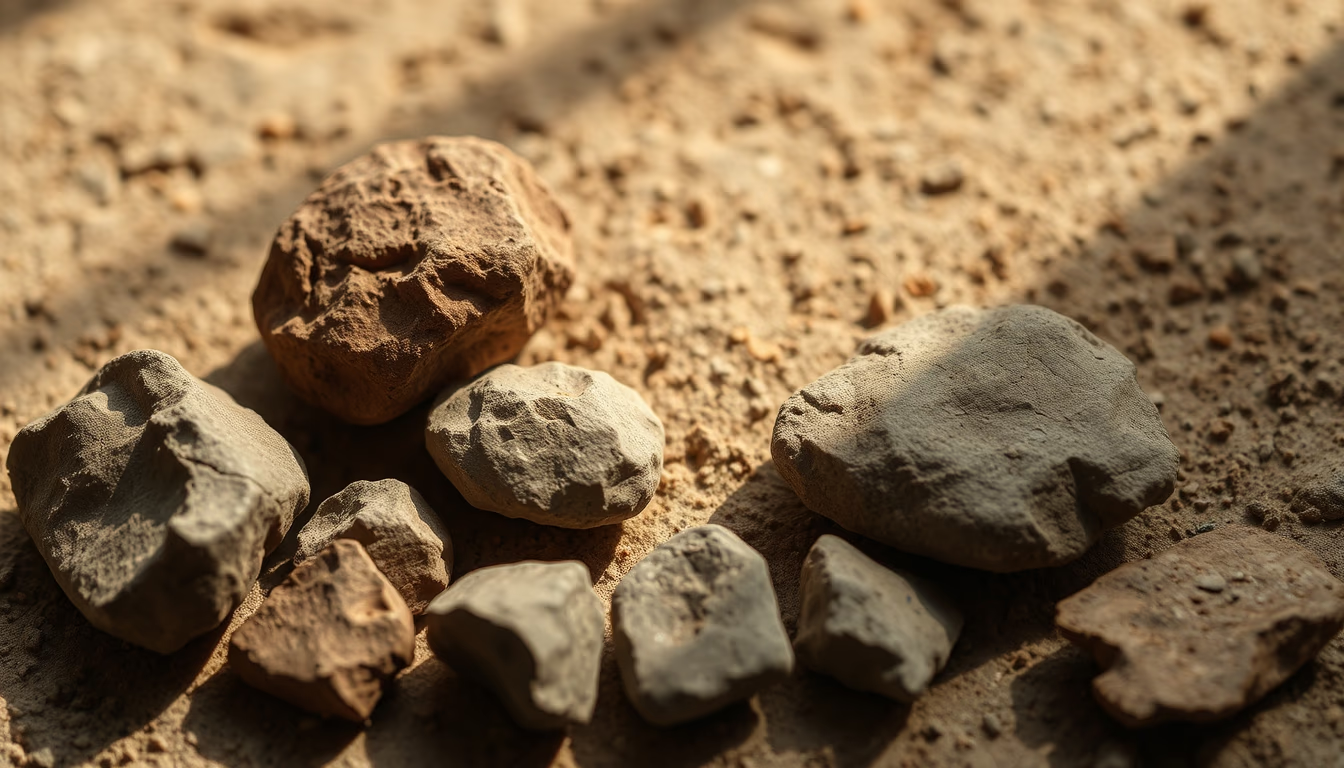
Pottery shards ancient
1344×768 · AVIF · CC BY 4.0
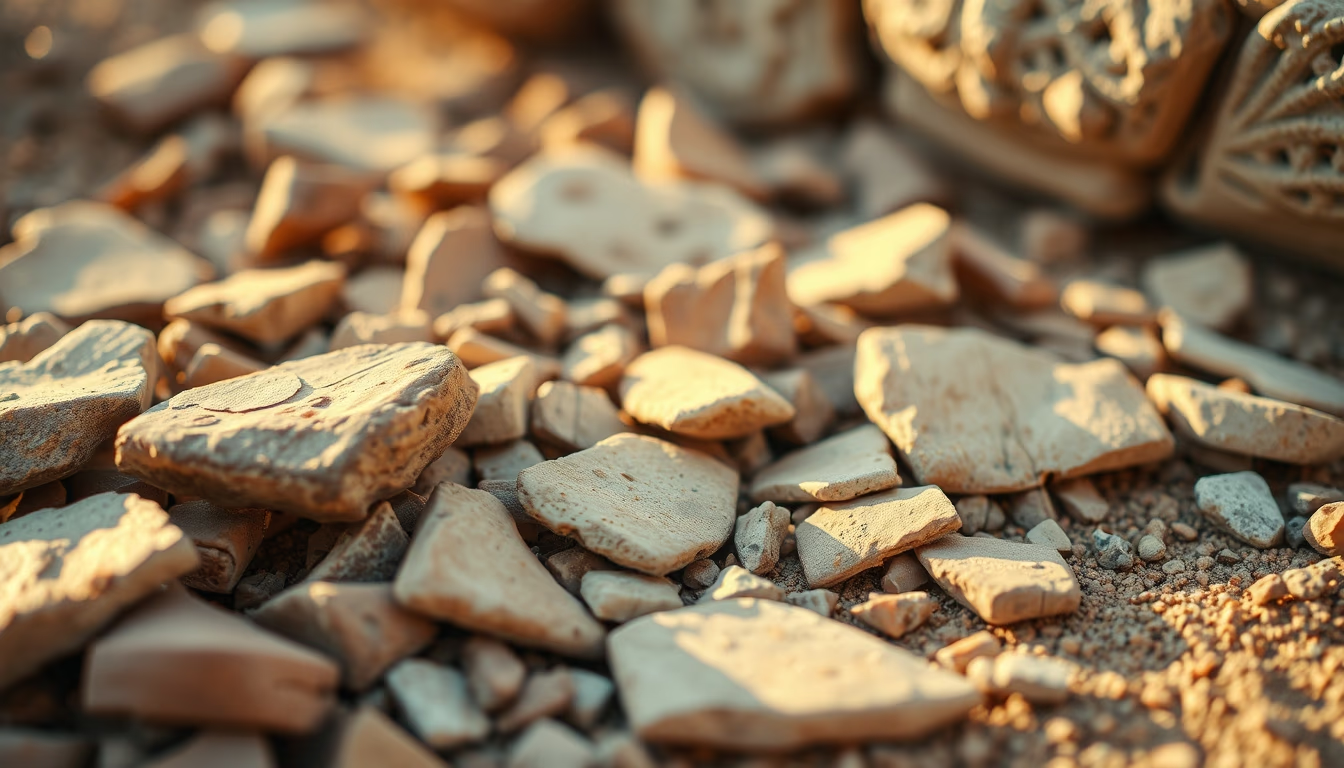
Ancient pottery shards reveal dietary habits, trade routes, and production techniques of past civilizations.
About this subject
Pottery shards, or fragments of broken vessels and utensils, are among the most common finds at archaeological sites worldwide. Their abundance and durability make them valuable sources of information about ancient societies, from prehistory to historical periods. Each shard carries clues about manufacturing techniques, such as clay selection, firing temperature, and the use of slips or glazes. Typological analysis allows classification of shapes and styles, helping to establish chronologies and identify cultural influences.
Pottery also offers insights into daily life. Organic residues preserved in vessel walls can be chemically analyzed to reveal consumed foods, such as grains, meats, or dairy products. Furthermore, the presence of imported pottery shards in areas far from their origin is a strong indicator of trade networks and cultural exchange. For example, Greek amphora shards have been found throughout the Mediterranean basin, while Chinese porcelain fragments from the Tang dynasty appear at sites in the Middle East and East Africa.
In Brazil, fragments of indigenous pottery, such as those from the Tupi-Guarani or Marajoara traditions, provide data on settlement patterns and ritual practices. Micro-remain analysis, including phytoliths and starch grains, can even reconstruct the use of domesticated plants. At archaeological sites on different continents, the study of tool marks, decorations, and accidental breaks helps understand the technical gestures of artisans and the life cycle of objects.
Despite their modest appearance, pottery shards are true archives of the past. Their multidisciplinary analysis combines archaeology, chemistry, geology, and history, allowing researchers to reconstruct material and symbolic aspects of vanished societies. Each fragment is a piece of a puzzle that, when assembled, reveals the complexity of human interactions over time.
Frequently Asked Questions
How do archaeologists date pottery shards?
Dating can be relative, by comparing styles and forms with known sequences, or absolute, using techniques like thermoluminescence, which measures radiation accumulated since the last firing.
What can potter's marks on shards indicate?
Potter's marks, such as fingerprints, signatures, or symbols, can indicate authorship, geographic origin, belonging to a specific workshop, or even ritual functions of the vessel.
How do pottery shards help understand ancient trade?
Imported pottery shards from distant regions, identified by chemical composition or style, map trade routes and indicate exchanges of goods, technologies, and cultural influences among peoples.
Direct URL
https://pub-c7d6a6ea828543ac903a74a341ccb2e1.r2.dev/imagens/pottery-shards-ancient-travel-photography-p2.avifHow to credit
Include a visible link back to UtilizAí. Copy one of the snippets below:
<a href="https://xn--utiliza-eza.com/en/midia/imagens/pottery-shards-ancient-travel-photography-p2">Pottery shards ancient</a> by <a href="https://xn--utiliza-eza.com">UtilizAí</a>, licensed under <a href="https://creativecommons.org/licenses/by/4.0/">CC BY 4.0</a>.
[Pottery shards ancient](https://xn--utiliza-eza.com/en/midia/imagens/pottery-shards-ancient-travel-photography-p2) by [UtilizAí](https://xn--utiliza-eza.com), CC BY 4.0
License: CC-BY-4.0