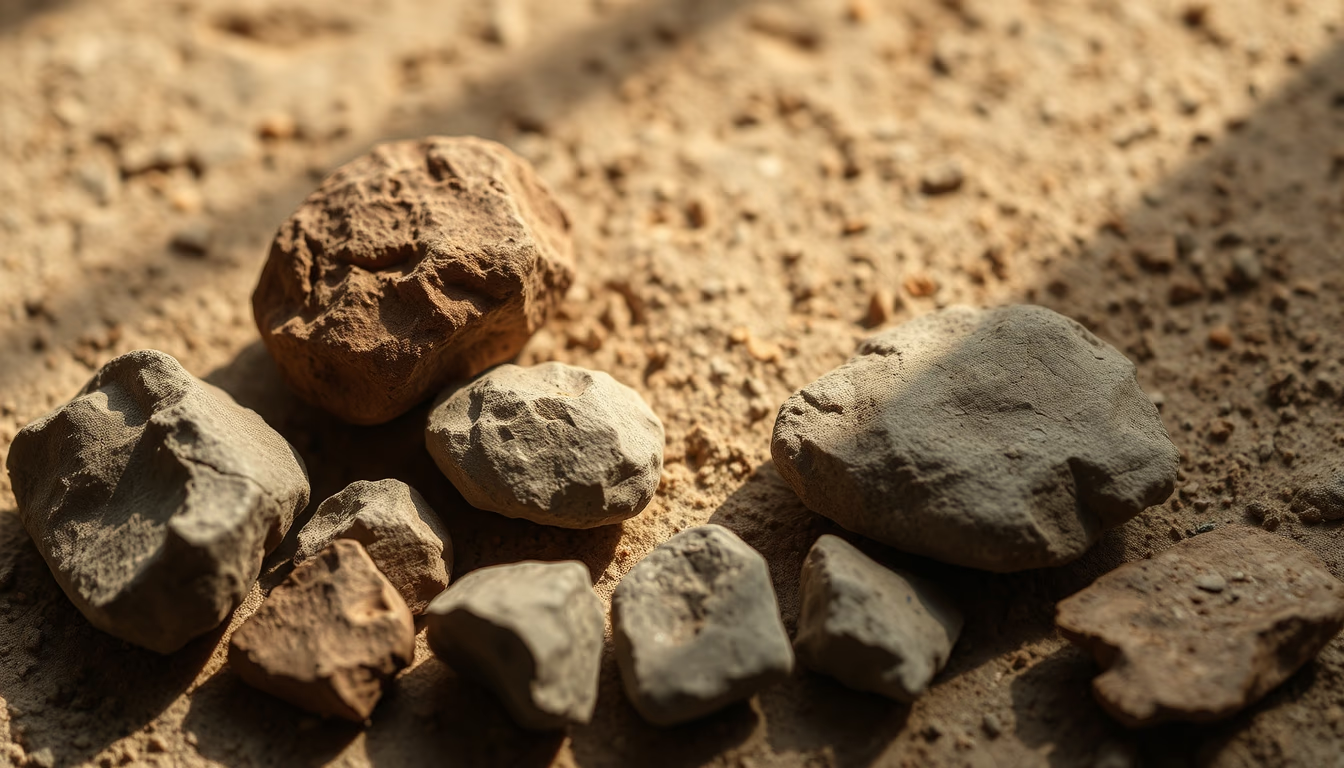
Pottery shards ancient
1344×768 · AVIF · CC BY 4.0
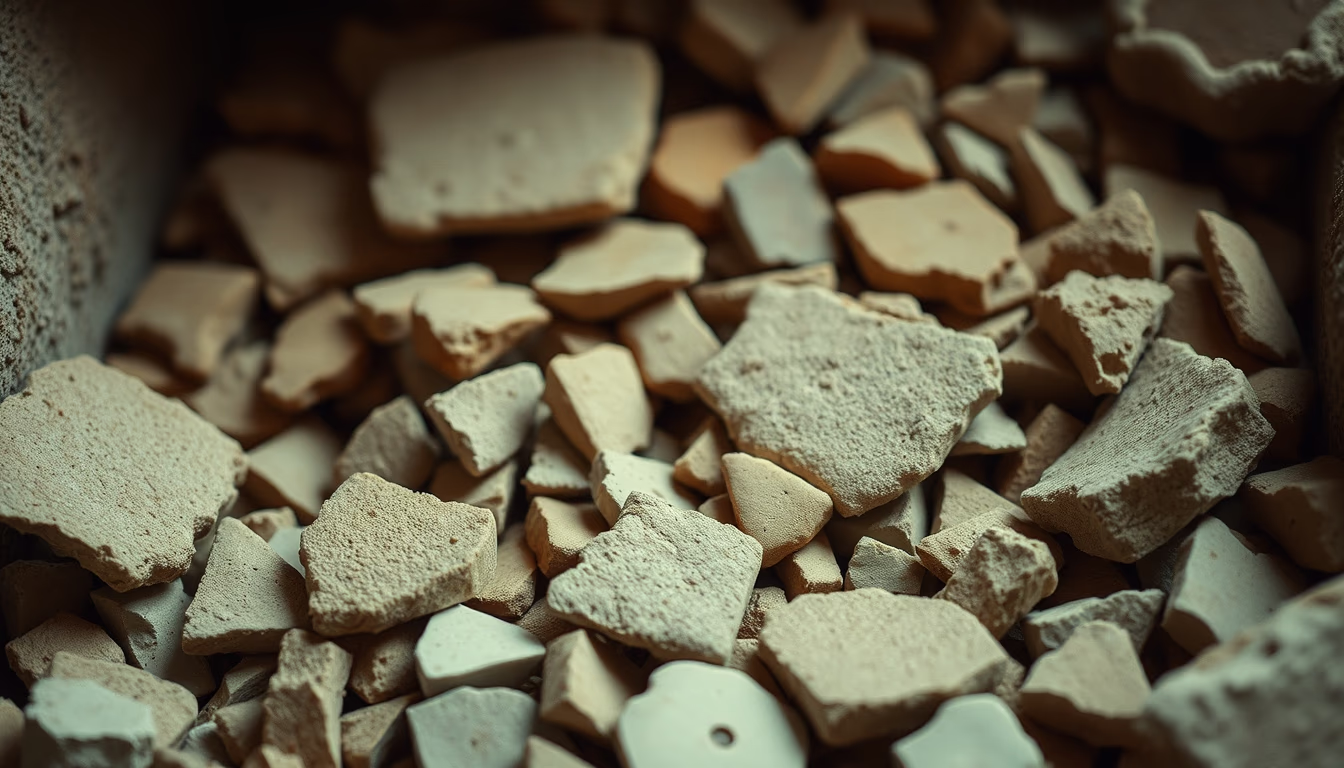
Ancient pottery shards reveal secrets about past civilizations, production techniques, and trade routes.
About this subject
Fragments of pottery, known as shards or sherds, are among the most common artifacts found in archaeological sites worldwide. Their durability and ubiquity make them essential for understanding ancient cultures, from prehistory to historical periods. Pottery, being brittle, breaks easily, but its fragments remain in the ground for millennia, offering a window into the past.
Through the analysis of shards, archaeologists can determine the age of a site using methods like thermoluminescence and carbon-14 dating of adhering organic residues. Pottery typology, which classifies shapes, decorations, and pastes, allows for relative chronologies and identification of cultural influences. For example, ancient Greek pottery with its black-figure and red-figure techniques not only dates strata but also reveals myths and social practices.
Beyond dating, fragments provide information on technology and economy. The chemical composition of the clay can indicate local or imported sources, mapping trade networks. Use-wear marks, such as soot or abrasion, evidence domestic, ritual, or storage functions. At sites like Çatalhöyük in Turkey, thousands of shards have helped reconstruct Neolithic daily life.
Preservation of shards depends on soil conditions, but even small, eroded fragments can hold valuable information. Recent studies employ spectroscopy and organic residue analysis to identify foods, beverages, or perfumes that once contacted the vessel. Each shard is a piece of a puzzle that, when assembled, tells the story of the peoples who preceded us.
Frequently Asked Questions
How do archaeologists date ancient pottery shards?
Dating can be done via thermoluminescence, which measures radiation accumulated since the last firing, or carbon-14 on organic residues. Comparative typology also helps establish relative ages.
What do pottery shards reveal about ancient trade?
Chemical analysis of clay identifies the material's origin. If a shard's composition differs from local sources, it indicates importation. This maps trade routes and cultural exchanges.
Are very small or eroded shards archaeologically valuable?
Yes. Even tiny shards may contain organic residues for dating or chemical analysis. Use-wear marks and partial decoration still provide information on function and style.
Direct URL
https://pub-c7d6a6ea828543ac903a74a341ccb2e1.r2.dev/imagens/pottery-shards-ancient-lo-fi-disposable-camera-p7.avifHow to credit
Include a visible link back to UtilizAí. Copy one of the snippets below:
<a href="https://xn--utiliza-eza.com/en/midia/imagens/pottery-shards-ancient-lo-fi-disposable-camera-p7">Pottery shards ancient</a> by <a href="https://xn--utiliza-eza.com">UtilizAí</a>, licensed under <a href="https://creativecommons.org/licenses/by/4.0/">CC BY 4.0</a>.
[Pottery shards ancient](https://xn--utiliza-eza.com/en/midia/imagens/pottery-shards-ancient-lo-fi-disposable-camera-p7) by [UtilizAí](https://xn--utiliza-eza.com), CC BY 4.0
License: CC-BY-4.0