Photosynthesis chloroplast
1344×768 · AVIF · CC BY 4.0
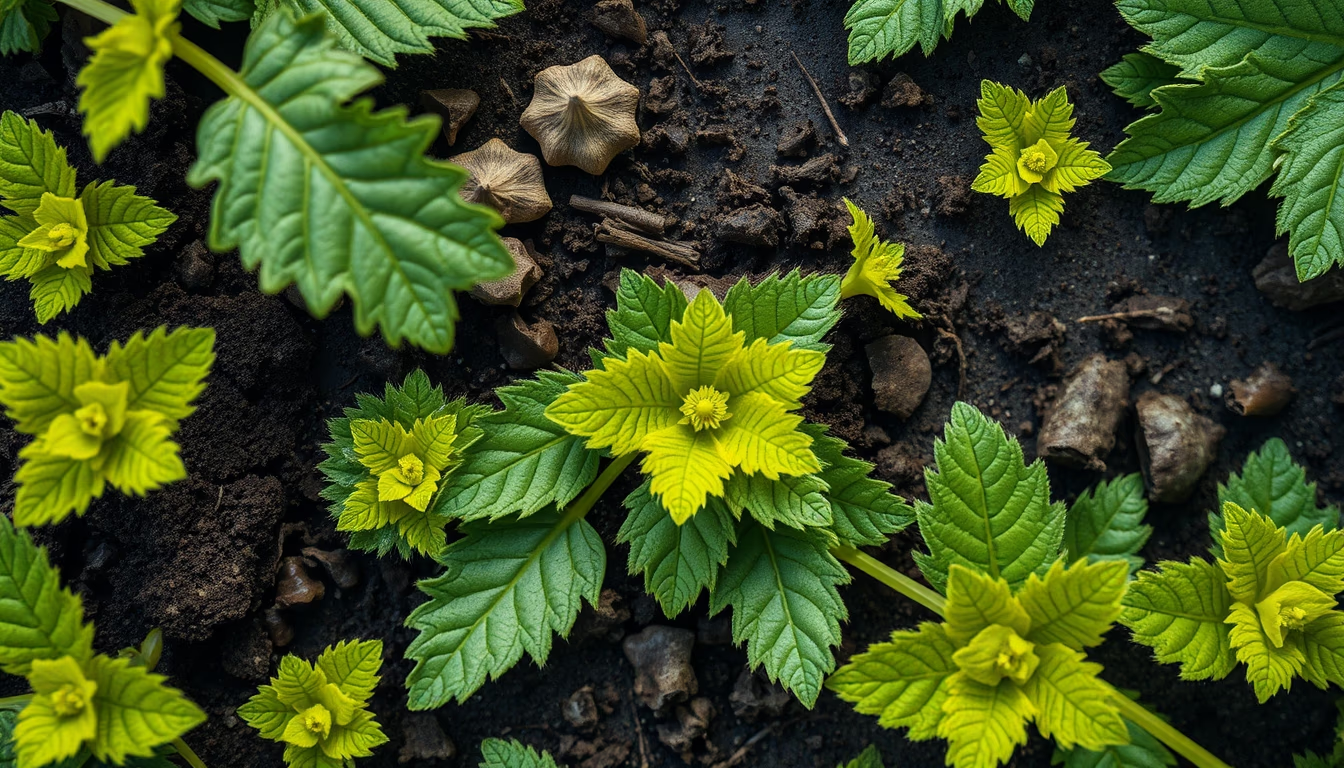
Chloroplasts are organelles responsible for photosynthesis, the process that converts sunlight into chemical energy, essential for life on Earth.
About this subject
Chloroplasts are organelles found in plant and green algae cells where photosynthesis takes place. They contain chlorophyll, the pigment that absorbs sunlight, and have a complex internal structure composed of thylakoids (membrane discs) organized into grana (stacks). These thylakoids house the photosystems and electron transport chain, generating ATP and NADPH. In the stroma, the fluid surrounding the thylakoids, the Calvin cycle occurs, fixing carbon dioxide into carbohydrates.
Photosynthesis is the main process producing oxygen in Earth's atmosphere and the foundation of the food chain. It is estimated that about 100 billion tons of carbon are fixed annually by photosynthetic organisms. The study of chloroplasts advanced with the discovery of the photosystem II structure by scientists like Johann Deisenhofer (Nobel Prize in 1988). Each chloroplast can contain dozens to hundreds of grana, and each thylakoid has a double membrane maintaining the proton gradient necessary for ATP synthesis.
Interestingly, chloroplasts have their own circular DNA, similar to bacteria, suggesting they evolved from endosymbiotic cyanobacteria, a theory proposed by Lynn Margulis. Moreover, photosynthetic efficiency is about 3 to 6% for most plants, but research aims to increase it to improve agricultural productivity. Photosynthesis also varies by plant type: C3, C4, and CAM, each with specific adaptations to environments such as drought or high light intensity.
Frequently Asked Questions
What are thylakoids and what is their function in photosynthesis?
Thylakoids are membranous discs inside chloroplasts where the light reactions of photosynthesis occur. They contain the photosystems and electron transport chain, responsible for converting light into ATP and NADPH.
How do chloroplasts reproduce?
Chloroplasts divide by binary fission, similar to bacteria, as they have their own DNA. This division is independent of cell division and occurs during plant growth.
What is the difference between C3, C4, and CAM plants?
C3 plants use the Rubisco enzyme directly in the Calvin cycle but suffer from photorespiration. C4 minimize photorespiration by concentrating CO2 in bundle sheath cells. CAM open stomata at night to fix CO2, reducing water loss in arid environments.
Direct URL
https://pub-c7d6a6ea828543ac903a74a341ccb2e1.r2.dev/imagens/photosynthesis-chloroplast-isometric-flat-lay-p10.avifHow to credit
Include a visible link back to UtilizAí. Copy one of the snippets below:
<a href="https://xn--utiliza-eza.com/en/midia/imagens/photosynthesis-chloroplast-isometric-flat-lay-p10">Photosynthesis chloroplast</a> by <a href="https://xn--utiliza-eza.com">UtilizAí</a>, licensed under <a href="https://creativecommons.org/licenses/by/4.0/">CC BY 4.0</a>.
[Photosynthesis chloroplast](https://xn--utiliza-eza.com/en/midia/imagens/photosynthesis-chloroplast-isometric-flat-lay-p10) by [UtilizAí](https://xn--utiliza-eza.com), CC BY 4.0
License: CC-BY-4.0