Photosynthesis chloroplast
1344×768 · AVIF · CC BY 4.0
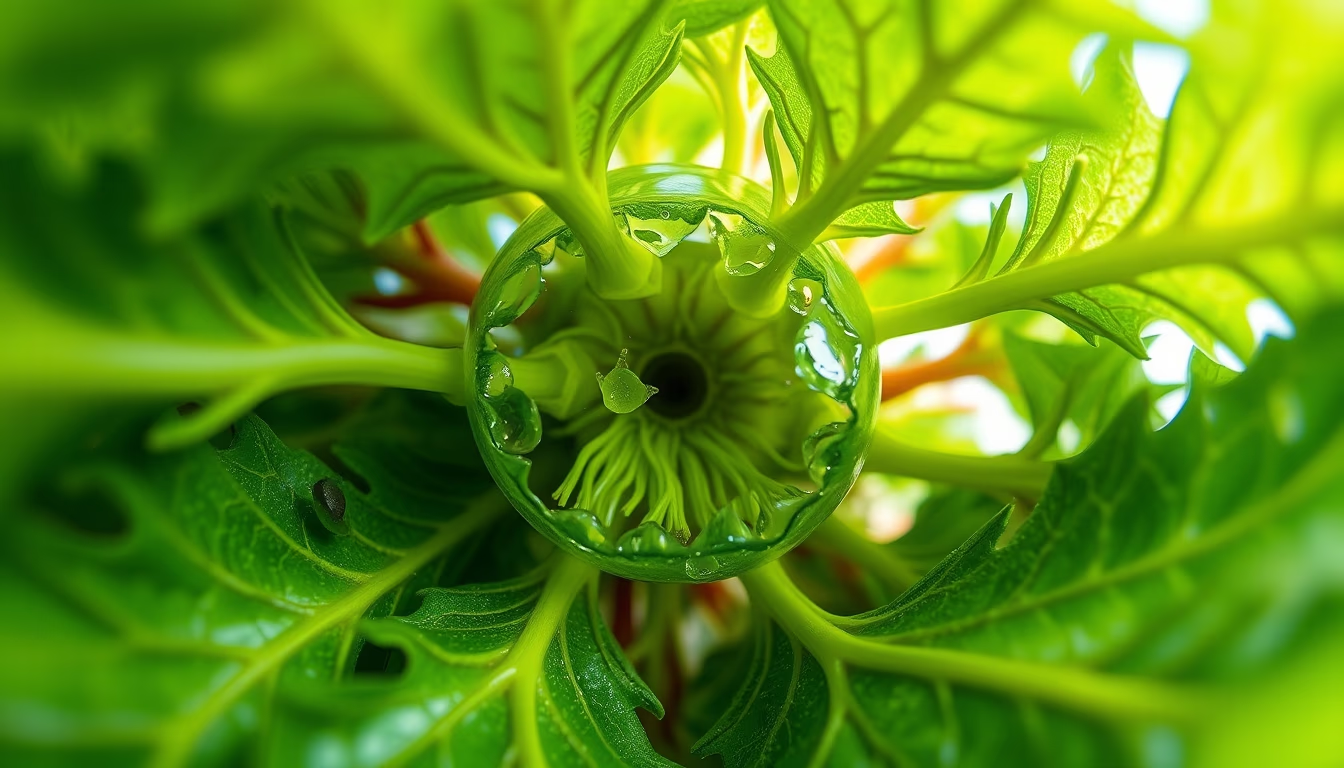
Chloroplasts are organelles where photosynthesis takes place, converting sunlight into chemical energy for plants.
About this subject
Chloroplasts are organelles found in plant and algal cells, responsible for photosynthesis, the process that converts light energy into chemical energy. Structurally, they have a double membrane: the outer and inner membranes enclose the stroma, a fluid rich in enzymes. Inside the stroma are thylakoids, membranous discs stacked into grana, where photosynthetic pigments such as chlorophyll reside.
Photosynthesis occurs in two main stages: the light-dependent reactions and the Calvin cycle (light-independent). In the light-dependent reactions, light excites chlorophyll in the thylakoids, producing ATP and NADPH. In the Calvin cycle, which takes place in the stroma, CO2 is fixed and converted into glucose using the energy from ATP and NADPH. This process is essential for producing oxygen and biomass, sustaining the food web.
Chloroplasts have their own circular DNA and ribosomes, evidence for the endosymbiotic theory, which proposes that they originated from ancestral cyanobacteria engulfed by eukaryotic cells. This symbiosis enabled the evolution of land plants, which now play a critical role in the carbon cycle and climate regulation. Interestingly, chloroplasts can move within the cell in response to light intensity to optimize light capture.
Besides plants, algae such as green and red algae also contain chloroplasts, with variations in pigments. Photosynthesis produces about 70% of Earth's oxygen, making chloroplasts indispensable for aerobic life. Chlorophyll, the green pigment, absorbs mainly blue and red light, reflecting green, which gives leaves their color.
Frequently Asked Questions
What is the main function of the chloroplast?
The main function of the chloroplast is to carry out photosynthesis, converting light energy into chemical energy stored in glucose molecules, and releasing oxygen as a byproduct.
What are thylakoids and grana in chloroplasts?
Thylakoids are disc-shaped membranous structures where the light-dependent reactions of photosynthesis occur. They are stacked into grana, increasing the surface area for light capture.
How does chlorophyll contribute to photosynthesis?
Chlorophyll is a green pigment located in the thylakoids that absorbs sunlight, especially blue and red wavelengths, exciting electrons that initiate the electron transport chain in photosynthesis.
Direct URL
https://pub-c7d6a6ea828543ac903a74a341ccb2e1.r2.dev/imagens/photosynthesis-chloroplast-fish-eye-wide-angle-p11.avifHow to credit
Include a visible link back to UtilizAí. Copy one of the snippets below:
<a href="https://xn--utiliza-eza.com/en/midia/imagens/photosynthesis-chloroplast-fish-eye-wide-angle-p11">Photosynthesis chloroplast</a> by <a href="https://xn--utiliza-eza.com">UtilizAí</a>, licensed under <a href="https://creativecommons.org/licenses/by/4.0/">CC BY 4.0</a>.
[Photosynthesis chloroplast](https://xn--utiliza-eza.com/en/midia/imagens/photosynthesis-chloroplast-fish-eye-wide-angle-p11) by [UtilizAí](https://xn--utiliza-eza.com), CC BY 4.0
License: CC-BY-4.0