Phishing email warning
1344×768 · AVIF · CC BY 4.0
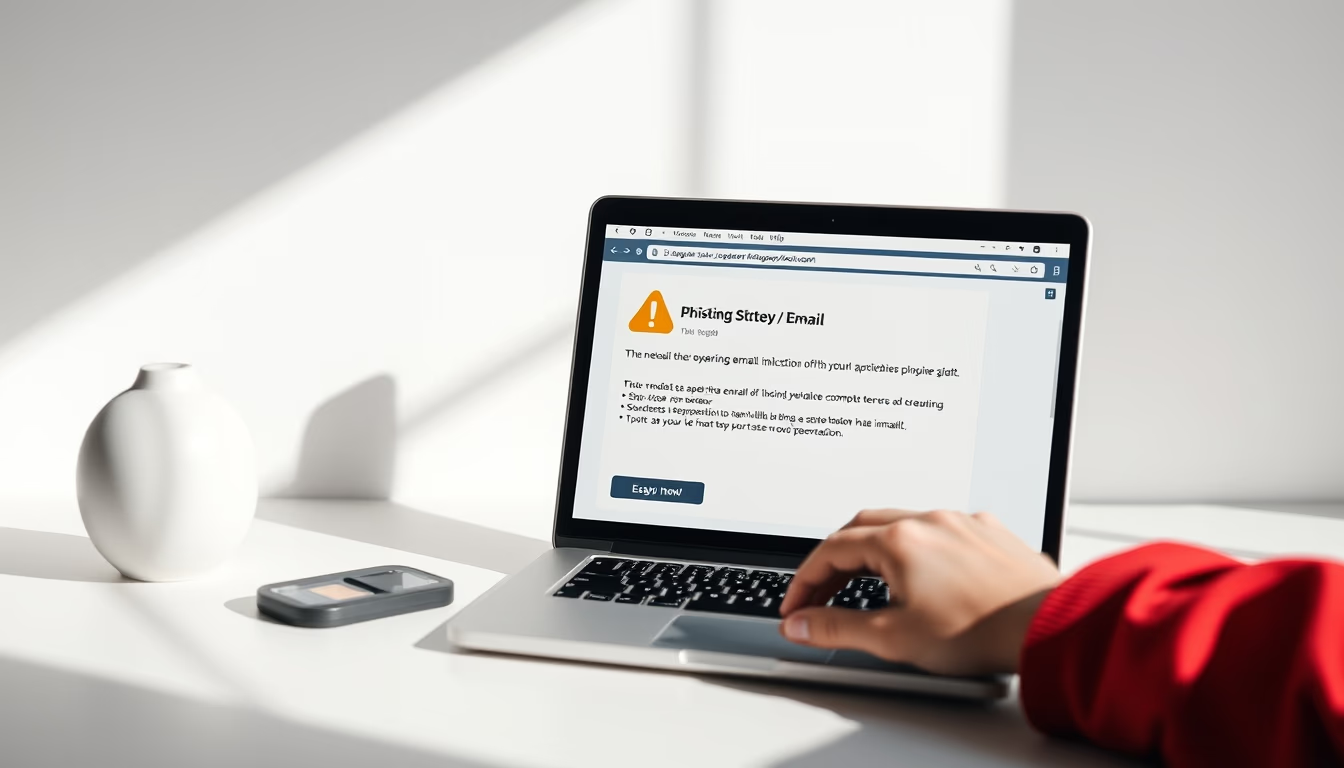
Learn how to recognize phishing emails, cyber threats that mimic legitimate institutions to steal personal data.
About this subject
Phishing is a cyber scam where criminals impersonate trusted institutions, such as banks, social networks, or government agencies, to trick victims into revealing sensitive information. The attack typically arrives via email but also occurs through SMS (smishing) and phone calls (vishing). It is estimated that about 90% of cybersecurity incidents begin with a phishing email. Attackers exploit user trust and urgency: messages with account suspension warnings, too-good-to-be-true offers, or fake payment demands.
The social engineering behind phishing is sophisticated. Many emails copy logos, colors, and even the communication tone of real brands. However, details reveal the fraud: spelling errors, odd sender addresses (e.g., @security-bank-fake.com), and links that, when hovered over, show suspicious URLs. In 2023, Brazil was the second most affected country by phishing in Latin America, according to Kaspersky. The rise of remote work and e-commerce has expanded the attackers' playground.
To protect yourself, never click on links in unsolicited messages. Always verify the sender address and, if in doubt, type the official website URL directly into the browser. Companies run internal awareness campaigns, often using minimalist warning images like the one in this description, to train employees to spot threats. Regular software updates, antivirus software, and two-factor authentication provide additional layers of defense.
The term phishing emerged in the 1990s when hackers targeted AOL users with fake messages, drawing an analogy to fishing. The "ph" spelling references hacker culture. Today, techniques have evolved: spear phishing personalizes attacks using social media data, while whaling targets high-level executives. Knowledge remains the best defense against this global threat.
Frequently Asked Questions
What is phishing?
Phishing is a type of online fraud where criminals impersonate legitimate companies to steal personal information, such as passwords and credit card numbers.
How to identify a phishing email?
Look for spelling mistakes, suspicious sender addresses, generic greetings, and urgent requests for personal data. Hover over links to see the actual destination.
What are the most common types of phishing?
Email phishing, smishing (SMS), and vishing (phone calls). Spear phishing targets specific individuals using collected personal information.
Direct URL
https://pub-c7d6a6ea828543ac903a74a341ccb2e1.r2.dev/imagens/phishing-email-warning-minimalist-composition-p4.avifHow to credit
Include a visible link back to UtilizAí. Copy one of the snippets below:
<a href="https://xn--utiliza-eza.com/en/midia/imagens/phishing-email-warning-minimalist-composition-p4">Phishing email warning</a> by <a href="https://xn--utiliza-eza.com">UtilizAí</a>, licensed under <a href="https://creativecommons.org/licenses/by/4.0/">CC BY 4.0</a>.
[Phishing email warning](https://xn--utiliza-eza.com/en/midia/imagens/phishing-email-warning-minimalist-composition-p4) by [UtilizAí](https://xn--utiliza-eza.com), CC BY 4.0
License: CC-BY-4.0