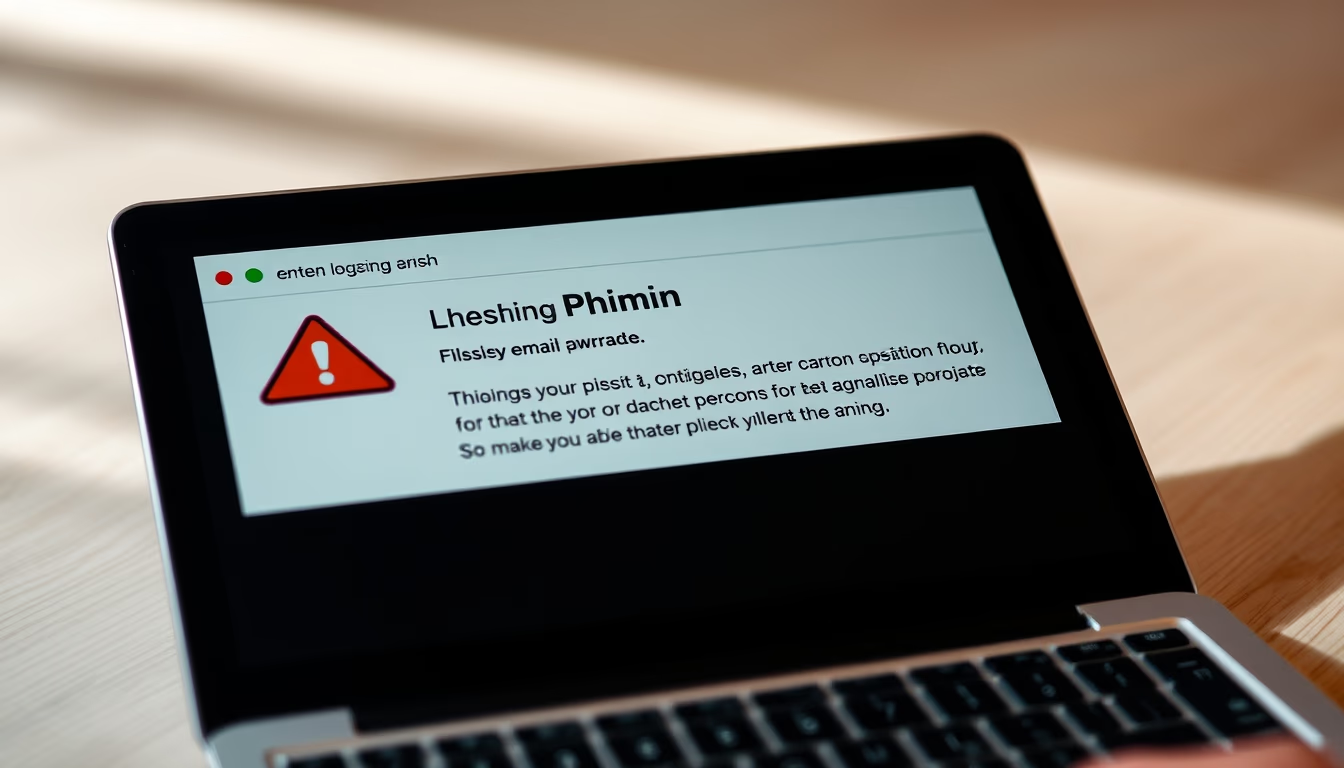
Phishing email warning
1344×768 · AVIF · CC BY 4.0
Phishing is an online fraud technique that uses fake emails to steal personal data. Learn how to identify and protect yourself.
About this subject
Phishing is a type of cyberattack in which criminals impersonate legitimate institutions, such as banks, companies, or government agencies, to deceive victims and obtain sensitive information. The term is a variation of 'fishing,' and the practice has grown exponentially with the popularization of the internet and email. Globally, phishing remains one of the most prevalent threats: the Anti-Phishing Working Group reported over 5 million phishing attacks in 2022 alone. These messages often use urgency or threats, such as 'your account will be blocked' or 'click here to avoid a fine,' to induce the victim to click on malicious links or download infected attachments.
To protect yourself, it is essential to carefully check the sender and be suspicious of grammatical errors or offers that seem too good to be true. Banks and serious institutions never request passwords or banking details by email. A practical tip is to hover over the link without clicking to see the actual destination address. If you identify a phishing attempt, report it to authorities like the FBI's IC3 (Internet Crime Complaint Center) or your email provider. Awareness is the best defense: educational campaigns in companies and schools help reduce risk.
Interestingly, the first documented phishing case dates back to the mid-1990s, when crackers attacked America Online (AOL) with fake messages. Today, the technique has evolved into variants such as spear phishing (targeting a specific person), whaling (aimed at executives), and smishing (via SMS). The use of artificial intelligence is also making scams more realistic, heightening the need for continuous digital security training.
Globally, governments and financial institutions have invested in warning mechanisms, such as registering fraudulent websites and issuing rapid notifications in case of data breaches. Regulations like the European Union's GDPR impose penalties on companies that fail to adequately protect customer information. Preventing phishing is a shared responsibility among users, organizations, and authorities.
Frequently Asked Questions
What should I do if I click a phishing link?
Disconnect the device from the internet immediately. Change passwords for affected accounts and enable two-factor authentication. Run an antivirus scan and contact the bank or institution involved if necessary.
How to recognize a phishing email?
Check for spelling errors, unfamiliar sender, suspicious links (hover without clicking), and urgent requests for personal data. Legitimate banks never ask for passwords via email.
Is phishing a crime in the United States?
Yes, phishing is illegal under federal laws such as the Computer Fraud and Abuse Act (CFAA) and can be prosecuted as wire fraud. Penalties include fines and imprisonment, especially for large-scale operations.
Direct URL
https://pub-c7d6a6ea828543ac903a74a341ccb2e1.r2.dev/imagens/phishing-email-warning-fine-art-photography-p5.avifHow to credit
Include a visible link back to UtilizAí. Copy one of the snippets below:
<a href="https://xn--utiliza-eza.com/en/midia/imagens/phishing-email-warning-fine-art-photography-p5">Phishing email warning</a> by <a href="https://xn--utiliza-eza.com">UtilizAí</a>, licensed under <a href="https://creativecommons.org/licenses/by/4.0/">CC BY 4.0</a>.
[Phishing email warning](https://xn--utiliza-eza.com/en/midia/imagens/phishing-email-warning-fine-art-photography-p5) by [UtilizAí](https://xn--utiliza-eza.com), CC BY 4.0
License: CC-BY-4.0