Periodic table elements glow
1344×768 · AVIF · CC BY 4.0
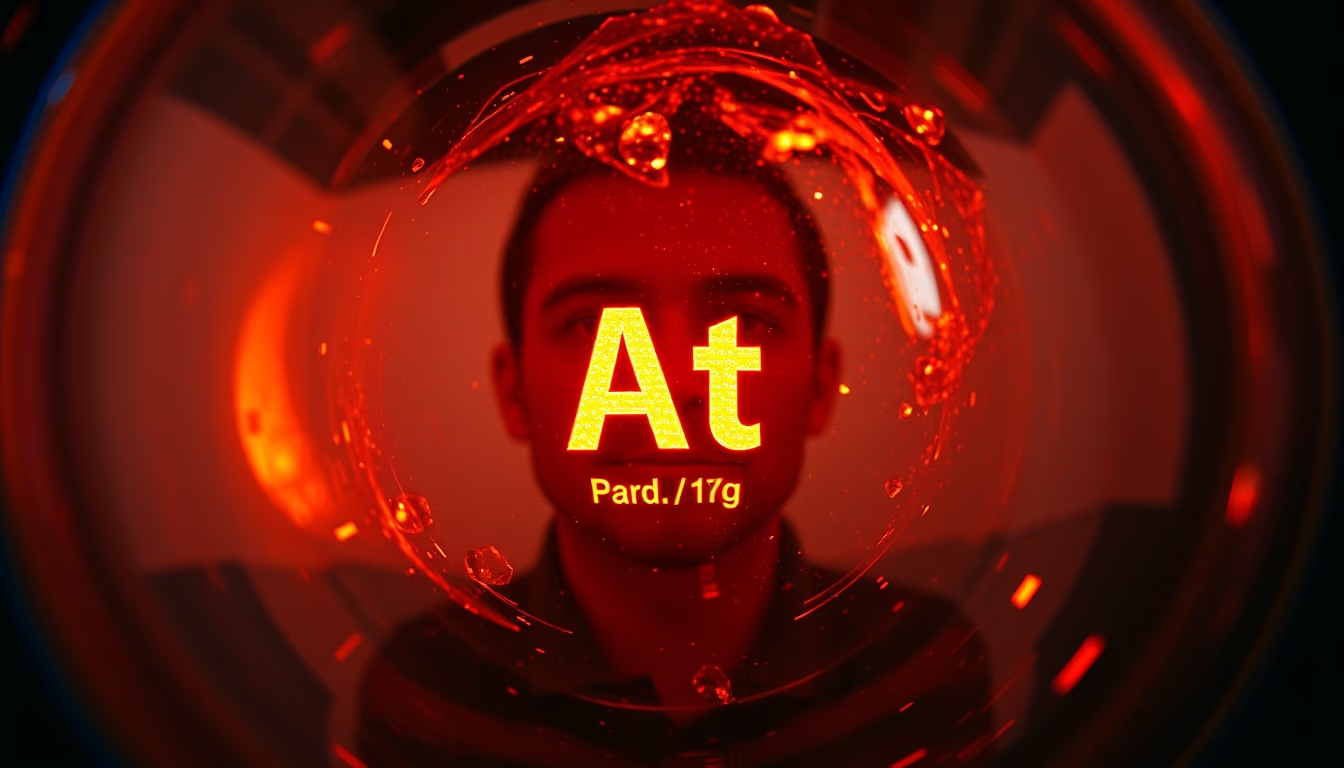
The periodic table reveals elements that glow in the dark, such as phosphorus and radium, in a fascinating luminescence phenomenon with applications from medicine to signage.
About this subject
Certain chemical elements have the ability to emit visible light without heating, a phenomenon known as luminescence. In the periodic table, this occurs notably in elements like phosphorus, which oxidizes slowly in air producing a characteristic green glow, and radium, a radioactive metal that emits alpha particles that excite neighboring molecules and generate light. This behavior is directly linked to the electronic configuration of atoms: electrons in higher energy levels return to the ground state by releasing photons.
The discovery of luminescent elements revolutionized science in the late 19th century. Marie Curie isolated radium and observed its blue glow, which led her to study radioactivity. Phosphorus, discovered in the 17th century by Hennig Brand, was known for its slow, luminous combustion. Noble gases like neon and argon, when subjected to electrical discharges, emit colored light used in neon signs. Luminescence can also be induced in compounds such as zinc sulfide, widely used in glow-in-the-dark paints.
In modern life, luminescent elements and compounds have important practical applications. Vacuum tubes with noble gases illuminate streets and façades. Radioactive isotopes like tritium are used in watches and emergency signs to glow continuously without electricity. In medicine, luminescent markers aid in diagnostic imaging. The periodic table organizes these elements into groups that share electronic properties, explaining why some glow and others do not.
Frequently Asked Questions
Which chemical elements naturally glow in the dark?
The best-known examples are phosphorus (white), which oxidizes and emits green light, and radium, which glows due to its radioactivity. Other elements like promethium (radioactive) and certain noble gases under electrical discharge also exhibit luminescence.
What causes the glow in elements like phosphorus?
The glow of white phosphorus occurs by chemiluminescence: it slowly reacts with oxygen in the air, releasing energy as visible light. This process does not involve significant heat, unlike ordinary combustion.
Is it safe to use glow-in-the-dark objects with radioactive elements?
Old products that used radium (like watch dials) can be dangerous if ingested or inhaled. Today, modern items use non-toxic phosphors or sealed tritium, which are safe for everyday use when intact.
Direct URL
https://pub-c7d6a6ea828543ac903a74a341ccb2e1.r2.dev/imagens/periodic-table-elements-glow-fish-eye-wide-angle-p11.avifHow to credit
Include a visible link back to UtilizAí. Copy one of the snippets below:
<a href="https://xn--utiliza-eza.com/en/midia/imagens/periodic-table-elements-glow-fish-eye-wide-angle-p11">Periodic table elements glow</a> by <a href="https://xn--utiliza-eza.com">UtilizAí</a>, licensed under <a href="https://creativecommons.org/licenses/by/4.0/">CC BY 4.0</a>.
[Periodic table elements glow](https://xn--utiliza-eza.com/en/midia/imagens/periodic-table-elements-glow-fish-eye-wide-angle-p11) by [UtilizAí](https://xn--utiliza-eza.com), CC BY 4.0
License: CC-BY-4.0