Pencil sharpener vintage
1344×768 · AVIF · CC BY 4.0

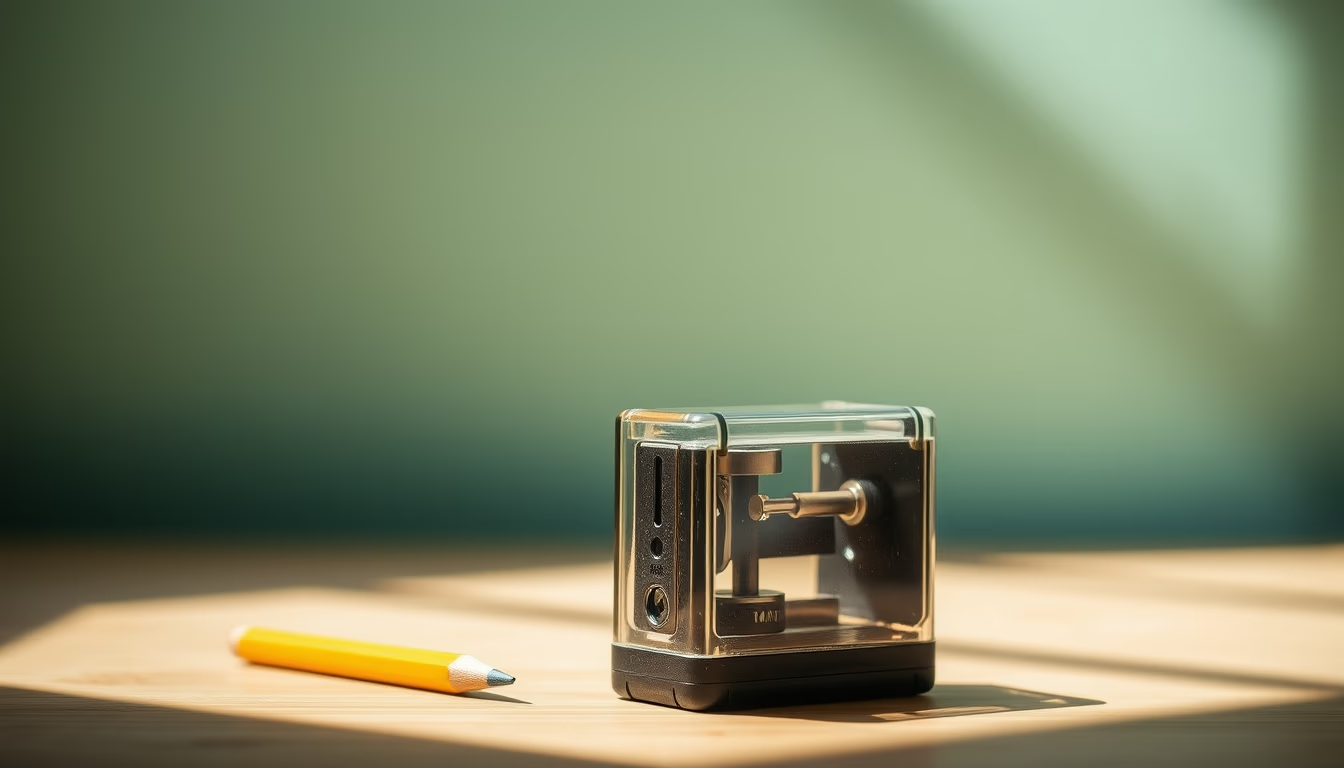
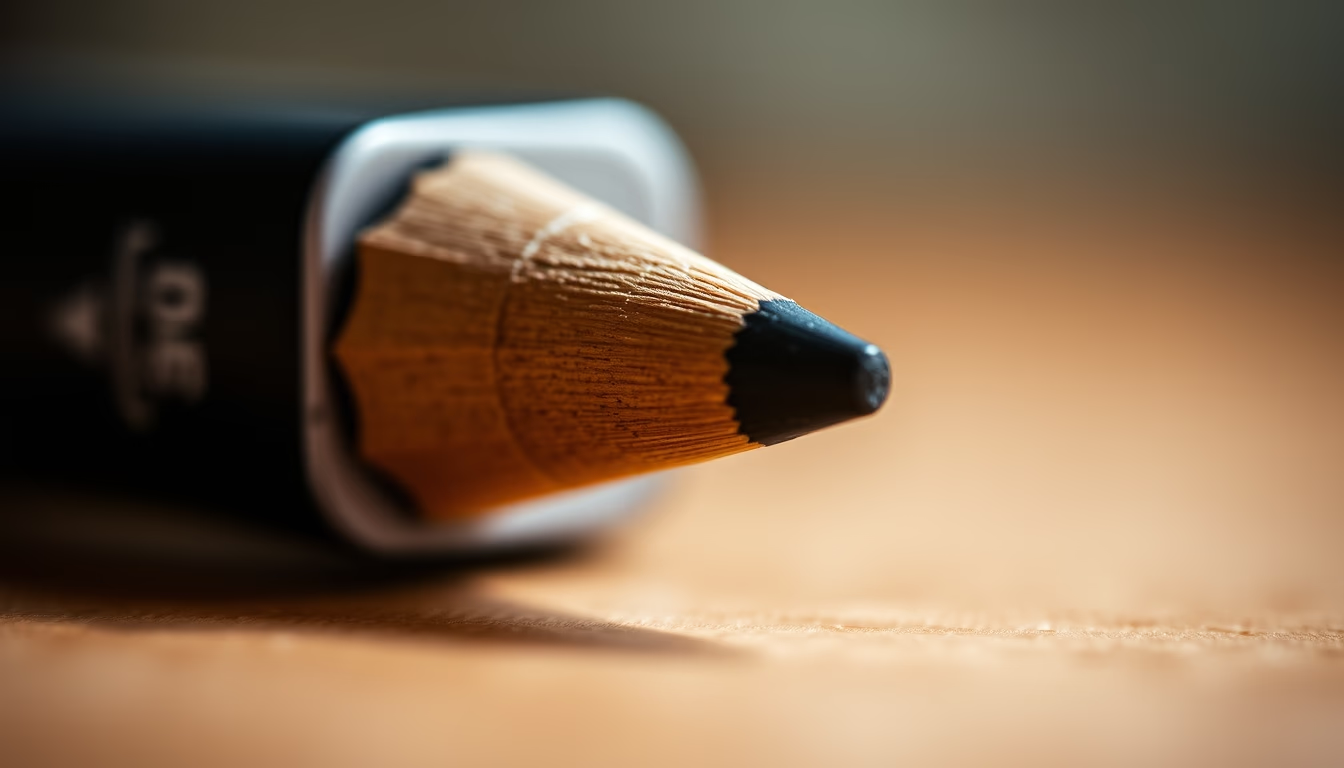
Vintage pencil sharpeners combine classic design, precise mechanics, and nostalgia, serving as collectibles and functional tools.
About this subject
Vintage pencil sharpeners are artifacts dating back to the late 19th century, when mass production of pencils demanded efficient solutions to keep them sharp. The first patented models appeared in the 1840s, but it was from 1900 onward that desktop devices, such as the famous single-blade sharpener mounted on a wooden or metal base, became popular in offices and schools. These objects often feature gear mechanisms, levers, and finishes in cast iron, brass, or Bakelite, reflecting the industrial aesthetics of the time.
The diversity of designs is remarkable: from portable manual sharpeners, resembling small boxes with a conical hole, to wall-mounted models with a crank and a receptacle for shavings. Brands like Apsco, Boston, and KUM produced specimens that are now coveted by collectors. In Brazil, local industry also manufactured versions adapted to local taste, often in colored plastic or chrome metal, which marked generations of students.
Culturally, the vintage sharpener evokes a pre-digital era, where sharpening a pencil was a manual and careful ritual. Unlike today's electric models, old sharpeners require technique and patience, and their characteristic sound, the scraping of the blade against wood, is part of the sensory experience. Additionally, many antique sharpeners have replaceable or adjustable blades, extending their lifespan, a contrast to today's planned obsolescence.
Interestingly, sharpeners also influenced the design of other office objects, such as knife sharpeners and staplers, sharing similar mechanical principles. Today, besides being functional, they are decorative pieces in retro and vintage environments, valued for their aesthetic appeal and connection to a slower, more artisanal past.
Frequently Asked Questions
When did the first pencil sharpeners appear?
The first pencil sharpeners were patented in the 1840s, but popular desktop models emerged around 1900.
What materials were common in vintage sharpeners?
Materials such as cast iron, brass, Bakelite, wood, and colored plastic were typical, varying by era and manufacturer.
Why are vintage pencil sharpeners collectible?
Because of their varied designs, ingenious mechanisms, durability, and nostalgic appeal, representing the evolution of office objects.
Direct URL
https://pub-c7d6a6ea828543ac903a74a341ccb2e1.r2.dev/imagens/pencil-sharpener-vintage-long-exposure-fresh8.avifHow to credit
Include a visible link back to UtilizAí. Copy one of the snippets below:
<a href="https://xn--utiliza-eza.com/en/midia/imagens/pencil-sharpener-vintage-long-exposure-fresh8">Pencil sharpener vintage</a> by <a href="https://xn--utiliza-eza.com">UtilizAí</a>, licensed under <a href="https://creativecommons.org/licenses/by/4.0/">CC BY 4.0</a>.
[Pencil sharpener vintage](https://xn--utiliza-eza.com/en/midia/imagens/pencil-sharpener-vintage-long-exposure-fresh8) by [UtilizAí](https://xn--utiliza-eza.com), CC BY 4.0
License: CC-BY-4.0