Pencil sharpener vintage
1344×768 · AVIF · CC BY 4.0
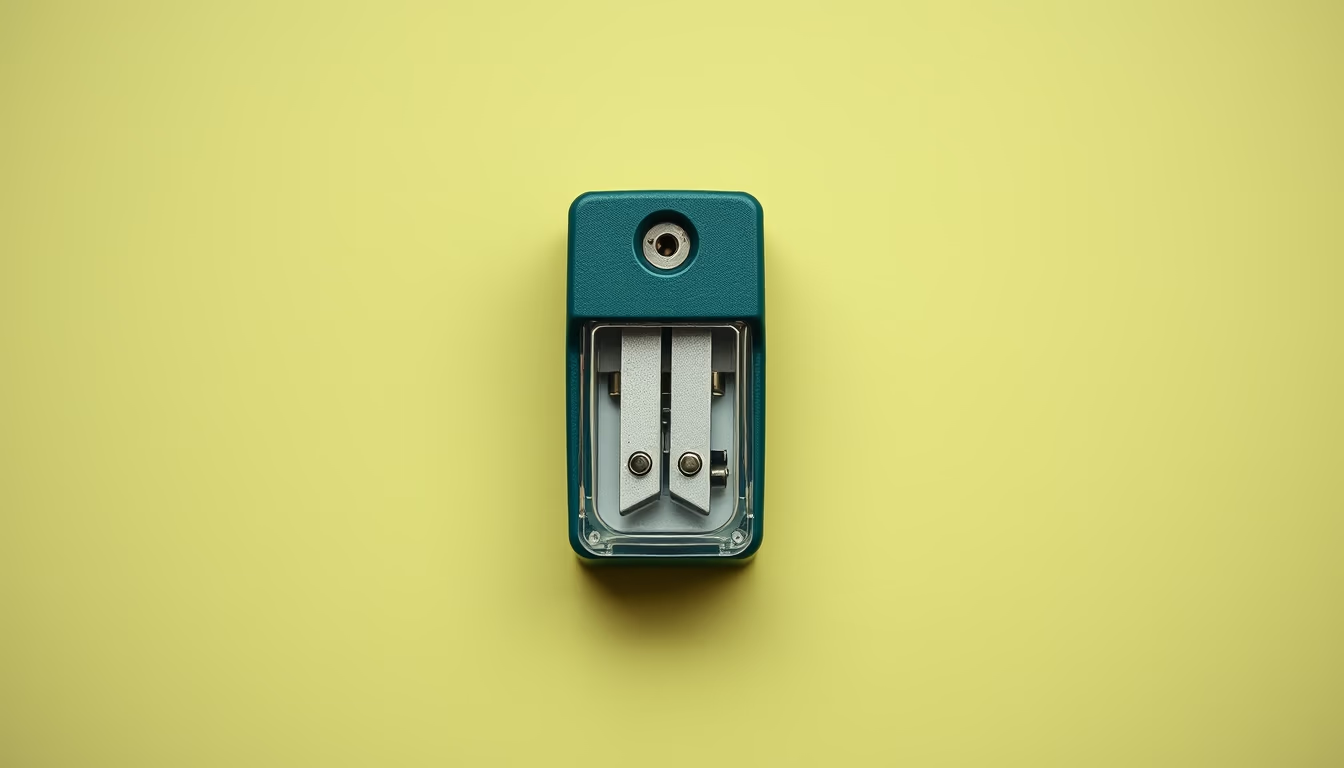
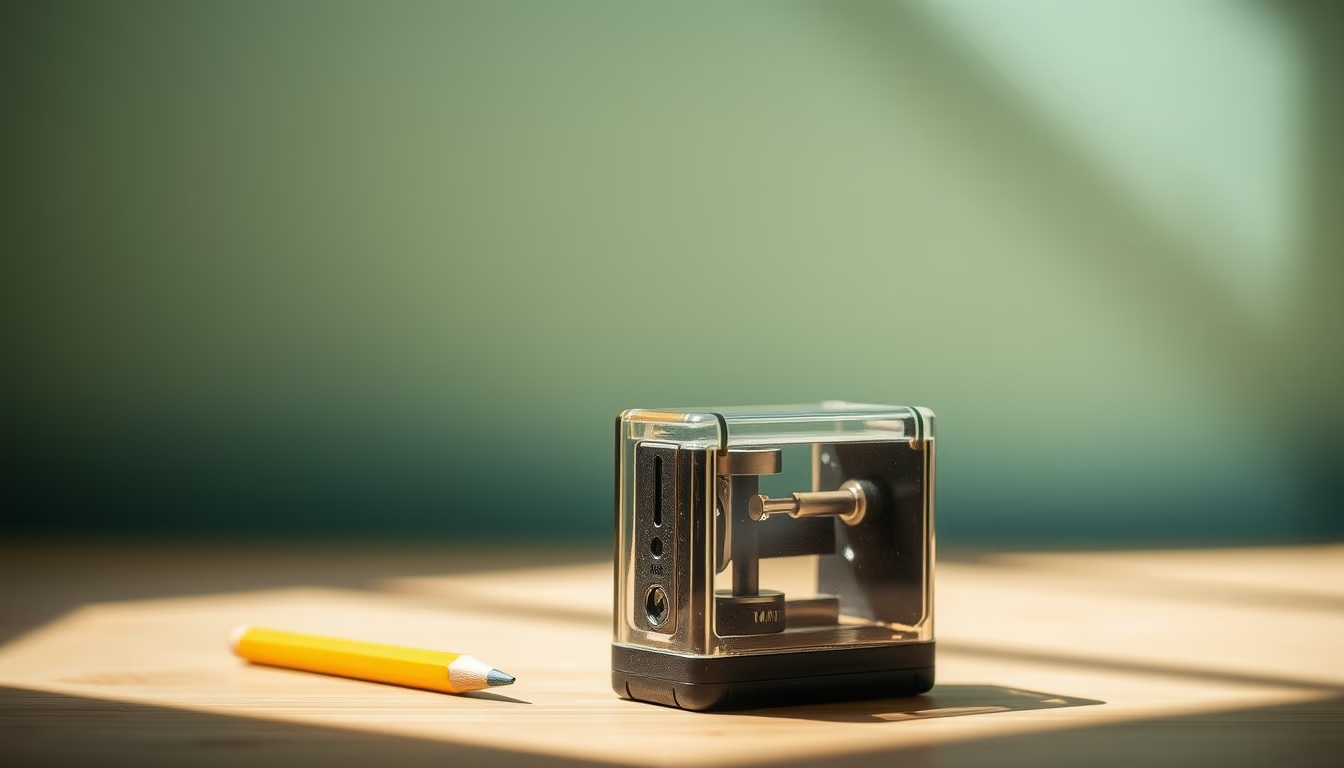
Vintage pencil sharpeners, such as crank and wall-mounted models, are design objects and tokens of nostalgia, representing the evolution of writing instruments.
About this subject
Vintage pencil sharpeners, manufactured between the late 19th and mid-20th centuries, are pieces that combine functionality and aesthetics. Models like the crank sharpener, popular in schools and offices, were made of cast iron or Bakelite, an innovative material at the time. The first mechanical sharpener was patented in 1828 by Frenchman Bernard Lassimone, but it was the 1847 version by fellow Frenchman Therry des Estwaux that established the conical design still used today.
In the United States and Europe, vintage sharpeners became common in classrooms and offices, with brands like Boston (from the Automatic Pencil Sharpener Company) leading the market. These devices were often wall-mounted or clamped to desks, featuring a rotating handle that drove the cutting mechanism. The design evolved from simple cast-iron boxes to streamlined Art Deco shapes.
Interestingly, manual sharpeners required the user to turn the pencil against an internal blade, creating a tactile experience that contrasts with modern electric sharpeners. Maintenance was straightforward: emptying the shavings tray. Today, these sharpeners are collectibles, sold at antique fairs and online stores, prized for their durability and nostalgic appeal.
For collectors, a pristine vintage sharpener can fetch hundreds of dollars, especially rare models like the 1905 Climax or the streamlined Dux. Some models feature dual blades or adjustable guides for different pencil sizes, showcasing pre-digital ingenuity.
Frequently Asked Questions
What was the first mechanical pencil sharpener?
The first mechanical sharpener was patented in 1828 by French mathematician Bernard Lassimone. However, the practical design with a conical blade was patented in 1847 by Therry des Estwaux in France.
Common materials in vintage sharpeners?
Vintage sharpeners were primarily made of cast iron, brass, and Bakelite (phenolic plastic). Later models used injection-molded plastic, but the oldest were all-metal and sturdy.
How to identify a valuable vintage sharpener?
Look for brands like Boston, Climax, Dux, or Faber-Castell. Check the condition of the blade, presence of original parts, and model rarity. Crank sharpeners in cast iron with Art Deco design are most sought after.
Direct URL
https://pub-c7d6a6ea828543ac903a74a341ccb2e1.r2.dev/imagens/pencil-sharpener-vintage-isometric-flat-lay-fresh9.avifHow to credit
Include a visible link back to UtilizAí. Copy one of the snippets below:
<a href="https://xn--utiliza-eza.com/en/midia/imagens/pencil-sharpener-vintage-isometric-flat-lay-fresh9">Pencil sharpener vintage</a> by <a href="https://xn--utiliza-eza.com">UtilizAí</a>, licensed under <a href="https://creativecommons.org/licenses/by/4.0/">CC BY 4.0</a>.
[Pencil sharpener vintage](https://xn--utiliza-eza.com/en/midia/imagens/pencil-sharpener-vintage-isometric-flat-lay-fresh9) by [UtilizAí](https://xn--utiliza-eza.com), CC BY 4.0
License: CC-BY-4.0